
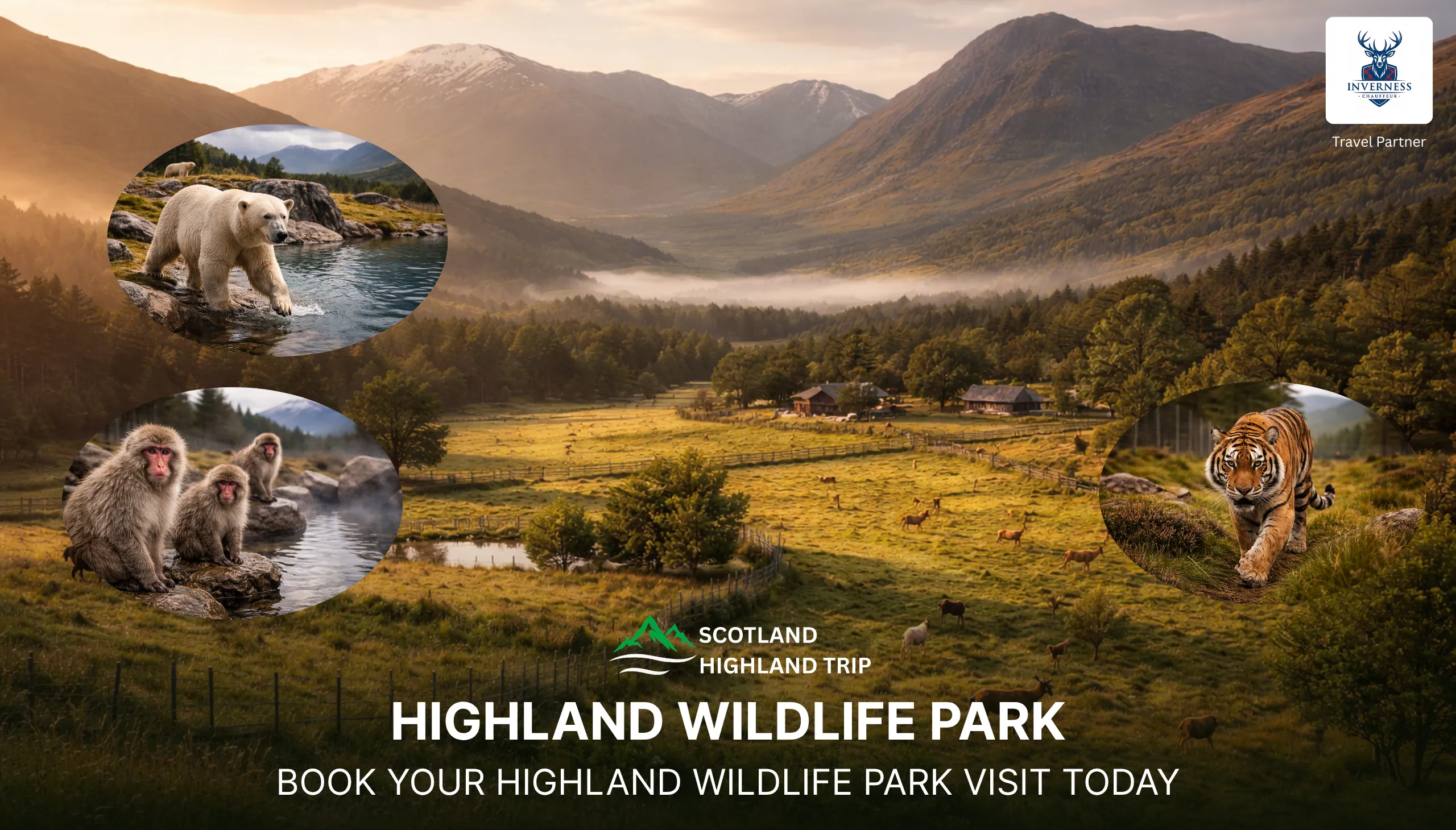
Highland Wildlife Park, set within the Cairngorms National Park near Kincraig, has long been one of Scotland’s most evocative wildlife experiences. Operated by the Royal Zoological Society of Scotland (RZSS), the 105‑hectare park is home to more than 250 animals representing rare and cold‑climate species. From the only polar bears in Scotland to herds of native red deer and the elusive Scottish wildcat, the park blends a drive‑through reserve with walk-through enclosures to bring visitors face‑to‑face with wildlife against a backdrop of sweeping mountains.
In this guide I, Emma, your author, share everything you need to know before visiting, including ticket prices, travel tips, seasonal advice, and personal insights from her own visits. Whether you’re planning a family outing, seeking the perfect photo of Arktos the polar bear, or curious about the best time to see snow monkeys, this comprehensive resource will help you make the most of your day.
Jump to Section
Why Highland Wildlife Park Is Special
- Unique species mix: Unlike many zoos, the park focuses on cold‑climate species from around the world. You’ll encounter Amur tigers, Japanese macaques, Bactrian camels, Arctic foxes and rare ungulates such as Przewalski’s horses. Scotland’s only polar bears, Arktos and Walker, live here, while young bear Brodie is temporarily away while his habitat is upgraded.
- Drive‑through reserve: A highlight is the reserve loop where you drive among free‑ranging European elk, Bukhara deer, vicuña and bison. You can circle the loop multiple times during your visit.
- Conservation focus: Operated by the RZSS, the park participates in international breeding programmes and raises awareness of species threatened by habitat loss and climate change. Discovery Rangers give talks and daily feeds so visitors learn how to help.
- Stunning Highland scenery: The park sits seven miles south of Aviemore, surrounded by moorland and ancient forest. Visitors enjoy views of the Cairngorms while watching snow leopards and red pandas.
Planning Your Visit
Opening hours & best times
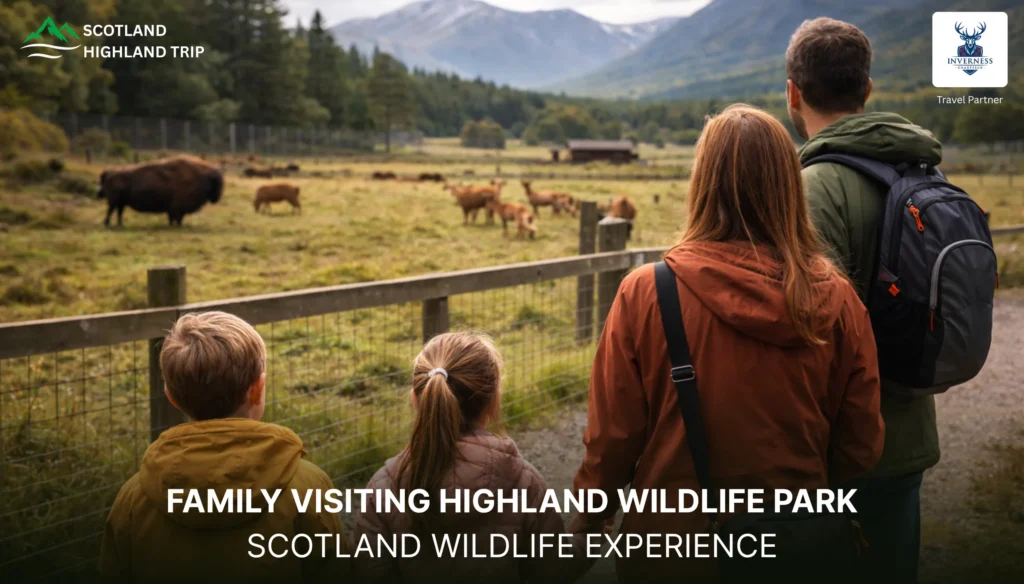
Highland Wildlife Park is open every day except Christmas Day. Opening hours vary seasonally: January–February and November–December 10 a.m to–4 p.m, March–October 10 a.m–5 p.m. The last entry is one hour before closing. I recommend arriving early to beat the queues and to see the animals more active. “We noticed that Arktos and Walker were far more playful at 10 a.m., splashing in their pool, whereas by midday they were snoozing,” she recalls.
Seasonal advice:
- Winter (December–February): Dress warmly; snow monkeys and red deer look magical in the snow and crowds are small. The polar bears are at their most active in cold weather.
- Spring (March–May): A great time to spot newborns. I remember seeing tiny Mishmi taking calves and squealing piglets on a crisp April morning.
- Summer (June–August): Longer daylight means more time to explore, but midges can be bothersome and the park is busier. Arrive early or late afternoon to avoid crowds.
- Autumn (September–November): The park is quiet and colours are beautiful; Amur tigers roam against golden birch trees.
Ticket options and prices
Highland Wildlife Park encourages advance booking. Online prices are currently £25 for adults, £18.70 for children aged 3–15 and free for under‑3s. Concessions (students, seniors and those with eligible ID) cost £22.50. Walk‑up tickets are slightly more expensive (adult £27.50, child £20.60). Groups of 15 or more can secure reduced rates.
Pro tip: If you travel by rail, look out for seasonal Kids Go Free promotions through ScotRail; these sometimes include 2‑for‑1 entry coupons with valid train tickets. Membership of the RZSS also provides unlimited access to the park and Edinburgh Zoo.
Getting there
The park sits just off the B9152 near Kincraig. It is seven miles south of Aviemore. There are several ways to reach it:
- By car: From Inverness on the A9, turn off at Kingussie/Kincraig and follow the B9152 north; from Perth/Edinburgh, take the A9, exit south of Aviemore and follow the B9152 through Kincraig. Parking is free.
- By bus: Stagecoach and Citylink services run to Aviemore; the local bus 39/M39 stops at the end of the park’s entrance road, with a half‑mile walk to the ticket booths. Express coaches from London and other UK cities serve Aviemore.
- By train: Aviemore station is on the Highland Main Line with trains from Edinburgh, Perth, Glasgow and Inverness. The Caledonian Sleeper runs overnight from London.
- GPS warning: Sat‑navs can be unreliable near Kincraig; I still remembers circling small farm lanes before following signposts. When in doubt, stay on the B9152.
Your Day at the Park: Itinerary & Highlights
1. Start with the drive‑through reserve
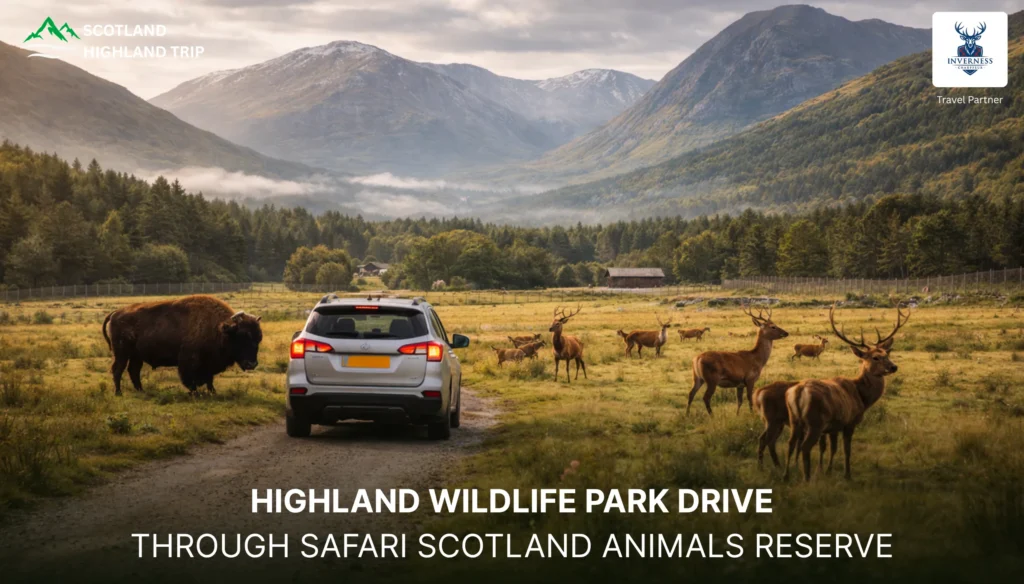
Upon arrival, most visitors head straight to the drive‑through reserve, where you remain in your vehicle to observe herds of hoofed animals. I recall, “The first time we entered the loop, a massive Bukhara stag wandered past our bumper. We could smell the damp earth and feel completely immersed in the Highlands.” Keep your windows closed and drive slowly; animals roam freely and may cross the track. You’ll spot Bukhara deer, European elk, vicuña, yak and bison. You can loop back as many times as you like, my suggestion is doing another circuit later as species often move to different areas.
Photographer’s tip: Early morning light along the reserve makes for dramatic silhouettes of elk and deer against the mountains. Bring a telephoto lens and a polarising filter to reduce glare from your windscreen.
2. Explore on foot: must‑see enclosures
After the drive‑through, park in the main car park and continue on foot. There are steep slopes and some steps, but alternative paths exist; wear sturdy shoes and plan your route. Download the free park app or pick up a map at the entrance to avoid getting lost.
Here are highlights I recommend not to miss:
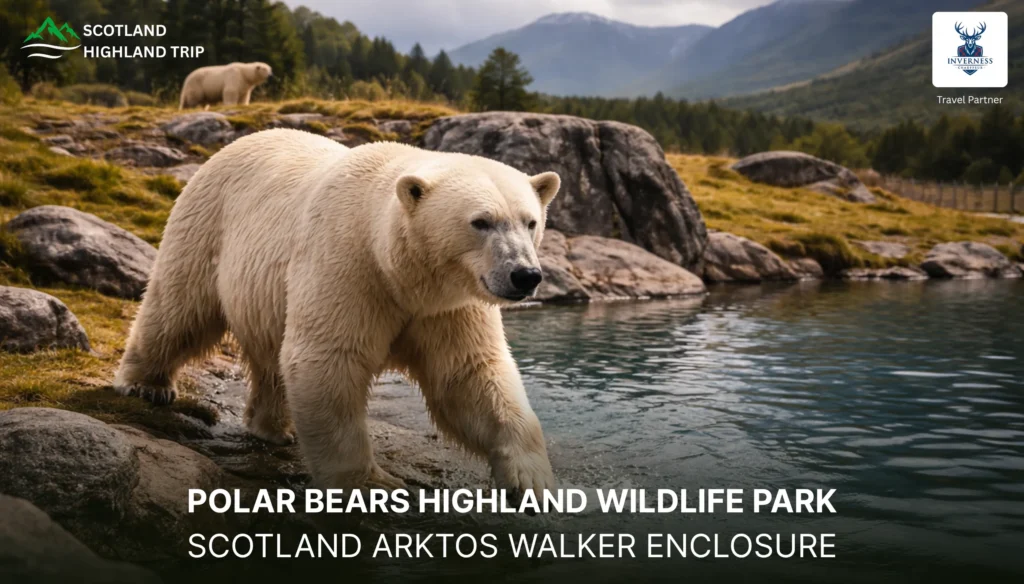
- Polar bear habitat: Arktos and Walker inhabit one of Europe’s largest polar bear enclosures. Raised platforms provide views of the bears swimming and playing; a glass wall gives underwater glimpses. The fact file notes they are among the world’s largest carnivores and can weigh up to 800 kg. These bears were born in 2007 and 2008, and third bear Brodie (born 2021) currently resides at another park during habitat upgrades. Hearing them crash into the water is unforgettable. I still remember how our group gasped when Walker surfaced right beside the glass.
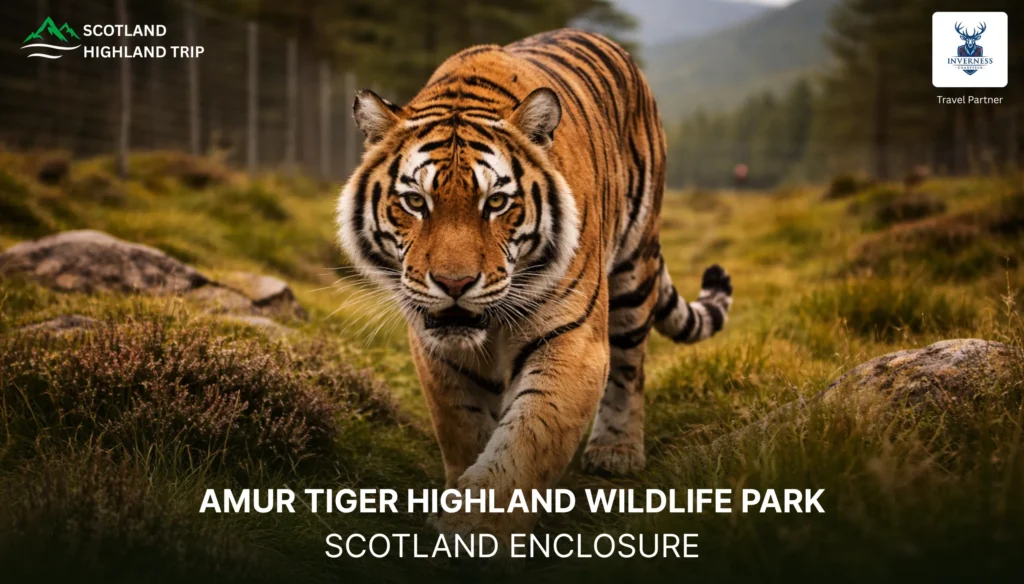
- Amur tiger enclosure: Hear the roar of the world’s largest big cat. I remember that the tigers are often active after feeding sessions. There’s a viewing shelter for rainy days.
- Japanese macaques (“snow monkeys”): Watch them soak in heated pools, a sight more reminiscent of Japan’s Jigokudani than Scotland. In winter their pink faces contrast against the snow.
- Wolf Wood: A boardwalk winds through pine trees where European grey wolves and European forest reindeer roam. Keep your voice down to increase your chances of seeing them.
- Red pandas and Scottish wildcats: Both species are elusive. I learned from a Discovery Ranger that red pandas, named Kitty and Kevyn, sleep high in trees during the day; check again mid‑afternoon.
3. Attend talks and feedings

Discovery Rangers deliver daily talks and feeding sessions across the park. These sessions explain conservation efforts and allow you to see animals up close. Listen for announcements at the entrance or consult the park app. My favourite memory is of a ranger describing how snow leopard mothers teach cubs to navigate cliffs, while the cubs tumbled playfully behind him. Arrive five minutes early to secure a good spot.
4. Book a reserve tour for deeper insight
For a truly special experience, consider the park’s Reserve Tour. These 50‑minute, small‑group tours take place on Thursdays through Sundays at 1 p.m., led by expert Discovery Rangers and cost £85 per group (discounted for members). You’ll learn about species that once teetered on the brink of extinction, like the Przewalski’s horse, and explore the rich birdlife of the reserve. Tours must be booked online and are an add‑on to regular admission. I still remember spotting a golden eagle during her tour, a moment she’d have missed on her own.
5. Facilities, food and accessibility
Highland Wildlife Park has expanded facilities over the past few years. You’ll find clean toilets, baby‑changing areas, picnic benches, and a restaurant serving hot lunches and snacks. There is also a café near the entrance and food stalls near the tiger enclosure (cashless payments accepted). The gift shop stocks plush polar bears, wooden puzzles and local crafts. Free Wi‑Fi covers most of the site.
The park is located on rugged Highland terrain. Although many steps can be bypassed, some paths are steep. Wheelchairs are available to hire at no extra cost; call ahead to reserve. Assistance dogs are permitted, but pets are not allowed to protect animal welfare. If you have mobility concerns, plan extra time and consider the reserve tour instead of walking every path.
6. Suggested day itinerary
To make the most of your visit, here’s a sample itinerary based on my own experience:
- 09:45 a.m: Arrive and pick up map/app. Grab a coffee, check the day’s talk schedule.
- 10:00 a.m: Drive‑through reserve. Spend 30–40 minutes and take photographs.
- 10:45 a.m: Polar bear viewing platform. Watch Arktos and Walker during their most active period.
- 11:15 a.m: Snow monkeys and tiger enclosure. Listen for feeding times.
- 12:00 p.m: Lunch break. Enjoy the café or picnic area; children can use the play park.
- 1:00 p.m: Reserve tour (optional). If booked, this is the time to join the guided tour.
- 2:00 p.m: Wolf Wood and red pandas. Walk at a leisurely pace and enjoy the forest.
- 3:00 p.m: Visit the Wildcat enclosure and Bactrian camels. I still remember the camels’ curious noses pressed up to the fence.
- 3:30 p.m: Final drive‑through loop. Animals often roam in different areas by late afternoon.
This schedule leaves flexibility for spontaneous moments, like revisiting your favourite species or dropping by the gift shop.
Practical Tips & Mistakes to Avoid
Clothing & gear: Dress for the Highlands, waterproofs, layers and sturdy footwear are essential year‑round. I once had to buy an extra hoodie from the gift shop when a sunny August day turned chilly.
Timing: Arrive early to secure parking and enjoy quieter viewing. Avoid mid‑afternoon if you dislike crowds, especially during school holidays.
Photos: Bring binoculars and long lenses. Use the park’s app to mark where you spotted animals and to time your return visits. Overcast days reduce harsh shadows, making for better wildlife photos.
Families: The park is stroller‑friendly in most areas, but some paths are steep. Little ones love the small play park near the café. Plan for at least three hours; many families spend four to five hours exploring.
Food: Pack snacks if you prefer not to rely on the café. Outside food is allowed in picnic areas.
Midges: In summer, bring insect repellent to fend off midges, especially near water bodies and wooded areas.
Weather: The Cairngorms can see rapid weather changes. Check the forecast and be prepared for rain, sun and wind on the same day.
My Personal Story: Emma’s Day at the Park
“One thing I did not expect was how emotional it would be watching Walker and Arktos up close. We arrived just after the park opened and headed straight to the polar bear enclosure. Arktos was lounging by the pond when Walker ambled over, nudged him playfully and then both slipped into the water. The splash sent ripples all the way to the glass. I still remember the children around us squealing with delight. Later, as we walked through Wolf Wood, a Discovery Ranger told us about the wolves’ reintroduction into European forests and why the Scottish Highlands offer similar habitats. He described how packs travel great distances and rely on each other for survival. Watching the wolves melt into the trees, we quickly realised how easily they could disappear from our world if we don’t protect them.”
“We met people on the trail who had driven up from Glasgow just for the day. They advised us to re‑run the drive‑through loop late afternoon because the animals move around; sure enough, on our second drive we saw Przewalski’s horses wading through a shallow stream we’d missed earlier. The tip to revisit enclosures stuck with me, animals have their own schedules, and patience is rewarded. What stayed with me most was the sense of space and the way the park integrates with the landscape. It felt less like a zoo and more like stepping into a patch of wilderness.”
FAQs
Is Highland Wildlife Park worth visiting?
Absolutely. This park offers a blend of drive‑through safari, walk‑through enclosures and conservation education unique in the UK. You’ll see cold‑climate animals you can’t find elsewhere in Scotland, learn about their survival challenges and enjoy spectacular mountain views.
How long does it take to go around Highland Wildlife Park?
Most visitors spend 2 to 3 hours exploring the park, but if you want to watch feeding sessions, join a reserve tour and revisit enclosures, allow 4 to 5 hours. Families often turn it into a full‑day outing.
Which zoo is best in Scotland?
That depends on what you’re looking for. Highland Wildlife Park is exceptional for cold‑climate species and its drive‑through reserve. Edinburgh Zoo (also run by RZSS) houses panda bears and penguins. Blair Drummond Safari Park offers a wider range of African species. Each has its strengths; many visitors consider Highland Wildlife Park unmatched for its scenery and focus on conservation.
Does the Highland Wildlife Park have red pandas?
Yes. The park is home to Kitty and Kevyn, a pair of red pandas. They sleep during much of the day, often high in the trees, so check their enclosure late afternoon for the best chance of a sighting.
How many tigers are at Highland Wildlife Park?
The park houses Amur tigers, one of the largest tiger subspecies. As of our visit, there is an adult pair living in a spacious enclosure; you’ll likely hear their roar during feeding times.
What are the top 5 zoos in the UK?
While rankings are subjective, travellers often praise these five:
- Chester Zoo: England’s largest zoo, renowned for conservation and immersive habitats.
- Edinburgh Zoo: Home to pandas, penguins and a hilltop location with views of the city.
- Highland Wildlife Park: Unique for its cold‑climate species and Highland scenery.
- London Zoo (ZSL): Historic zoo with an extensive reptile house and new walk‑through exhibits.
- Whipsnade Zoo: A vast safari park with elephants, rhinos and large open spaces.
Plan Your Highland Wildlife Park Adventure
Ready to meet Scotland’s polar bears and drive through a herd of European elk? Book your Highland Wildlife Park tour to secure the best price and avoid queues. Whether you’re travelling from nearby Aviemore or farther afield, the park offers a memorable day immersed in wildlife and Highland landscapes. Pack your camera, bring your sense of wonder and enjoy one of Scotland’s most unique wildlife experiences.
If you found this guide helpful, share it with friends planning a Highland adventure or leave a comment with your own tips. Happy exploring!

Emma is a solo traveler and freelance travel writer from New Zealand who spent three weeks exploring the Scottish Highlands. With a deep appreciation for history and landscapes, she booked a series of day tours and a private chauffeur journey with Scotland Highland Trip. From Loch Ness to the Cairngorms, she documented her experience through vivid blog posts and drone footage.