
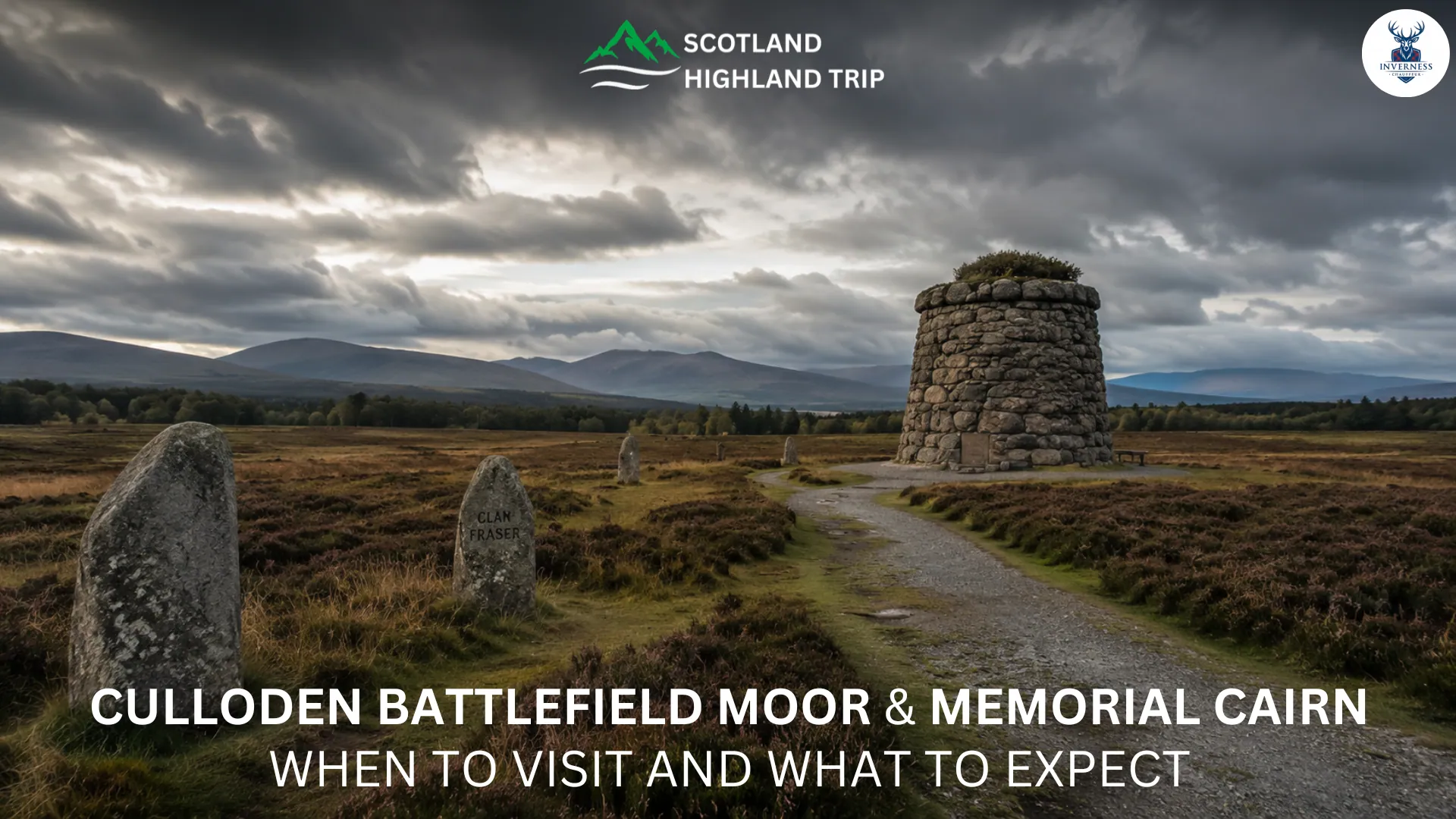
Culloden Moor, just east of Inverness, marks the site of the final pitched battle of the Jacobite rising. It is often listed as a must‑see for history enthusiasts, Outlander fans and travellers exploring the Scottish Highlands. But is it worth your limited time? For many visitors the answer is yes, provided you know what to expect.
Culloden is not an amusement park; it is a memorial set on exposed moorland with an excellent modern visitor centre. The experience can be both educational and emotionally moving. Whether you find it worthwhile depends on your interest in Scottish history, your tolerance for sombre topics and the time you have available. This guide explains when to visit, how long to allow and what you’ll see, so you can decide if Culloden belongs in your itinerary.
Quick Answers
| Question | Short Answer |
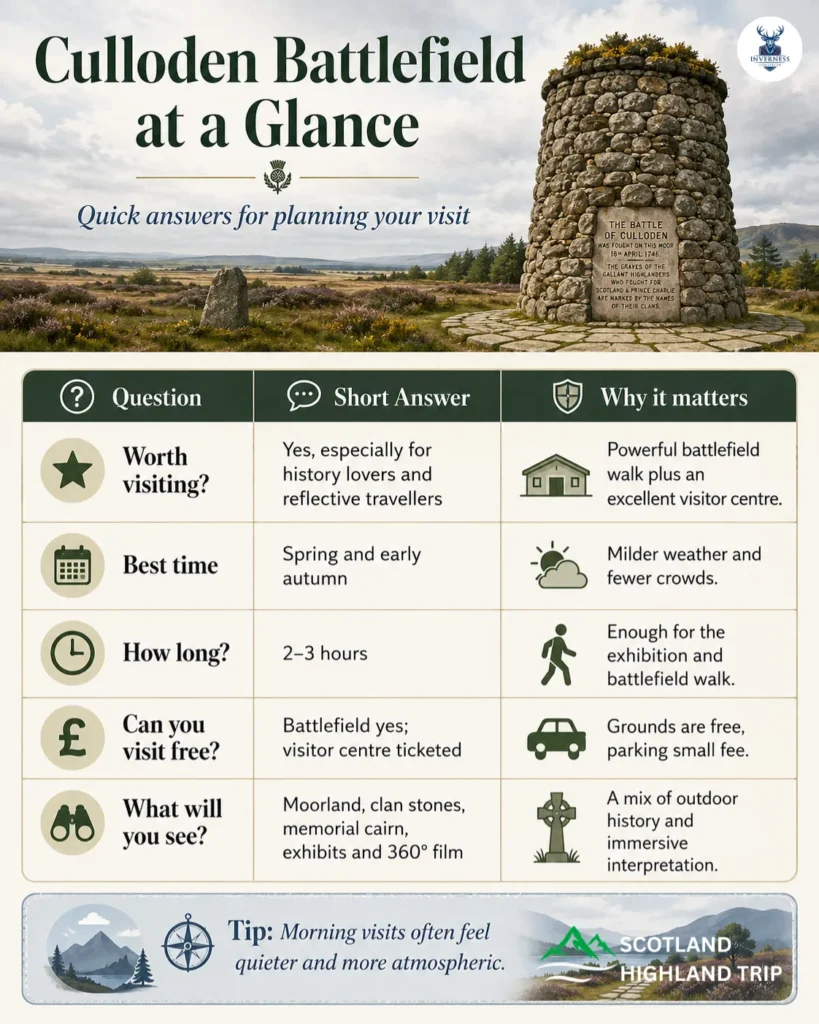
| Is Culloden Battlefield worth visiting? | Yes if you appreciate history, want context for Highland culture or enjoy reflective outdoor spaces. The battlefield offers a solemn walk with memorials and interpretive markers, while the visitor centre provides an immersive exhibition and powerful 360° film. Families and casual travellers should be prepared for sombre content but will still learn a lot. |
| Best time to visit | Spring (April to June) and early autumn (September) provide milder weather and fewer crowds. Summer offers long days but can be busy; winter is quieter but cold and short on daylight. Morning visits often feel more atmospheric and less crowded than afternoons. |
| How long to allow | For a quick stop, budget 1 to 1.5 hours to walk the battlefield and view a few exhibits. A standard visit with the full visitor‑centre exhibition and battlefield walk typically takes 2 to 3 hours. History enthusiasts could spend 3 to 4 hours exploring exhibits, listening to the audio guide and reflecting on the moor. |
| Can you visit for free? | Yes: the battlefield grounds are open all year and free to walk. Car parking costs around £2 and the visitor centre charges admission (approximate adult prices £11 to £14; family tickets available). National Trust for Scotland members enter the visitor centre free. |
| What will you see? | Expect a windswept moor with marked clan lines, memorial stones, a tall cairn and interpretive plaques. The visitor centre features interactive exhibits, artefacts, a 360° theatre film, a rooftop viewing platform and a café. |
Jump to Section
When to Visit Culloden Battlefield
Seasonal considerations
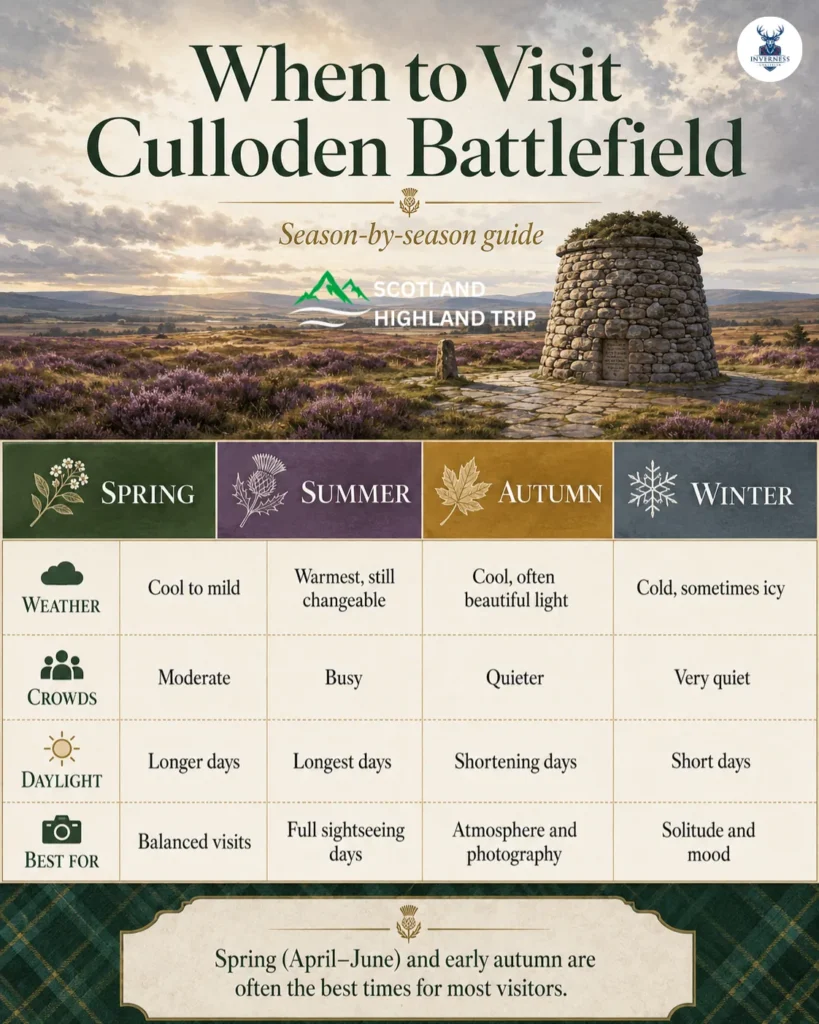
Culloden’s open moor means the experience is shaped by weather and daylight. Inverness is among Scotland’s driest areas, but conditions change quickly. Statistics show that October to December are the wettest months while February and April are the driest. Temperatures remain mild by Highland standards: spring (March to May) averages 8 to 13 °C, summer (June to August) around 17 °C, autumn (September to November) 8 to 15 °C and winter approximately 6 °C.
- Spring (April to June): Longer daylight, moderate temperatures and wildflowers make spring one of the best times to visit. Paths are less muddy than in winter and crowds lighter than peak summer. May–June also coincide with fewer midges and long evenings.
- Summer (July to August): Expect the longest days and warmest weather (around 17 °C). This period brings more tourists, especially when Outlander fans peak, so book tickets in advance and arrive early. While the moor is rarely sweltering, rainfall is possible and breezes can feel cool, so bring layers.
- Autumn (September to October): Early autumn offers golden light and fewer visitors. September temperatures are still comfortable and heather blooms purple on the moor. October brings changeable weather; it’s quieter but can be wet.
- Winter (November to March): The battlefield remains free to access and often feels atmospheric in winter fog, but daylight is short (sunrise around 8 am and sunset before 4 pm) and temperatures hover around 0 to 6 °C. The visitor centre stays open daily but closes earlier (last entry around 4 pm). Dress warmly and be prepared for icy paths.
Time of day
Early mornings tend to be quieter and give a sense of solitude appropriate to the site’s sombre history. By mid‑day, tour groups may arrive. Late afternoon visits can also be peaceful but note the visitor centre’s last entry time (30 minutes before closing).
What to Expect When You Visit
The battlefield grounds (free)
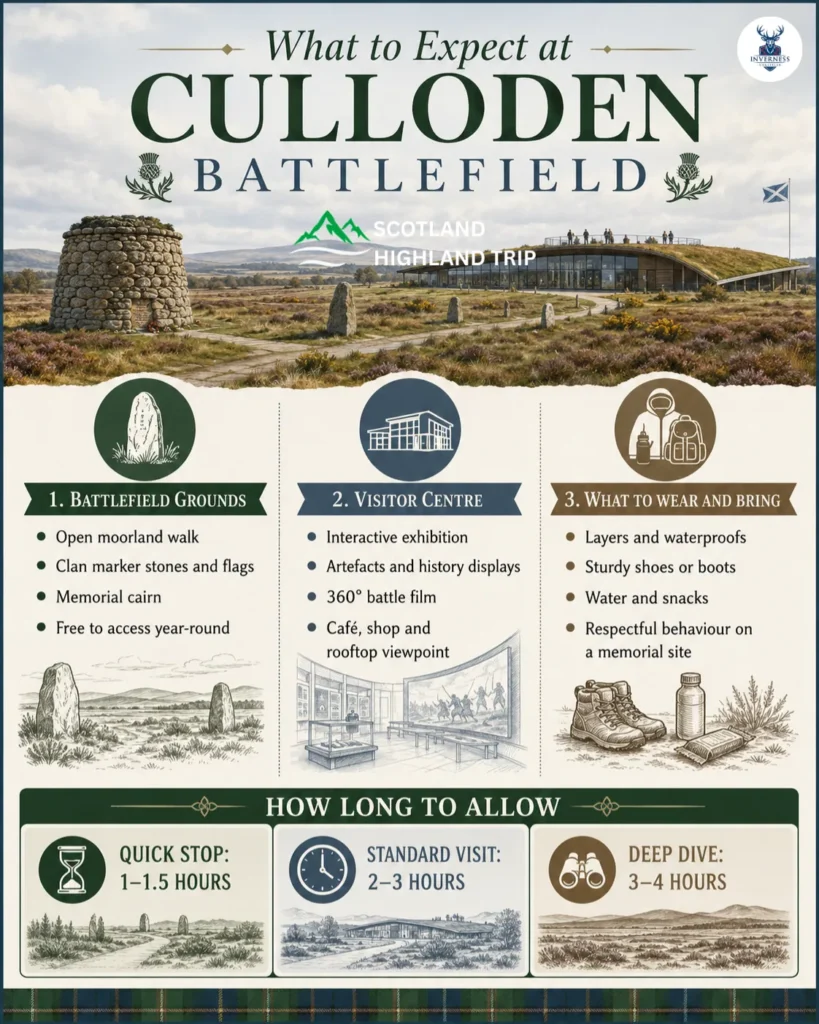
Culloden Moor itself is an open, largely level expanse of heath. Footpaths lead you past lines of coloured flags marking the positions of the Jacobite and government forces. Marker stones show where different Highland clans stood and fell. A large cairn, erected in 1881, is the principal memorial. Information boards provide context along the paths, and handheld or downloadable audio guides add depth.
The moor is exposed, with little shelter; it can be windy and boggy in places. Families should note that children may find the space less engaging without the context provided by the visitor centre or an audio guide. The battlefield is open all year and accessible at any time; however, parking is charged and toilet facilities are only available during visitor‑centre hours.
The visitor centre (ticketed)
Adjacent to the moor, the National Trust for Scotland runs a modern visitor centre. Tickets include access to interactive displays tracing the Jacobite rising, a gallery of artefacts, a roof‑top viewing platform and a café and shop. A highlight is the 360° immersive theatre that places visitors in the midst of the battle; the depiction is intense and may upset younger children. Guided tours of the battlefield often depart from the entrance and are included or available for a small donation (check current arrangements).
Exhibits are available in multiple languages via audio guide. The visitor centre is open daily, usually 09:00 to 17:00 (March to October) and 09:00 to 16:00 (November to February), with last admission 30 minutes before closing. Admission prices vary by year; typical adult tickets range around £11 to £14 with concessions and family tickets. National Trust members enter free; visitors from the National Trust (England & Wales) may receive reciprocal benefits,check before visiting.
How Long to Allow
Your visit length depends on your interest level and whether you enter the visitor centre.
- Quick stop (1 to 1.5 hours): If you’re on a tight schedule or primarily interested in seeing the battlefield, allow time for a 30 to 45 minute walk around the moor plus a brief browse of selected exhibits. This works well for families with younger children or travellers combining Culloden with other nearby sites like Clava Cairns.
- Standard visit (2 to 3 hours): Most travellers should plan for two to three hours. This includes a full circuit of the battlefield with the audio guide, time in the visitor centre to watch the 360° film and explore the exhibition galleries, and a tea break at the café. Arrive early to secure parking and avoid crowds.
- Deep dive (3 to 4 hours): History enthusiasts may spend several hours reading all interpretive panels, listening to the guided tour, consulting genealogical resources and reflecting at memorials. Allow extra time if you want to explore nearby sites such as the Clan Fraser stone and Leanach Cottage or to chat with National Trust rangers.
Combine Culloden with other attractions such as the prehistoric Clava Cairns (5 minutes away) or the more romantic Cawdor Castle (20 minutes), but don’t underestimate how draining reflective sites can be. Some visitors find they need time afterwards to process what they’ve learned.
Practicalities: What to Wear and Bring
Culloden is an exposed moorland, and the weather can change rapidly. Visitors should:
- Dress in layers: Even in July the temperature hovers around 17 °C and wind chill can make it feel cooler. Bring a waterproof jacket, hat and gloves in cooler months.
- Wear sturdy shoes or boots: Paths can be muddy and uneven, particularly after rain; avoid heels or smooth‑soled shoes.
- Carry rain protection: Inverness sees under 900 mm of rain annually, but showers can appear without warning. Pack a compact umbrella or poncho.
- Bring water and snacks: The café sells refreshments during visitor‑centre hours, but there are no facilities on the moor itself.
- Consider insect repellent: Midges appear from late spring to early autumn; they are less prevalent than in western Highlands but can still be bothersome in sheltered spots.
- Be mindful of the site’s solemnity: This is a place of commemoration. Respect signage, avoid climbing on cairns and keep noise to a minimum.
Free vs Paid: Tickets, Memberships and Costs
One of the most common questions is whether you can visit Culloden for free. The answer is nuanced:
- Battlefield access is free: You can park (for around £2) and walk the moor at any time. Information boards offer basic context.
- Visitor centre is ticketed: Admission grants access to exhibitions, audio guides and the 360° theatre. Prices have fluctuated (Adult tickets have been listed between £11 and £14 in recent years; child and concession rates are lower). Family and one‑adult family tickets offer savings. Fees support preservation of the battlefield.
- National Trust membership benefits: Members of the National Trust for Scotland enter the visitor centre for free, and many memberships from other UK National Trust organisations offer reciprocity. Bring your membership card and confirm at the desk.
- Car park fee: A small parking charge (around £2) applies and is separate from admission. Have coins or a contactless card ready.
If you’re unsure whether the visitor centre is “worth it,” consider your interest in history and your need for context. The moor itself is atmospheric but much more meaningful with the narrative provided by the exhibitions and audio guide. Families may appreciate the interactive displays and cafe as a break from the wind.
What to See at Culloden Battlefield
- Clan marker stones and flags: Stones along the moor mark the positions where different Highland clans fought. Coloured flags show the Jacobite and government lines, red for government forces and blue for Jacobites. These markers help you visualise the battle’s layout.
- Memorial cairn: A large cairn, erected in the 19th century, stands at the heart of the battlefield as a collective memorial. Visitors often leave flowers or clan tartans here.
- Leanach Cottage. The small thatched building near the visitor centre is a surviving structure from the era. Inside, interpretation boards describe civilian life and the aftermath of the battle.
- Roof‑top viewing platform: The visitor centre’s roof offers panoramic views across the battlefield and surrounding countryside.
- Interactive exhibitions: Inside, exhibits detail the causes of the Jacobite rising, the battle itself and its consequences. Artefacts range from weapons to personal letters. An immersive 360° theatre places visitors in the midst of battle, surrounded by sound and visual effects, powerful but potentially distressing for young children.
- Café and shop: After exploring, relax with a hot drink or browse books and souvenirs. The café uses local produce and offers indoor seating sheltered from the weather.
Common Visitor Mistakes and How to Avoid Them
- Underestimating the weather: Many travellers assume summer will be warm; in reality, it can be cold and wet. Always carry layers and waterproof clothing.
- Rushing through: To appreciate the significance of Culloden, take time to read the plaques or listen to the audio guide. A quick glance at the moor won’t convey the full story.
- Skipping the visitor centre: While the battlefield is free, the ticketed exhibition provides essential context. Without it, the flags and stones may seem abstract.
- Arriving late: The visitor centre’s last entry is 30 minutes before closing. Aim to arrive earlier to allow enough time.
- Bringing very young children to the 360° film without preparation: The immersive film recreates the chaos of battle and includes loud noises and flashing images. Consider whether it is suitable for your children; there are alternative exhibits for younger visitors.
Final Planning Takeaway
Culloden Battlefield is a powerful and educational site that can enrich your understanding of Scotland’s history and culture. For travellers with even a passing interest in the Jacobites or Outlander, the combination of an evocative landscape and a world‑class visitor centre is compelling.
To make the most of your visit, plan for at least two hours, choose a season that suits your weather tolerance and travel style, and dress for the moor’s unpredictability. The free access to the battlefield means budget travellers can experience the site, but the visitor‑centre ticket adds depth that most visitors appreciate. Ultimately, Culloden rewards thoughtful exploration, providing a sober but unforgettable glimpse into a pivotal moment in Highland history.

Emma is a solo traveler and freelance travel writer from New Zealand who spent three weeks exploring the Scottish Highlands. With a deep appreciation for history and landscapes, she booked a series of day tours and a private chauffeur journey with Scotland Highland Trip. From Loch Ness to the Cairngorms, she documented her experience through vivid blog posts and drone footage.