Somewhere over the Atlantic, about five hours out of Toronto, the flight map switches from open ocean to a jagged green coastline. That first glimpse of Scotland gets people every single time. If you’re planning the best Scotland Highland tour for Canadians, you’re in good company: VisitScotland reports that Canada was Scotland’s ninth largest international source market by visits in 2024, and seventh by spend, with Canadian visitors averaging £931 per trip. That’s roughly C$1,700 spent on castles, whisky, and rain jackets, and almost nobody regrets a penny of it.
This guide covers the tour styles that actually work for Canadians, real costs in Canadian dollars, flight routes from Toronto, Calgary, and Halifax, the new UK entry rules, and a day by day itinerary you can copy. No fluff, just the stuff I wish someone had told me before my first trip north of Inverness.
Jump to Section
Why Do Canadians Keep Choosing the Scottish Highlands?
Canadians choose the Highlands for ancestry, familiar culture, and dramatic scenery within an eight hour direct flight. Nearly 5 million Canadians claim Scottish heritage, and clan sites like Culloden and Glencoe turn a scenic holiday into a personal one for many visitors.
Let’s be honest, Canada has mountains. Bigger ones, actually. So why do so many Canadians cross an ocean to look at hills?
Heritage is the big one. Between the Highland Clearances of the 1700s and 1800s and later waves of emigration, huge numbers of Scots ended up in Nova Scotia, Ontario, and the Prairies. Nova Scotia literally means New Scotland. For travellers with names like MacDonald, Campbell, Fraser, or Cameron, walking Culloden Battlefield or standing in Glencoe isn’t sightseeing. It’s a family visit, several generations late.
Then there’s the practical side. Scotland runs on English, drives on the left but forgives you for gawking, uses a currency Canadians understand quickly, and treats visitors with a warmth that feels familiar. The landscapes are compact too. In one day you can see a sea loch, a 13th century castle, a whisky distillery, and a Munro (that’s a Scottish mountain over 3,000 feet, and yes, people collect them).
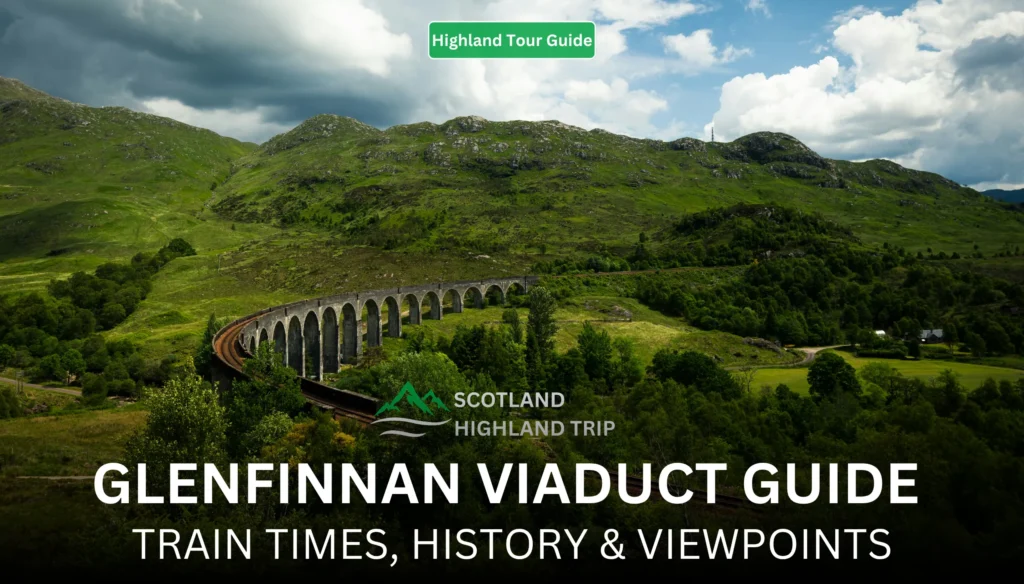
And the pop culture pull is real. Outlander, Harry Potter, and Skyfall all filmed here. The Glenfinnan Viaduct, better known to most Canadians as the Hogwarts Express bridge, sits right on the classic Highland tour route. If that’s on your list, the Glenfinnan Viaduct guide covers viewing times and the short walk to the photo spot.
What Is the Best Scotland Highland Tour for Canadians?
The best Scotland Highland tour for Canadians is a 7 to 10 day trip combining Inverness, Loch Ness, the Isle of Skye, and Glencoe, either as a small group guided tour or a private chauffeur driven tour. Both remove left side driving stress and maximize limited vacation days.
There’s no single perfect tour, but there is a perfect structure. After watching hundreds of Canadian visitors move through the Highlands, the pattern is clear: the trips that work best run 7 to 10 days, start in Edinburgh or Inverness, and cover four anchor regions.
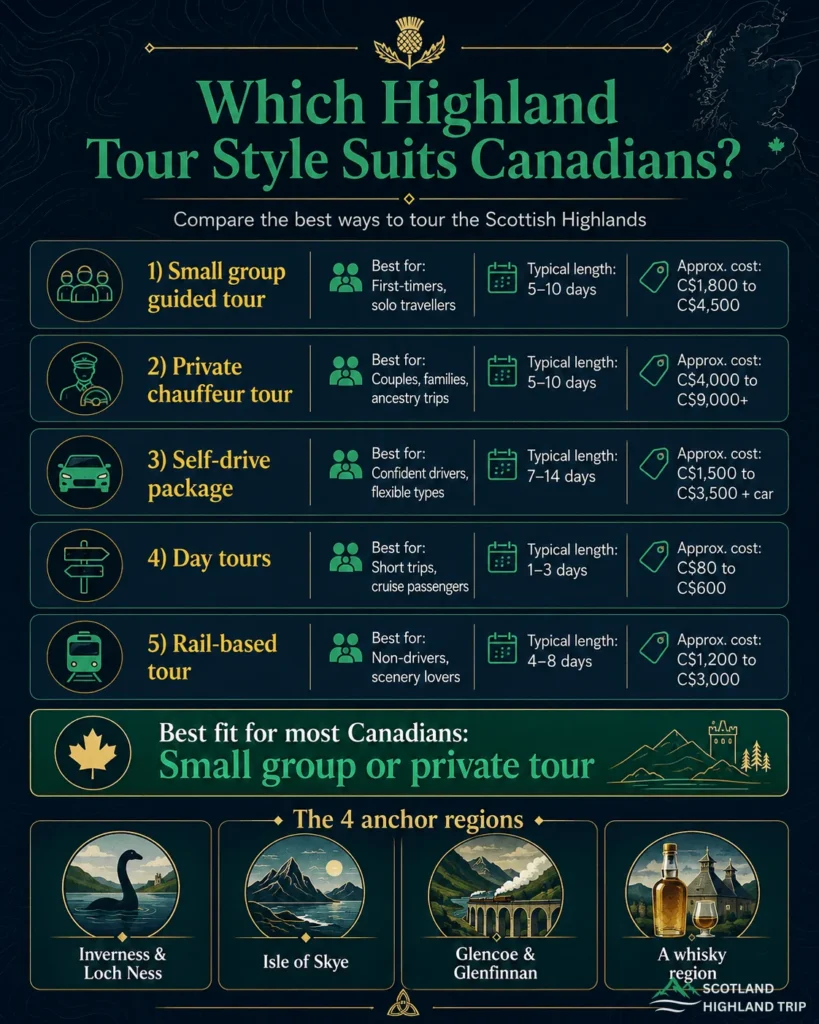
Here’s how the main tour types compare:
| Tour Type | Best For | Typical Length | Approx. Cost (CAD, per person) |
| Small group guided tour (max 16) | First timers, solo travellers | 5 to 10 days | $1,800 to $4,500 |
| Private chauffeur driven tour | Couples, families, ancestry trips | 5 to 10 days | $4,000 to $9,000+ |
| Self-drive package | Confident drivers, flexible types | 7 to 14 days | $1,500 to $3,500 plus car |
| Day tours from Edinburgh or Inverness | Short trips, cruise passengers | 1 to 3 days | $80 to $600 |
| Rail based tour | Non-drivers, scenery lovers | 4 to 8 days | $1,200 to $3,000 |
My honest take? For a first Highland trip, a small group tour or a private tour wins. Canadian vacation allowances are tight, usually two or three weeks a year, and burning mental energy on single track roads and roundabouts eats into the experience. A private tour of the Highlands also lets you build ancestry stops into the route, which group coaches simply can’t do.
The four anchors your tour should hit:
- Inverness and Loch Ness. The Highland capital, Urquhart Castle, and the loch itself. The Loch Ness area guide breaks down cruises, walks, and the best viewpoints.
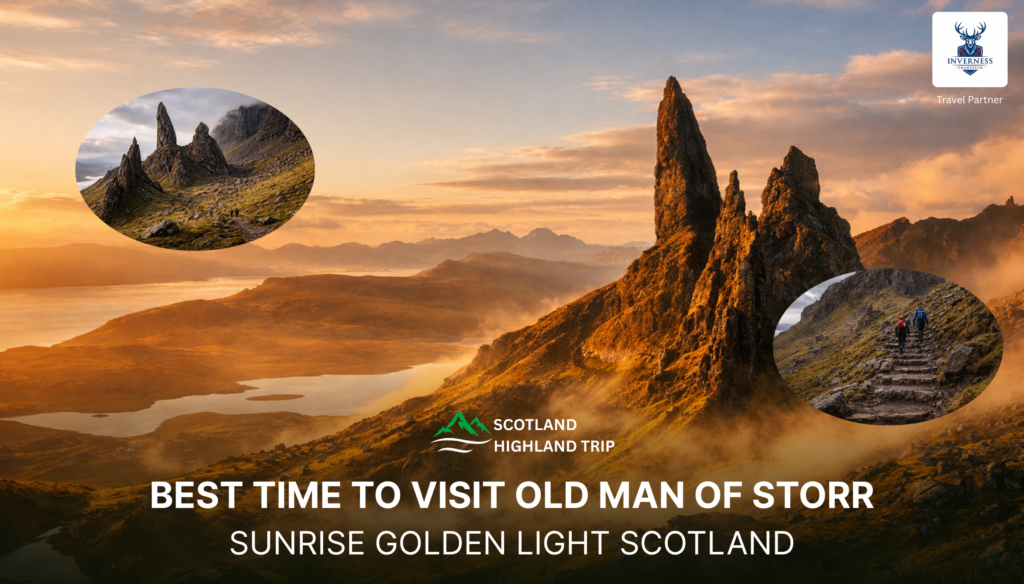
- Isle of Skye. The Old Man of Storr, the Quiraing, Portree’s painted harbour. Skye is the single most requested stop among North American visitors, and it earns the hype.
- Glencoe and Glenfinnan. Scotland’s most dramatic glen plus the famous viaduct, usually combined in one unforgettable driving day.
- A whisky region. Speyside or the distilleries around Inverness. Even non-drinkers tend to enjoy the craft and the history.
Cruise passengers are a special case. If you’re arriving on a ship rather than a flight, shore time is measured in hours, not days, and the Invergordon cruise port guide explains how to see Loch Ness and Urquhart Castle without missing your sail away.
How Do Canadians Get to the Scottish Highlands?
Canadians fly direct to Edinburgh from Toronto, Calgary, and Halifax with WestJet, or to Glasgow from Toronto with Air Transat and WestJet. Flights take 6 to 8 hours. Every Canadian traveller now needs a UK ETA, which costs £20 and takes minutes to get.
Getting to Scotland from Canada has genuinely never been easier. WestJet has made Edinburgh its Scottish home, flying non-stop from Calgary, Toronto, and Halifax in the summer season. The Halifax route is a treat: around five and a half hours in the air, shorter than a Halifax to Vancouver flight. In June 2026, WestJet also launched a direct Toronto to Glasgow service running three times weekly through mid September, competing with Air Transat on the same route. Air Canada and partners cover connecting options year round.
Round trip fares swing a lot. Deals from Toronto have dipped under C$500 return in shoulder season, while peak July fares can triple that. Booking around eight weeks out tends to land below average pricing.
Now, the part that catches people off guard: the UK Electronic Travel Authorisation.
Since early 2025, Canadian citizens have needed a UK ETA to enter the country, and enforcement became strict on February 25, 2026. No ETA, no boarding. Here’s the process:
- Apply through the official UK ETA app or at gov.uk, ideally at least three days before departure.
- Pay the £20 fee (roughly C$34). The price rose from £16 in April 2026.
- Upload a passport style photo and answer short screening questions. The whole thing takes about ten minutes.
- Approval usually arrives within hours and links electronically to your passport. Nothing to print.
Your ETA lasts two years or until your passport expires, covers unlimited visits of up to six months each, and one authorisation covers all of the UK, so an Edinburgh landing plus a London side trip needs no extra paperwork. Every traveller needs their own, including babies. Renew your passport, and you’ll need a fresh ETA too.
One more thing Canadians consistently forget: travel medical insurance. Your provincial health plan covers almost nothing overseas, and the NHS is not free for visitors.
Should Canadians Choose a Guided Tour, Private Tour, or Self-Drive?
Guided small group tours suit first time visitors who want zero logistics. Private chauffeur tours suit couples, families, and ancestry travellers wanting a custom route. Self-drive suits confident drivers, though left side driving on single track roads surprises many Canadians.
This is the decision that shapes your whole trip, so it deserves real thought. The full guided tour vs self-drive comparison goes deep on this, but here’s the short version through Canadian eyes.
Self-drive sounds natural to Canadians. We drive everywhere. But Highland driving is a different sport. You’ll be on the right side of the car, the left side of the road, navigating single track lanes with passing places, in weather that changes every twenty minutes. Plenty of Canadians love it. Plenty of others spend Skye’s most beautiful road white knuckled and staring at the tarmac instead of the Cuillin mountains. Fuel runs roughly triple Canadian prices per litre, and automatic rental cars cost noticeably more than manuals, which most Canadians need. If you do drive, read up on common Highland trip mistakes first, because midges, ferry timetables, and fuel gaps in the far north catch new visitors constantly.
Small group guided tours cap out around 16 passengers, include a driver guide who handles every logistic, and typically bundle accommodation and some meals. They’re sociable, efficient, and priced sensibly. The trade-off is a fixed route and fixed clock.
Private chauffeur driven tours cost more and are worth every dollar for the right traveller. Your day flexes around you: linger an extra hour at Culloden because your great great grandmother was a Fraser, skip the shop stop, chase the light for photos. The benefits of a private chauffeur matter even more in winter, when locals who know the roads earn their keep. For families of four or five, the per person math often lands surprisingly close to a group tour anyway.
That is the honest hierarchy. Budget tight and travelling solo? Group tour. Marking an anniversary or chasing ancestors? Private. Genuinely confident driver with two weeks to spare? Self-drive, and consider the North Coast 500 route, Scotland’s 516 mile answer to a Rocky Mountain road trip.
What Does a Perfect 7 Day Highland Itinerary Look Like?
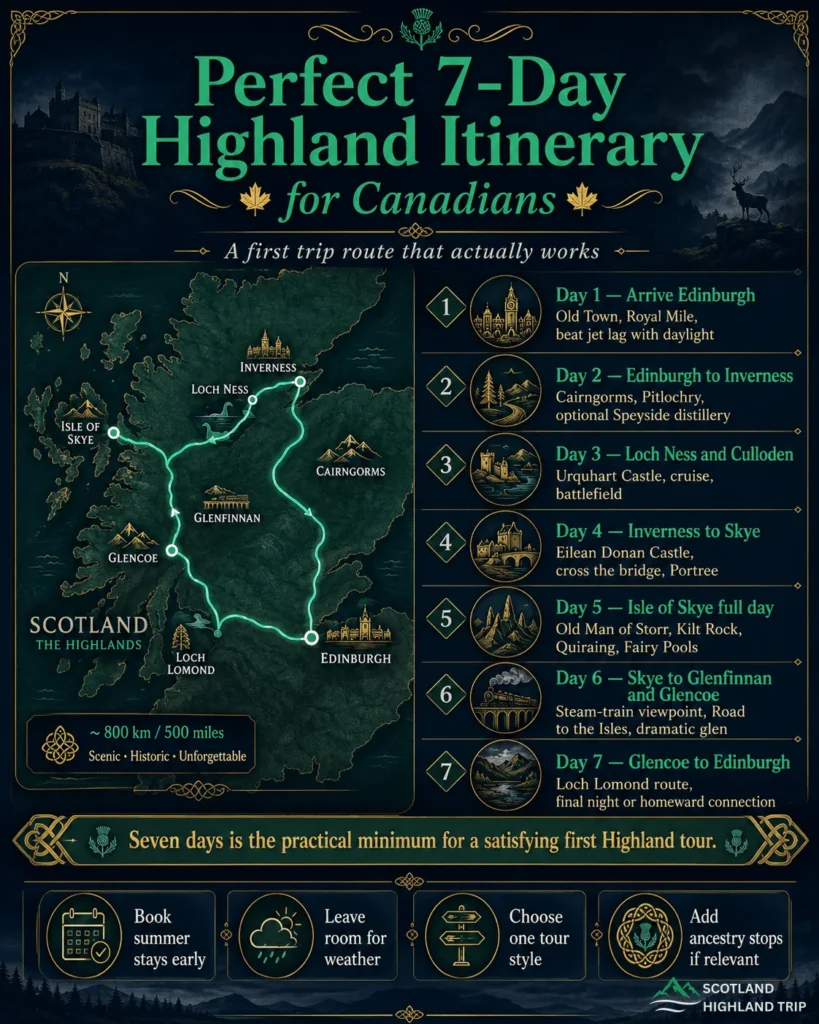
A perfect 7 day Highland itinerary for Canadians runs Edinburgh to Inverness through the Cairngorms, spends two nights near Loch Ness, two on or near the Isle of Skye, then returns south through Glencoe and Glenfinnan to Edinburgh.
Seven days is the sweet spot for most Canadian schedules: one week of vacation plus two weekends, minus travel days. Here’s a route that’s been refined over years of trial and error.
- Day 1: Arrive Edinburgh. Land in the morning off the overnight flight, drop bags, and stay outside walking. Old Town, the Royal Mile, an early dinner, and a 9 pm collapse. Fighting jet lag with daylight works.
- Day 2: Edinburgh to Inverness. North through the Cairngorms National Park with stops at Pitlochry and a Speyside distillery. Highland scenery starts about an hour in and never really stops.
- Day 3: Loch Ness and Culloden. Urquhart Castle, a loch cruise, then Culloden Battlefield in the afternoon. For anyone with Jacobite ancestry, budget extra time here. The day trips from Inverness guide lists add-ons like Glen Affric if you have spare energy.
- Day 4: Inverness to Skye. West past Eilean Donan Castle, the most photographed castle in Scotland, then over the bridge to Skye. Evening in Portree.
- Day 5: Isle of Skye full day. The Old Man of Storr, Kilt Rock, the Quiraing, and the Fairy Pools if the weather cooperates. The detailed Isle of Skye trip guide maps the loop.
- Day 6: Skye to Fort William via Glenfinnan. The Road to the Isles, the Glenfinnan Viaduct (time it for the steam train if it’s running), then into Glencoe as the light goes golden.
- Day 7: Glencoe to Edinburgh. Along Loch Lomond’s bonnie banks and back to the capital for your flight home or a bonus night.
With 10 days, add the North Coast 500’s northern section or two nights in Edinburgh proper. With only 3 or 4 days, base yourself in Inverness and do day tours; you’ll skip the driving days entirely.
Where you sleep matters as much as where you go. Highland accommodation ranges from castle hotels to family run B&Bs, and the good ones book out months ahead for summer. The roundup of the best hotels in the Scottish Highlands covers every budget from hostel to Michelin starred castle.
How Much Does a Scotland Highland Tour Cost in Canadian Dollars?
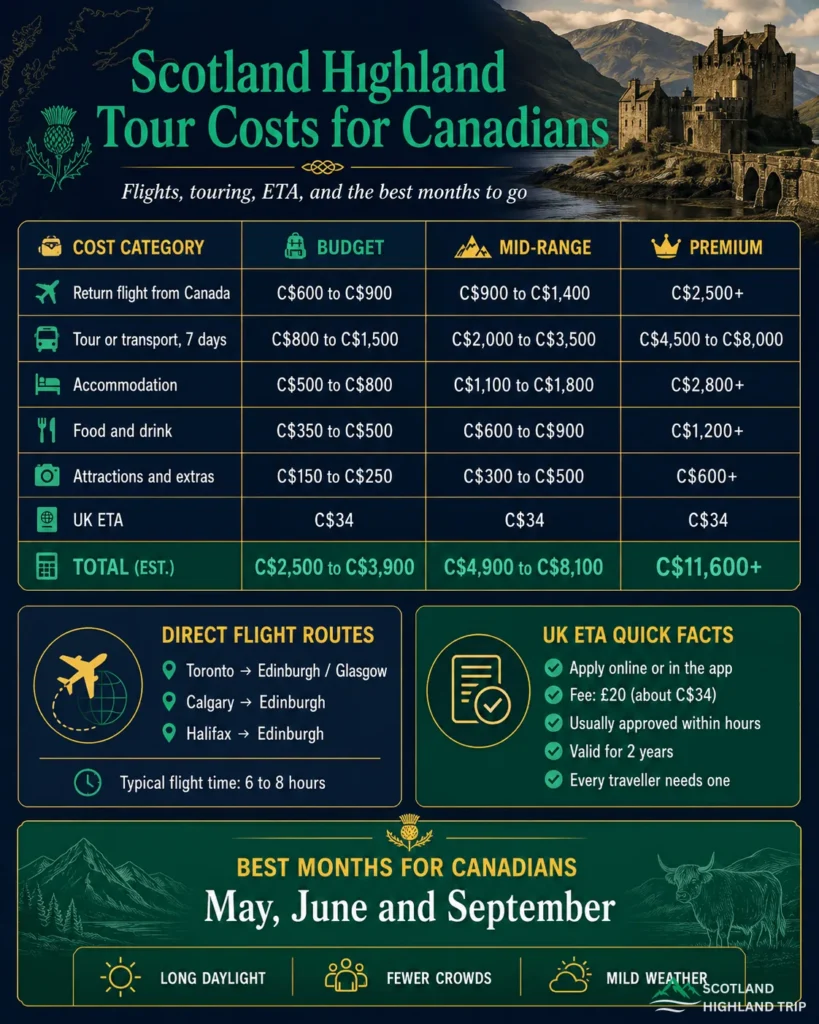
A 7 day Highland tour costs most Canadians C3,500toC6,000 per person all in, covering flights, a mid range tour, food, and extras. Budget travellers can manage C2,500.PrivatetourswithupscalehotelsrunC8,000 or more per person.
Sticker shock is real when the pound is involved, so here are realistic numbers for a 7 day trip, per person, assuming double occupancy:
| Expense | Budget (CAD) | Mid Range (CAD) | Premium (CAD) |
| Return flight from Canada | $600 to $900 | $900 to $1,400 | $2,500+ (business) |
| Tour or transport, 7 days | $800 to $1,500 | $2,000 to $3,500 | $4,500 to $8,000 |
| Accommodation (if not included) | $500 to $800 | $1,100 to $1,800 | $2,800+ |
| Food and drink | $350 to $500 | $600 to $900 | $1,200+ |
| Attractions and extras | $150 to $250 | $300 to $500 | $600+ |
| UK ETA | $34 | $34 | $34 |
| Realistic total | $2,500 to $3,900 | $4,900 to $8,100 | $11,600+ |
A few money notes from experience. Scotland uses the pound sterling, and one pound has hovered around C1.80toC1.90 in recent years, so mentally doubling UK prices gets you close in Canadian dollars. Tap payment works everywhere, including tiny island cafés, so skip the big cash withdrawal. Tipping runs about 10 percent in restaurants, far lighter than Canadian norms, and nobody tips at the pub bar.
Whisky lovers, budget separately. Distillery tours run £15 to £50, but the shop afterwards is where the damage happens. The Inverness whisky tours guide covers tastings from casual to serious, including options reachable without a car.
Book six to nine months ahead for July and August travel. Not kidding. Skye accommodation for peak summer is functionally gone by March.
When Should Canadians Visit the Highlands?
May, June, and September are the best months for Canadians: long daylight, mild weather, fewer crowds, and lower prices than July and August. Winter offers snow dusted mountains, possible northern lights, and the year’s best deals for those who pack properly.
Quick seasonal reality check, because the Highlands don’t do predictable weather in any month:
- May and June bring up to 18 hours of daylight, wildflowers, and the fewest midges. My personal pick. June daylight alone changes what you can fit into a day.
- July and August are warmest and busiest, with Highland Games across the region. Midges peak in the west. Book everything far ahead.
- September and October deliver autumn gold in the glens, stag rutting season, and thinner crowds. Photographers, this is your window.
- November through March means short days but real magic: snow on the Munros, cosy pubs with fires, aurora chances on clear northern nights, and prices at their annual floor. The Highlands winter trip guide covers what actually stays open.
Coming from a country where minus 30 is small talk, Canadians handle Highland winters better than almost any other visitors. A damp 3 degrees with wind is its own kind of cold, though. Respect the layering.
For a fuller month by month breakdown, the guide on the best time to visit the Scottish Highlands goes season by season.
What Should Canadians Pack and Sort Before Flying Out?
Canadians should pack waterproof layers rather than heavy insulation, sort their UK ETA and travel medical insurance early, bring a Type G plug adapter, and confirm their phone plan covers the UK. Rain gear matters in every month, including July.
The packing list is shorter than you’d think, but a few items are non-negotiable:
- A genuinely waterproof jacket. Not water resistant. Waterproof. Highland rain arrives sideways and without appointment, then leaves five minutes later.
- Layers, not bulk. Think Vancouver in November, not Winnipeg in January. Merino base layers, a fleece, and that rain shell handle almost everything.
- Broken in walking shoes with grip. Castle stairs, boggy trails, and cobbles are the daily terrain.
- Type G adapter for UK’s chunky three pin plugs. Voltage is 230V, and modern Canadian electronics handle it fine.
- Midge repellent for May through September in the west. Smidge is the local brand everyone swears by, and you can buy it there.
- A day pack that fits the jacket, water, and camera. You’ll carry it everywhere.
Before departure, three admin items: ETA approved, travel medical insurance purchased, and your bank notified so a Portree card tap doesn’t trigger a fraud freeze. If ancestry research is part of your trip, dig out family records before you fly. Knowing your ancestor’s parish or clan turns Culloden and the clan museums from interesting into unforgettable, and it’s the kind of homework you cannot do from a Skye B&B with one bar of signal.
Castles deserve a plan too. There are far more than any single trip can hold, so pick your hit list from the top castles in the Highlands rather than improvising. Eilean Donan and Urquhart make almost every route; the rest depend on your direction of travel.
Frequently Asked Questions
How many days do Canadians need for a Scotland Highland tour?
Seven days is the practical minimum for a satisfying Highland tour covering Inverness, Loch Ness, Skye, and Glencoe. Ten days lets you add the North Coast 500 or extra Edinburgh time. With under five days, base in Inverness and take day tours instead of touring point to point.
Do Canadians need a visa to visit Scotland?
No visa, but yes to the UK ETA. Canadian citizens are visa exempt for visits up to six months, and since February 2026 every traveller needs an approved £20 Electronic Travel Authorisation before boarding. Apply through the official gov.uk channel; approval usually takes hours.
Can Canadians drive in Scotland with a Canadian licence?
Yes. A valid Canadian provincial licence covers you for up to 12 months, no international permit needed. The real adjustments are driving on the left from the right hand seat, roundabouts, and single track roads with passing places. Book an automatic early because they sell out.
Is a Highland tour worth it for Canadians without Scottish ancestry?
Absolutely. The scenery, castles, whisky, and film locations stand entirely on their own. Ancestry adds a personal layer for the roughly 5 million Canadians with Scottish roots, but plenty of visitors with zero Scottish blood rank the Highlands among their favourite trips anywhere.
What is the cheapest way for Canadians to tour the Highlands?
Fly shoulder season on a direct WestJet or Air Transat deal, join a small group tour with hostel grade accommodation, and self-cater some meals. Done that way, a week can come in around C$2,500 all inclusive. Winter travel drops costs further if short daylight doesn’t bother you.
Are the Highlands safe for solo Canadian travellers?
Very. Scotland ranks among the safest destinations for solo travel, and small group tours make meeting people effortless. The genuine risks are outdoor ones: fast changing mountain weather and remote roads. Tell someone your hiking plans and carry layers, exactly as you would in the Canadian backcountry.