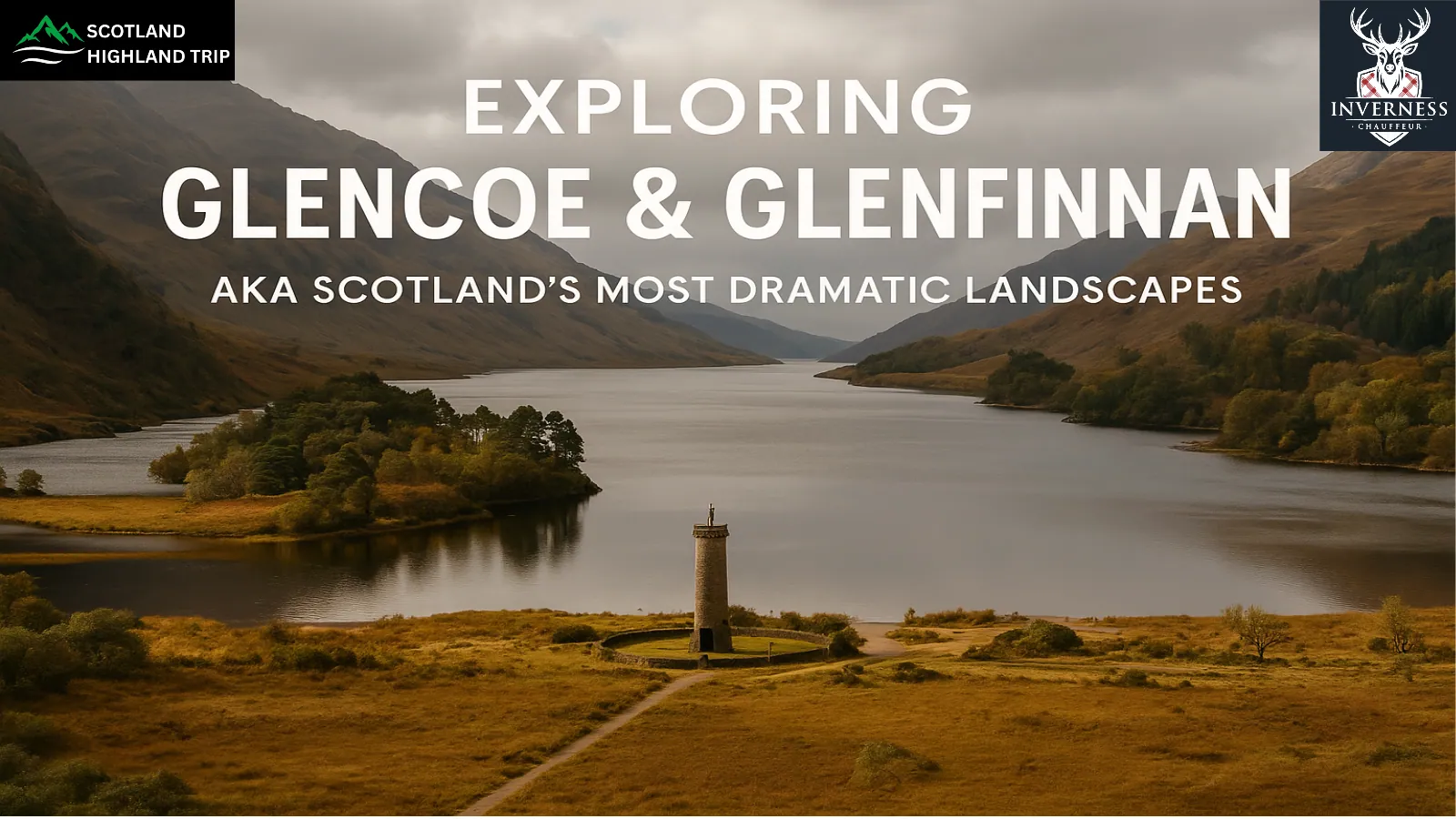
To those searching for a purely raw identity of Scotland, you must visit its ancient, dramatic landscapes. It is more than just ticking off postcard sites; it’s about feeling the weight of history in the mist and wild of the land itself. Bound by a single glen and a shared past, two places offer this absolute experience: Glencoe and Glenfinnan.
Glencoe is a valley carved by long-running glaciers, where its peaks tell a tragic story as old as its rocks. A short drive west from this beauty is Glenfinnan. It is a quieter, water-edge stage where history and fantasy collide at the famous viaduct. Together they form the emotional and scenic core of the West Highlands. Here is your guide to exploring the vast landscapes of Glencoe and Glenfinnan.
Jump toSection
Glencoe: A Landscape Forged in Ice and Blood

The Drive In
The way forward to Glencoe is literally a transition into another world. As you cross the flatlands near Fort William, the land begins to fold and rise. After about 5 miles, you’ll reach Buachaille Etive Mor, the “Great Shepherd of Etive”, at the glen’s eastern entrance. This perfect pyramidal peak is Scotland’s most photographed mountain. It’s your first stop to experience the views ahead.
Driving the A82 through the glen is an experience in itself. The road is laid like a ribbon between the Three Sisters of Glencoe and the winding River Coe. Here you would step out at the marked viewpoints for the amazing view of these mighty ridges. A relaxed walk around the place just adds to the experience. In tourist season, you can also listen to bagpipers playing Celtic or Scottish folk music. This landscape surrounds you with its silent thousand-foot cliffs and the cool rushing wind.
The Shadow of the Past: The Glencoe Massacre
This breathtaking beauty of Glencoe holds a dark secret. The silence you’ll feel there is not just about the scale; it holds the horrific secrets of history. In the early hours of February 13, 1692, a terrific event unfolded here that is remembered by the title of the Massacre of Glencoe.
Government soldiers, who had been billeted with the Clan MacDonald for nearly two weeks as guests, turned on their hosts. An estimated 30-38 men, women, and children were killed for their chieftain’s delayed pledge of allegiance to the new monarchs. The betrayal of hospitality, a sacred Highland code, made the atrocity infamous. As you look up at the steep sides of the glen, imagine families fleeing into that snow-bound wilderness, pursued by those they had fed and sheltered.
You should definitely stop by the Glencoe Visitor Centre run by the National Trust for Scotland to learn more about the geological and ecological affairs of the landscapes.
Best Hikes In The Area
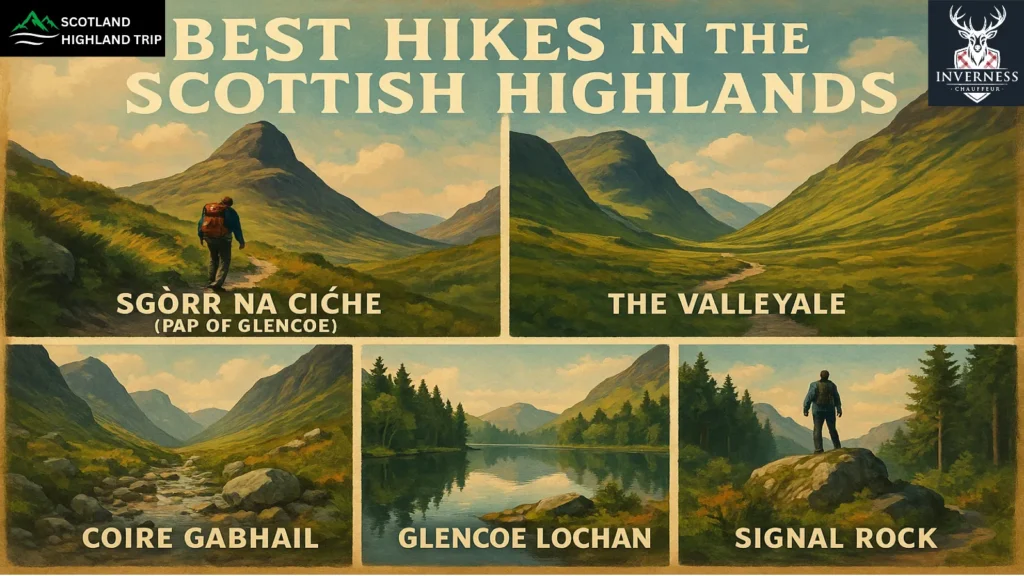
To have an epic experience of Glencoe, you should make a stop and take a walk around. There are options for everyone, from gentle lochside strollers to epic mountain challengers.
- If you want a challenge, try the Sgòrr na Cìch, also famously known as Pap of Glencoe. This 742m peak offers perhaps the finest 360° view in the area. The name, deriving from Gaelic for “Peak of the Breast”, hints at its distinctive shape. The hike is a proper challenge, a steep, relentless climb on a rough path. It takes about four to five hours, but only opt for clear, dry weather. The final step of your hike leads you to a panoramic sprawl of Loch Lynne, Ben Nevis and the entire Glencoe massif.
- The Lost Valley, named Coire Gabhail, is Glencoe’s most iconic walk. There is a path that climbs from the Glen’s floor into a hidden hanging valley where legends say the McDonald’s clan hid stolen cattle. The route involves scrambling up a rocky gorge that opens into a serene valley encircled by towering cliffs. Hidden away from the major path, it’s a great spot to walk.
- Just outside the village of Glencoe, there is this peaceful woodland loop called Glencoe Lochan that was created in the 19th century by a homesick Canadian. It’s a flat, easy walk with beautiful reflections of the surrounding hills. It’s perfect for families or for leg stretch after a long drive.
- If the popular trails feel too busy or if you crave a quieter Communion, with the Glen’s pine-scented air, seek out the path to Signal Rock. The walk from the Clachaig Inn through the ancient An Torr Woodland feels like a fairy tale affair. The dense canopy of oak and birch trees filters the light through them that falls on the forest floor which is a carpet of moss and fern. The rock itself, nestled in the trees, is traditionally thought to be where the signal was given to begin the massacre. It’s a strangely peaceful spot for such a dark purpose, offering a secluded, dappled light perspective on a glen’s history. This 45-minute loop is less about panoramic payoff and more about atmospheric immersion.
Where to Eat in Glencoe
A visit to Glencoe isn’t complete without a stop at the Clachaig Inn. This legendary pub, nestled under the crags, is the social heart of the outdoor community. Its walls are lined with ever-growing memorabilia, and its atmosphere is wonderfully warm. Order a pint of Ossian or try something from the nearby Glencoe Brewery and relax by the fire. It is the perfect relaxing end of the day in the mountains.
There are other options than the Classic Inn. Glencoe Cafe in the village is one of them. It’s a hub for cyclists, climbers and locals. Serving seriously good coffee and scones, their full Scottish breakfast is a masterpiece. For a special overnight stay, look for a family-run B&B in the nearby village of Ballachulish. Waking up to a view of Loch Leven from your window, followed by a breakfast featuring homemade jam, adds a fresh start to the day.
Glenfinnan: Where History Meets Hollywood
The Iconic Curve: Glenfinnan Viaduct
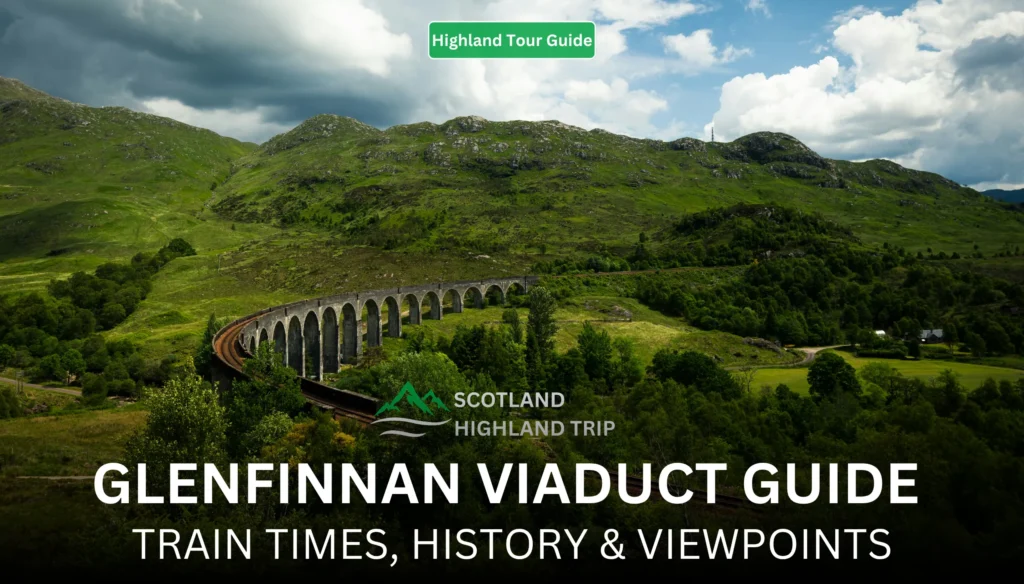
A 30-minute drive West from Glencoe transports you from a valley of tragedy to a lochside of drama and fantasy. The Glenfinnan Viaduct is a masterpiece of both engineering and cinematography. This 21-arch concrete viaduct, built in 1901, curves across the Glen, a sweeping grey ribbon against the green hills.
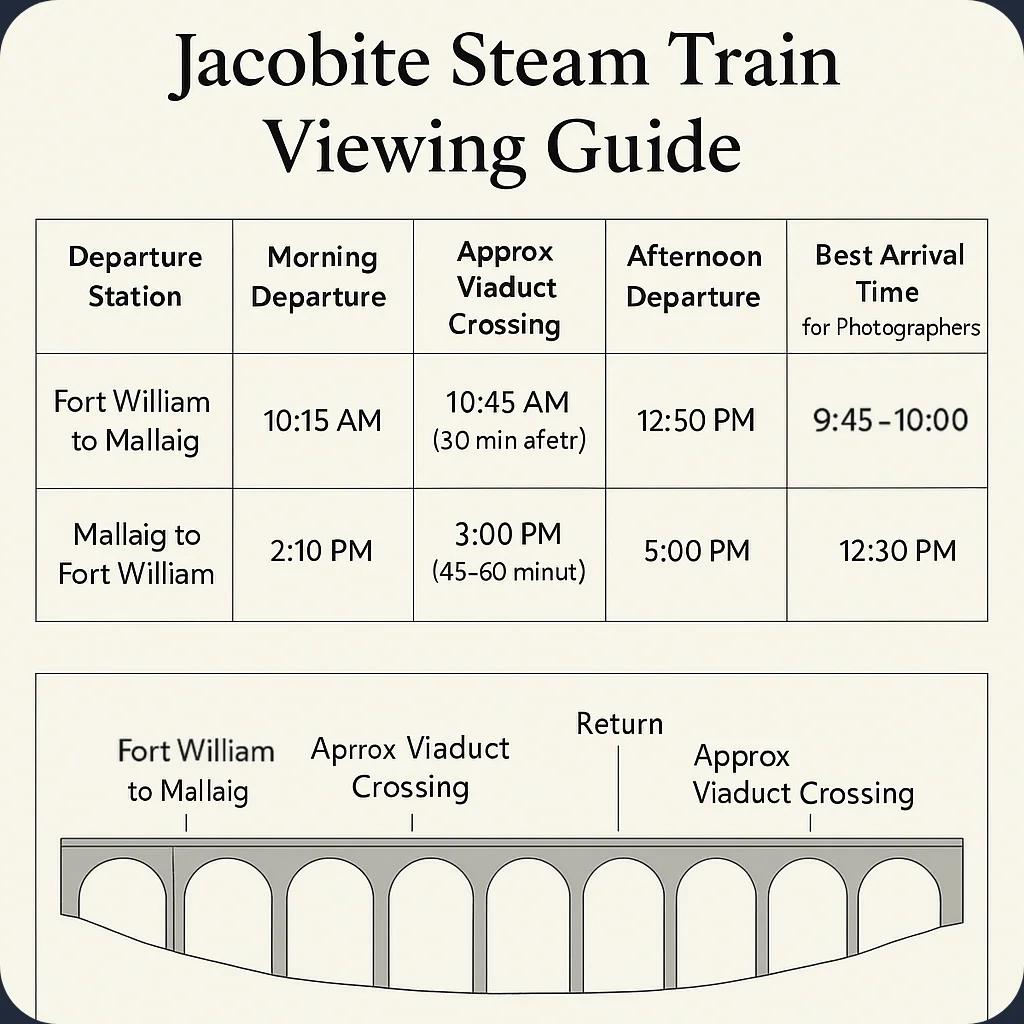
For many visitors, its magic is tied to Harry Potter. This is the bridge where the Hogwarts Express crosses in the film. To see the Jacobite steam train, often called the Harry Potter train, chugging across billowing white smoke is a truly magical sight. The train runs from Fort William to Mallaig, passing over the viaduct twice daily in the summer season. The morning service typically crosses between 10:45 to 11:00, and the afternoon between 13:20 to 13:35.
- The Viewpoint:
To catch the shot that every tourist of Glenfinnan wants, park your car at the Glenfinnan Visitor Centre parking area, preferably arrive early, as it gets extremely busy. Follow the path up the hill behind the visitor centre that takes about 10 to 15 minutes. For the best side photo of the train crossing the central arcs, aim to be in place at least 30 minutes before the scheduled pass. It gets crowded, but waiting for the train with everyone else is actually quite fun.
- Beyond the train: Loch Sheil and the Jacobite monument.
While the Viaduct grabs the headlines, the setting is equally stunning. It expands along the head of Loch Shiel, a long, slender freshwater loch that stretches into remote wilderness. On its shoreline stands the Glenfinnan Monument.
Erected in 1815, this 18-meter tower is topped by a statue of a lone Highlander. It commemorates the spot where, on 19 August 1745, Bonnie Prince Charlie raised his standard, marking the beginning of the doomed Jacobite Rising. You can climb the narrow spiral stair inside the monument to stand beside the statue for a breathtaking panorama of the large hill, the viaduct, and the surrounding mountains. Make sure to capture the moments in your camera.
The visitor centre here excellently tells the dual stories, the real gritty history of the 1745 uprising, and the cinematic magic of Harry Potter. It’s a fascinating juxtaposition.
- A Moment of Peace
After the train has passed and the crowds have dissipated, take an extra minute for your private moment to walk down to the quiet shores of Loch Shiel. Look back at the now still viaduct, its grandeur, permanent. You have witnessed a spectacle, but you have also found a place of absolute calm.
Crafting your own Highland Journey
How to travel and when to visit
- The only practical way to explore Glencoe and Glenfinnan at your own pace is by car. The freedom to stop at every breathtaking viewpoint and manage your own schedule has its own perks. Both are located on the A82/A830 route, easily accessible from Fort William, about 20 to 30 minutes or Glasgow, about 2.5 hours.
- The summer months, May to September, offer the longest stays and the best chance of good hiking weather. However, this is also the peak tourist season. For a balance of decent weather and fewer crowds, aim for late spring, that is, May/June or early autumn, as in September. The landscape is stunning in winter too; there is something extra mesmerising about seeing the peaks covered in white caps and cool, whistling winds, but be prepared for severe, changeable weather and very short days. Some roads and trails may be hazardous or even closed.
Suggested itinerary of Glencoe and Glenfinnan
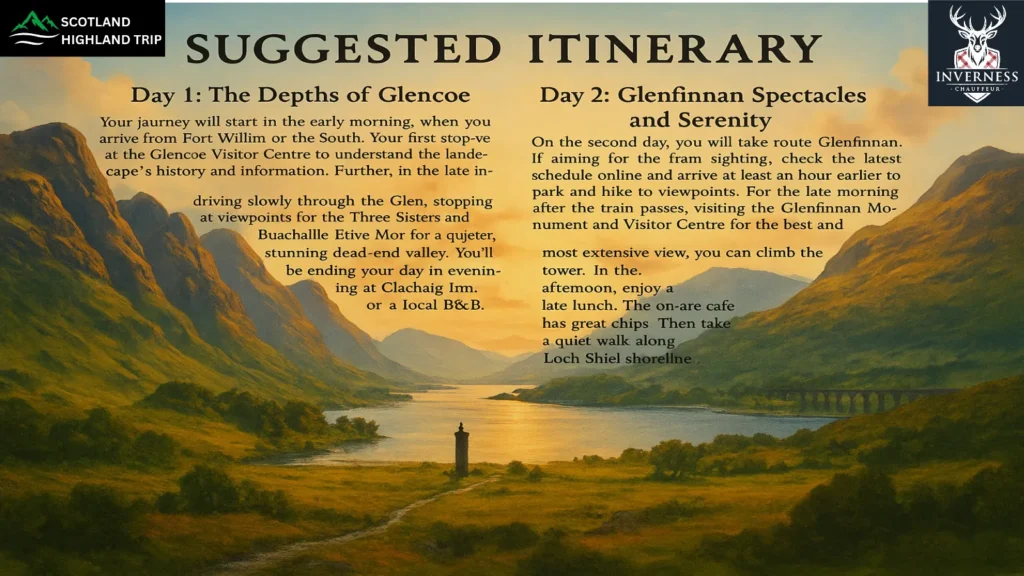
Day 1: The Depths of Glencoe
Your journey will start in the early morning, when you arrive from Fort William or the South. Your first stop will be at the Glencoe Visitor Centre to understand the landscape’s history and information. Further, in the late morning, you will be embarking on a hike, choose the Lost Valley, or a moderately history-filled adventure or the Pap of Glencoe for a full morning’s challenge.
In the afternoon, you will be driving slowly through the Glen, stopping at viewpoints for the Three Sisters and Buachaille Etive Mòr. You can take the minor road. Into the Glen Etive for a quieter, stunning dead-end valley. You’ll be ending your day in the evening with dinner, drinks and well-earned rest at the Clachaig Inn or a local B&B.
Day 2: Glenfinnan Spectacles and Serenity
On the second day, you will take the route to Glenfinnan. If aiming for the train sighting, check the latest schedule online and arrive at least an hour earlier to park and hike the viewpoints. For the late morning after the train passes, you can visit the Glenfinnan Monument and Visitor Centre.
For the best and most extensive view, you can climb the tower. In the afternoon, enjoy a late lunch. The on-site cafe has great chips. Then take a quiet walk along the Loch Shiel shoreline. Consider a short drive further West to the stunning silver sands of Morar or the fishing port of Malliag. Your day will end along with your trip in the evening, where you will return to your accommodation, or you can continue your journey West, to the Isle of Skye.
What to Pack And Remember
- Clothing: Scottish weather is famously changeable, pack layers of clothing, including a waterproof and windproof jacket. Even in summer, sturdy, worn-in hiking boots are non-negotiable for any walk.
- Respect: This is a working wild landscape. Follow the Scottish Outdoor Access code, take all the litter back with you, close gates behind yourself, keep your dogs under control and park considerately of the locals.
- Mindset: Slow drive and do not rush. The magic is in the moments between the stops, the light shifting on the mountain, the smell of peat in the air and the sudden appearance of a red deer on a hillside.
More Than a Scenic Drive
Glencoe and Glenfinnan are not just points on a map; they are places that will genuinely stay with you long after you leave. In Glencoe, you are walking through a magnificent raw landscape forever marked by history and betrayal. It reminds you of the cruelty and the resilience woven into these hills. Meanwhile, at Glenfinnan, human engineering and film magic meet the timeless beauty of the Loch. They offer a complete Highland experience with beauty, deep history and a touch of modern cinema. Come ready to be impressed not just by the views, but by the powerful, unforgettable spirit of this part of Scotland. It is a promise that the heart of the highlands is waiting for you.

Emma is a solo traveler and freelance travel writer from New Zealand who spent three weeks exploring the Scottish Highlands. With a deep appreciation for history and landscapes, she booked a series of day tours and a private chauffeur journey with Scotland Highland Trip. From Loch Ness to the Cairngorms, she documented her experience through vivid blog posts and drone footage.