

Rain rattles against the windscreen outside Inverness. The hills vanish, and the grand scenic plan suddenly looks rather optimistic. Knowing what to do in the Highlands when it rains saves the day. The best alternative is not to sit in a café until closing time.
Highland rain is not a rare interruption. Met Office climate mapping covers the years 1991 to 2020. It shows that observation sites in the Scottish Highlands can receive more than four metres of rain in a year. A workable tour needs indoor anchors and short transfers. One rule matters: scenery is optional when safety is not.
The plan starts in Inverness. It uses Culloden and the city as indoor anchors, then adds Loch Ness or whisky when the forecast allows. You still get Highland history and local flavour. Wet moorland need not become a test of character.
Jump to Section
What is the best one-day Highland rain itinerary?
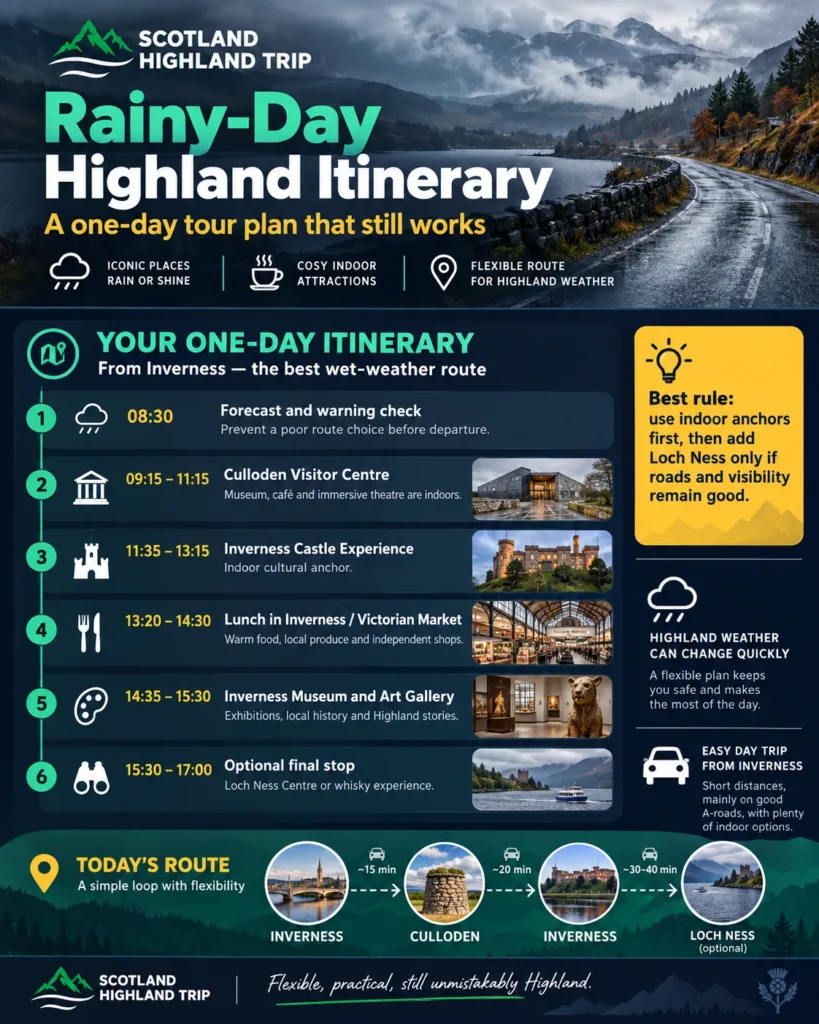
The most reliable rain-day route starts at Culloden Visitor Centre. It returns to central Inverness for the Castle Experience and museum. Add Loch Ness or a distillery only if roads and visibility remain good. Short transfers keep the plan flexible.
| Time | Main stop | Why it works in rain | Wet-weather fallback |
|---|---|---|---|
| 08:30 | Forecast and warning check | Prevents a poor route choice before departure | Stay in Inverness if warnings affect roads |
| 09:15 to 11:15 | Culloden Visitor Centre | Museum, artefacts, café and immersive theatre are indoors | Skip the exposed battlefield loop |
| 11:35 to 13:15 | Inverness Castle Experience | A substantial indoor cultural attraction with food on site | Book a later slot if traffic slows the morning |
| 13:20 to 14:30 | Lunch and city centre | Covered choices sit close together | Use the Victorian Market food hall |
| 14:35 to 15:30 | Inverness Museum and Art Gallery | Free indoor history and art | Choose Leakey’s Bookshop on Sunday or Monday |
| 15:30 to 17:00 | Loch Ness Centre or whisky experience | Adds a Highland signature without a long outdoor walk | Remain in Inverness for gardens, cinema or theatre |
Start from Inverness as your Highland base. The city gives you several exits from the plan, which matters more than squeezing in another viewpoint.
How should you decide whether the tour can run?
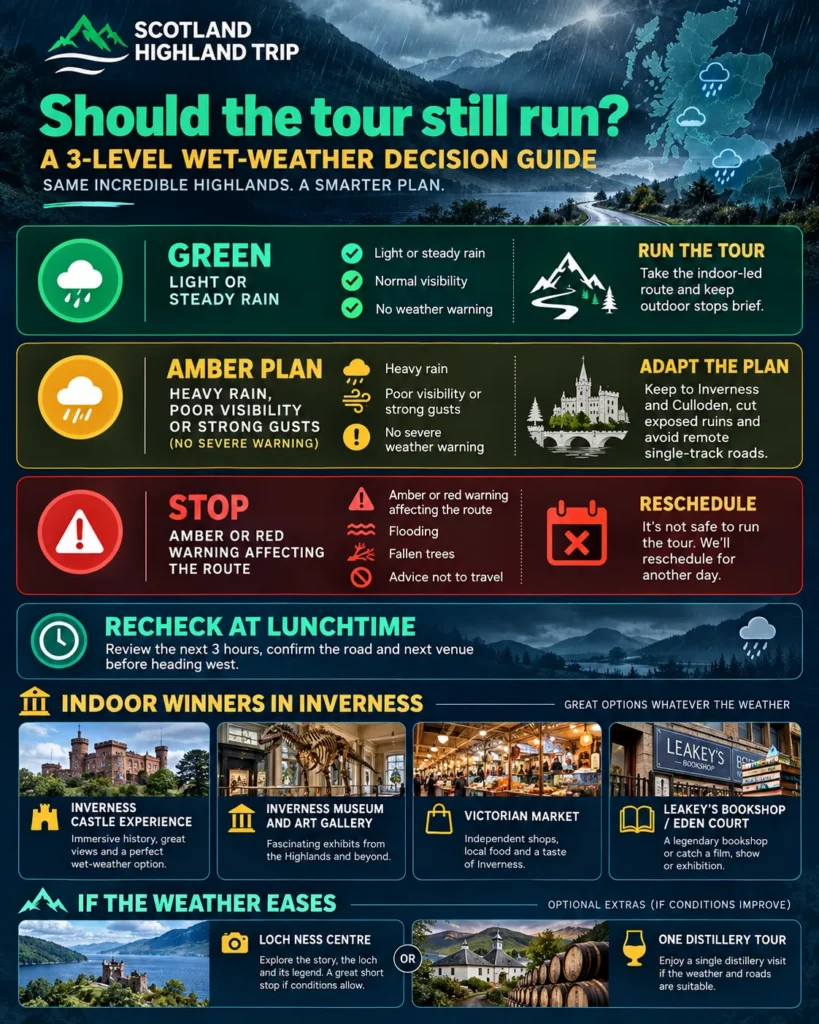
Check the Met Office warning map, hourly rain, wind gusts and local road reports before leaving. Light rain calls for better clothing. Persistent rain calls for indoor stops. Amber or red warnings mean changing the route or postponing travel.
Use a three-level weather test
- Green: Light or steady rain, normal visibility and no warning. Run the full indoor-led route, with brief outdoor stops if paths are sound.
- Amber plan: Heavy rain, poor visibility or strong gusts without a severe local warning. Keep to Inverness and Culloden, cut exposed ruins and avoid remote single-track roads.
- Stop: An amber or red warning affecting the route, flooding, fallen trees or official advice not to travel. Reschedule. A castle ticket is not worth arguing with a storm.
Read the official UK weather warnings. Do not rely on a phone icon. Mountain forecasts also matter if the original plan involved high ground. Rain in town and danger on a ridge are not the same thing.
Recheck at lunchtime
Highland conditions shift across short distances. Review the next three hours after lunch, not only the forecast seen at breakfast. Confirm the road and next venue before committing west.
Why does Culloden work as the first stop?
Culloden Visitor Centre gives a rainy Highland tour real substance. It has artefacts, displays from both sides and a 360-degree battle theatre. The battlefield is exposed, but the indoor museum can fill about two hours without making the visit feel second best.
The Culloden Battlefield visitor centre sits about five miles east of Inverness. Exhibits explain the 1745 Jacobite Rising from both viewpoints, so the visit does more than supply an Outlander backdrop.
National Trust for Scotland recommends around two hours for the museum and battlefield. Check the official Culloden opening times that morning because winter hours and prices can change.
Walk outside only if the rain is manageable and paths are safe. Culloden is a war grave and a place for quiet respect, not a quick dash between clan stones for a photograph.
What can you do indoors in Inverness?
Inverness offers the strongest wet-weather cluster in the Highlands, even in winter. The Castle Experience, museum, Victorian Market, Leakey’s Bookshop and Eden Court sit close together. Choose two or three. Do not race through every doorway.
Spend real time at Inverness Castle Experience
The Inverness Castle Experience tells Highland stories through landscape, people, culture and language. Entry is timed. Advance booking makes sense when half the region has reached the same rainy conclusion.
The attraction opens year-round except Christmas Day. Hours change by season. Its bistro needs no attraction ticket, so the castle remains a useful lunch anchor if entry slots sell out.
Pair the museum with the Victorian Market
Inverness Museum and Art Gallery covers Highland geology, archaeology, Jacobite history and art. Admission is free. It generally opens Tuesday to Saturday and keeps shorter winter hours.
The Victorian Market works for lunch, local shopping and shelter. It is not a full afternoon. Combine it with other things to do in Inverness, such as the tropical glasshouse at Inverness Botanic Gardens, a film at Eden Court or a long browse at Leakey’s.
Can Loch Ness still fit a rainy Highlands tour?
Loch Ness can work in ordinary rain if roads remain clear and visibility is fair. Keep the main stop indoors. Choose the Loch Ness Centre or a confirmed cruise with covered seating. Treat outdoor viewpoints and castle ruins as optional.
Drive west only after the lunchtime check. The route to Loch Ness gives quick water views. The Loch Ness Centre at Drumnadrochit explores the loch’s science, history and mystery indoors.
A cruise may sail in rain. Wind matters more than your schedule. Confirm with the operator before leaving Inverness. Covered seating helps, yet a misted window can reduce the trip to a rather expensive cup of tea.
Urquhart Castle has an indoor visitor centre. Its ruins are outside on sloping ground. Keep it for light rain and decent visibility. In a downpour, save it for another day.
Should you add a whisky distillery on a wet day?
A booked distillery tour is a strong wet-weather addition for most visitors. Production rooms, stories and tastings are mostly indoors. Pick one that fits the route and confirm the time. Make sure the driver does not drink alcohol.
Uile-bheist keeps you in Inverness, Tomatin suits a southbound day, and Glen Ord works northwest. A Northern Highland whisky route supplies more ideas, but one distillery is plenty here.
Distillery tours use fixed start times. Rain pushes more visitors indoors. Non-drinkers can join many production tours, but check the tasting policy before paying.
What works for families and travellers with limited mobility?
Families and travellers with limited mobility should favour level access, toilets, cafés and bookable entry. Inverness Castle Experience, Culloden Visitor Centre and the museum make good anchors. They beat ruins, muddy paths and long walks between exposed viewpoints.
Build around one major attraction
Children often prefer one immersive stop, lunch and an active option to four museums. Swimming, ice skating, bowling or climbing can rescue the afternoon when historical attention spans have quietly packed up.
Confirm lifts, wheelchairs, drop-off points and accessible toilets with each venue. Keep the vehicle close and avoid cobbled shortcuts. Wet paving can be more troublesome than the rain itself.
What should you pack for a wet Highland day?
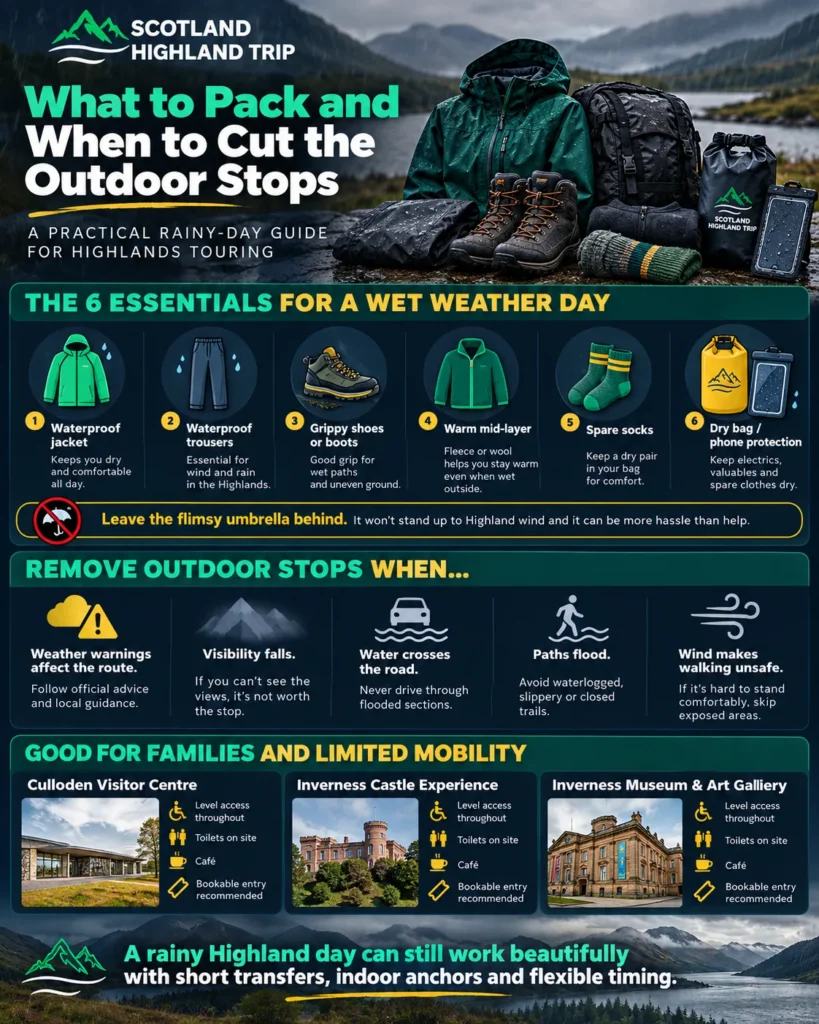
Pack a hooded waterproof shell, waterproof trousers and shoes with good grip. Add warm layers, spare socks and a small dry bag. Leave the flimsy umbrella behind. Highland wind can turn it inside out before the first stop.
- Wear a breathable waterproof jacket with a proper hood.
- Add waterproof overtrousers if any outdoor stop remains in the plan.
- Choose boots or shoes with tread, not smooth city soles.
- Carry spare socks and a warm mid-layer in the vehicle.
- Protect phones, camera gear and paper tickets in a dry bag.
- Bring a small towel for seats, glasses and damp hands.
Keep a full change of clothes in the boot for children. Nobody becomes more interested in Jacobite history while sitting in wet jeans.
When should you remove outdoor stops from the plan?
Remove outdoor stops when warnings affect the route. Do the same if visibility falls, water crosses the road, paths flood or wind makes walking unsafe. Cut mountains, ruins, waterfalls and remote detours first. Stay put if official advice says not to travel.
Persistent rain can raise burns quickly and loosen roadside debris. Never drive through floodwater. On single-track roads, use passing places correctly and turn back early if conditions deteriorate.
Short outdoor pauses are reasonable in light rain. A ten-minute loch view can feel wonderfully Highland. A soaked hour on an exposed ruin rarely improves with stubbornness.
What do travellers ask about Highland rain?
Travellers ask whether rain cancels tours, which attractions stay open and whether Loch Ness remains worthwhile on the day. A flexible route can handle ordinary rain. Warnings, wind, floods and venue closures always take priority.
Frequently asked questions
Does rain cancel Highland tours?
Ordinary rain usually does not cancel a Highland tour. Operators may change the route when wind, flooding, snow or official weather warnings create unsafe conditions.
Is Loch Ness worth visiting in the rain?
Yes, Loch Ness can look atmospheric in rain, but poor visibility weakens the view. Pair it with the indoor Loch Ness Centre and confirm any cruise before travelling.
Can I visit Culloden without walking the battlefield?
Yes. The ticketed visitor centre has museum displays, artefacts and an immersive theatre, so you can understand the battle without completing the exposed outdoor loop.
What can families do indoors in Inverness?
Families can use Inverness Castle Experience, the museum, Botanic Gardens glasshouses, Eden Court cinema, swimming, ice skating, bowling or indoor climbing. Check session times before arriving.
Is Urquhart Castle indoors?
No. Urquhart Castle is an outdoor ruin with an indoor visitor centre. Save it for light rain, sound footing and enough visibility to appreciate the setting.
Should I drive in an amber weather warning?
Avoid assuming an amber warning is safe for sightseeing. Read the affected area and impacts, follow official travel advice, and change or postpone the route when necessary.

Emma is a solo traveler and freelance travel writer from New Zealand who spent three weeks exploring the Scottish Highlands. With a deep appreciation for history and landscapes, she booked a series of day tours and a private chauffeur journey with Scotland Highland Trip. From Loch Ness to the Cairngorms, she documented her experience through vivid blog posts and drone footage.