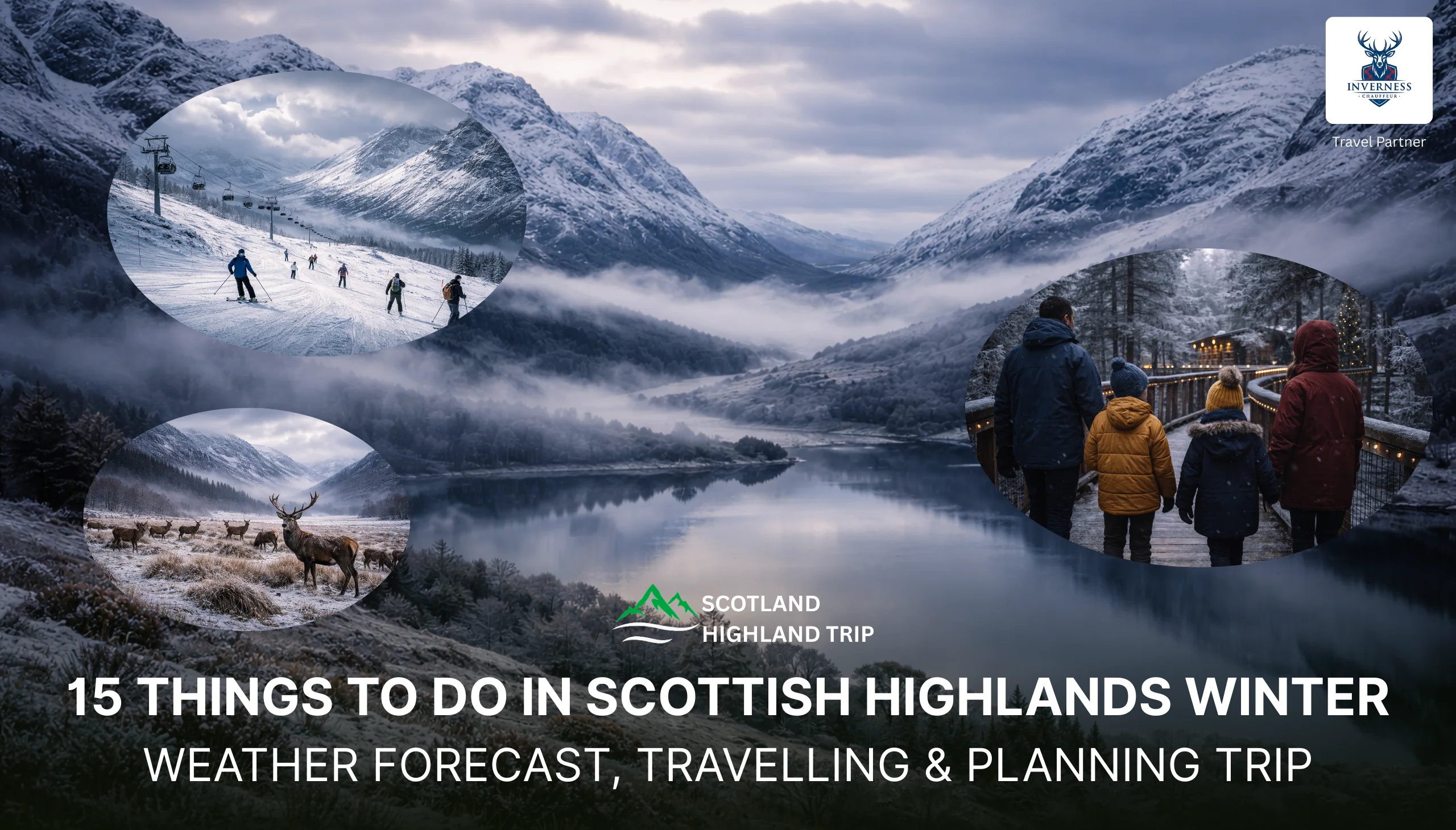
Travelling to the Scottish Highlands in winter rewards you with snow‑dusted mountains, peaceful lochs and ancient glens without the crowds. Temperatures hover around 4–5 °C in December to February with colder conditions at altitude, and daylight lasts 7 to 9 hours, so careful planning is essential.
Short days and variable weather mean you must allow extra time for driving, pack layers and waterproof gear and embrace the magic of cosy pubs and festive traditions. This guide brings together 15 unforgettable winter experiences, weather advice, travel tips and FAQs to help you enjoy the Highlands like a local.
Pro tip: Winter is considered off‑season from December to early March. Many attractions and accommodations remain open, but check ahead as some close or operate shorter hours. Hogmanay (New Year), Burns Night (25 January) and other festivals add seasonal charm.
Table of Contents
Winter Climate, Weather & Packing List
Weather overview
Scotland highland has a temperate maritime climate; in winter, the Highlands experience cool temperatures, occasional snow and changeable conditions. Average daytime temperatures sit around 5 °C (41 °F), with January and February the coldest months. It snows a handful of times each winter in the towns, but the mountains frequently have snow.
The weather can change quickly from sunshine to sleet. On the coldest nights, mountain glens record temperatures as low as – 14 °C. Daylight lasts just over 7 hours in December and lengthens to about 9 1⁄2 hours by February.
Packing essentials
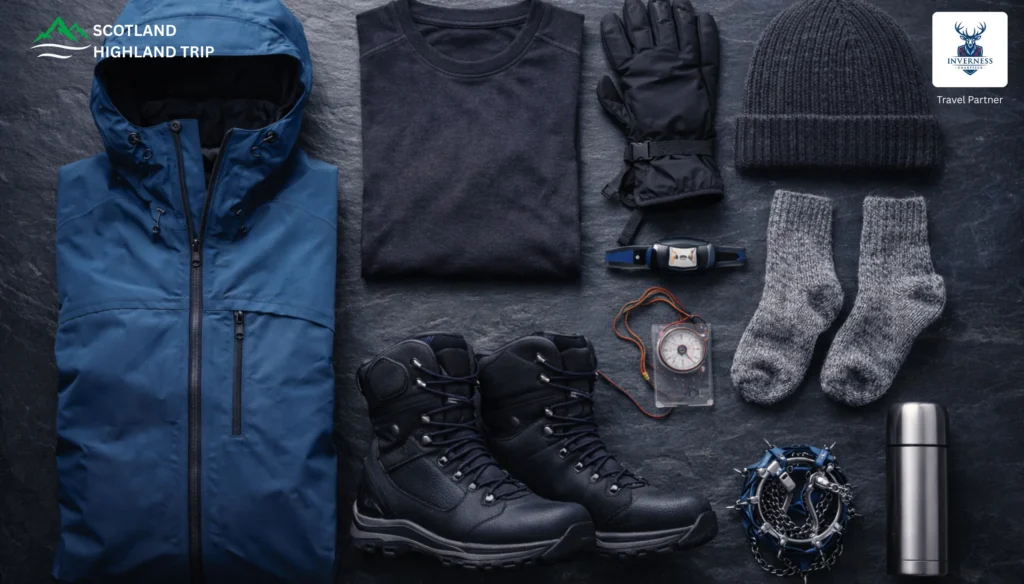
To stay comfortable in the Highlands in winter, pack:
- Waterproof and windproof jacket & trousers: Essential for sudden showers or sleet.
- Multiple light layers: Thermal base layers, fleece and a mid‑layer so you can adjust to changing temperatures.
- Hat, scarf, gloves & warm socks.
- Sturdy waterproof boots with good grip for snow, ice and muddy trails.
- Umbrella and sunglasses/sun cream, winter sun can be bright and reflects off the snow.
- Torch/flashlight for early sunsets and dark walks.
- Microspikes or crampons, if you plan to hike on icy terrain.
Road & travel considerations
Snow and ice occasionally close Highland roads. We warn that conditions can change rapidly and drivers must assess routes themselves. A yellow warning for snow and ice might cover the region, and drifting snow can make some roads impassable. Primary routes are prioritised for gritting, but minor roads may remain untreated. Always check live road conditions before driving and carry blankets, a shovel and food in your car.
Planning Your Winter Trip
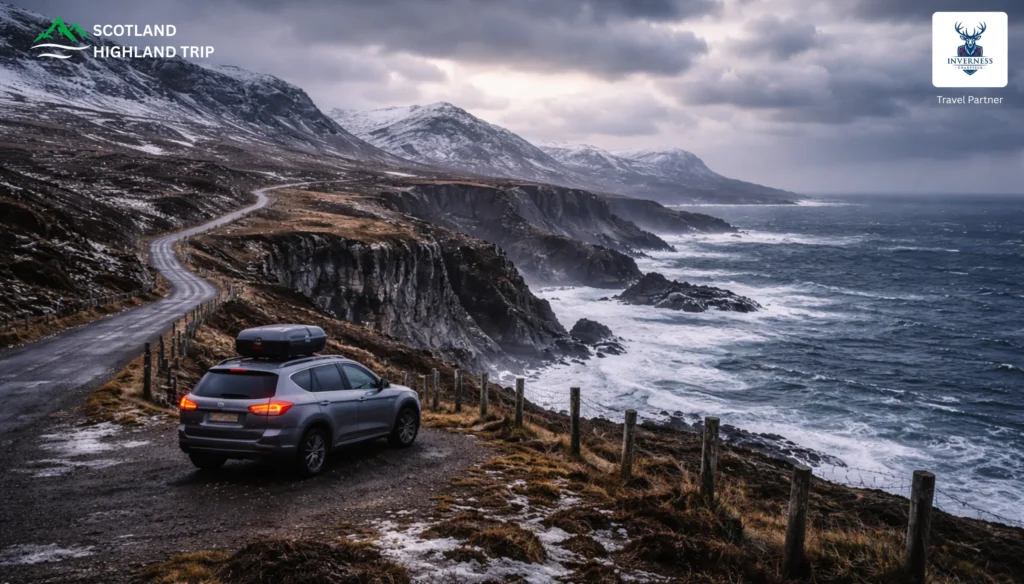
- Base yourself in Inverness or Fort William. These cities provide accommodation, restaurants and easy access to roads like the A82 (running south via Loch Ness to Fort William) and A9 (east coast). Consider staying in a luxury hotel like Ness Walk, whose concierge team can help plan itineraries.
- Hire an appropriate vehicle. In January, many campsites close. A campervan with a heater can still be cosy, but prepare for temperatures as low as –7 °C. For road trips, a 4×4 provides traction on snowy roads.
- Book tours and activities in advance. Winter cruises on Loch Ness operate with limited departures. Whisky distillery tours, guided hikes and ski rentals fill quickly over the holidays.
- Check daylight before planning hikes. Start early to finish before dark; sunrise can be after 8 AM.
15 Best Things To Do in the Scottish Highlands in Winter
1: Cruise Loch Ness & Visit Drumnadrochit
From Inverness, drive 10 minutes south via the A82 to Dochgarroch Lock and board a Loch Ness by Jacobite cruise. These large boats have indoor seating and operate year‑round. Continue south another 15 minutes to Drumnadrochit, where you can learn about the Loch Ness Monster at the Loch Ness Centre, which offers immersive exhibits covering 500 million years of history.
- Highlights: Scenic winter views of Loch Ness; indoor warmth while searching for Nessie.
- Seasonal tip: Dress warmly for the deck; winter cruises offer smaller crowds and atmospheric mist.
2: Admire Urquhart Castle & Inverness Museum
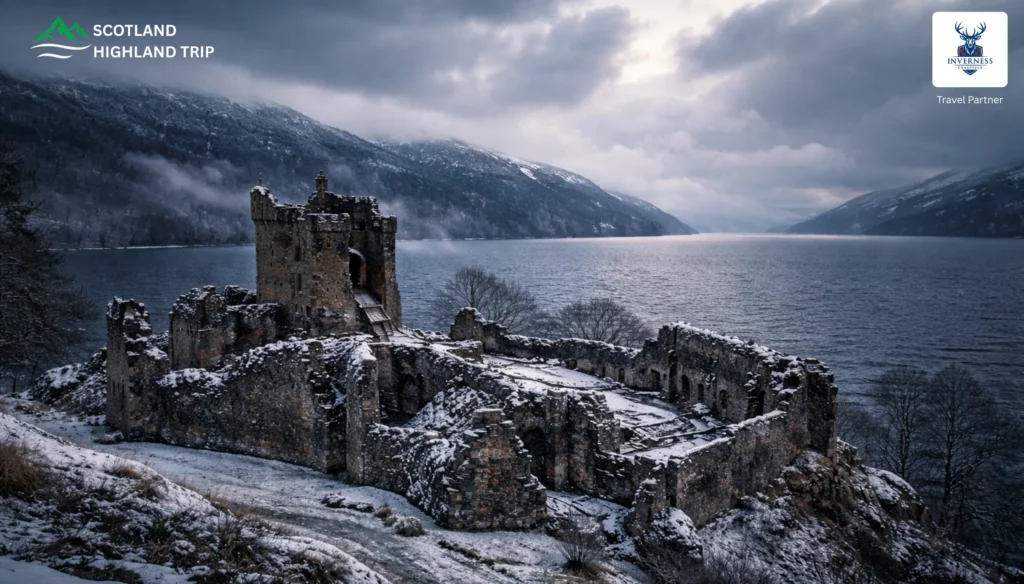
While near Drumnadrochit, take in the romantic ruin of Urquhart Castle on the loch’s shore. In winter, the castle’s silhouette against snow‑capped hills makes for dramatic photos. Back in Inverness, walk along the River Ness to Inverness Museum & Art Gallery (15‑minute stroll across the Ness Bridge). The museum is a perfect indoor escape to learn about Highland history and culture.
3: Stroll the River Ness & View Inverness Castle
Park at your hotel and take a winter stroll along the River Ness towards Inverness Castle. Though the castle is closed for refurbishment until 2025, you can enjoy views of its red sandstone exterior. Finish the day with dinner at your hotel restaurant and catch a show at Eden Court Theatre and Cinema, a 5‑minute walk away, where winter programmes include pantomimes, concerts and films.
4: Join Winter Festivals & Food Events
Winter in Inverness and the Highlands brings lively events:
- Eden Court Christmas Fair (late November): Browse handmade crafts and local foods; free entry from 10 AM–5 PM.
- Inverness & Loch Ness Food and Drink Fortnight (29 Jan–12 Feb): Restaurants and pubs offer special menus and tastings.
- Burns Night (25 January): Celebrate Robert Burns by attending a Burns Supper at a local restaurant or cultural venue.
- Hogmanay & New Year traditions: Watch fireworks in Inverness or join a ceilidh (Scottish dance) at a local hall.
5: Hike Winter Trails in Glen Coe
The dramatic valley of Glen Coe is easily reached via the A82. Long hikes like Buachaille Etive Mòr can be dangerous in winter, so opt for half‑day walks such as Buachaille Etive Beag or Pap of Glencoe, which are relatively straightforward and doable in limited daylight. A winter sunset from the summit outshines the summer equivalent.
6: Walk to Steall Waterfall in Glen Nevis
Near Fort William, drive 20 minutes south‑east into Glen Nevis and follow a 45‑minute trail each way to the Steall Waterfall. In winter, the 105‑metre cascade is at its most dramatic as ice and snow accentuate the rock face. Wear microspikes when icy and allow extra time for the slippery wire bridge.
7: Explore Forested Trails: Allt na Calliche
For a quieter outing, head north of Spean Bridge to Invergarry. The Allt na Calliche trail follows the River Garry through frost‑covered woods; it’s well‑maintained and suitable for all abilities. Mist and waterfalls create a fairy‑tale atmosphere in winter.
8: Search for the Northern Lights & Star Gazing
Thanks to low light pollution, the Highlands offer superb stargazing. On clear winter nights, you can see the Milky Way and occasional displays of the aurora borealis. The best viewing spots are remote places like the Cairngorms, Assynt or the Isle of Skye. Winter visitors may witness the Northern Lights over distant mountains. Check aurora forecasts and wrap up warm; a thermos of hot chocolate helps!
9: Wildlife Watching & Highland Wildlife Park
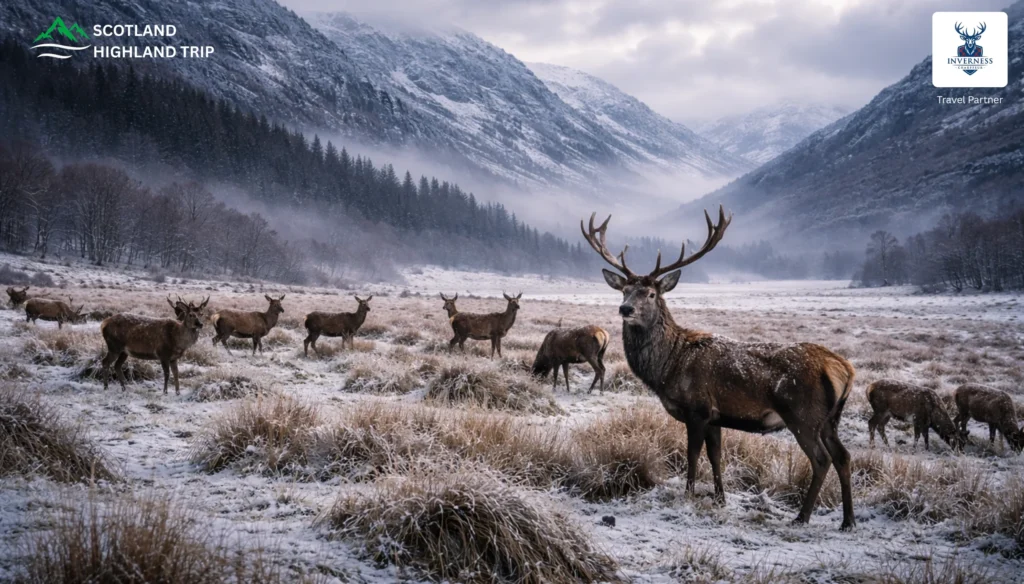
Winter is a great time for wildlife: red deer descend to lower slopes and are easier to spot in quiet glens. Visit Highland Wildlife Park near Kingussie, where you can drive around the reserve and see species such as wolves, lynx, beavers, wild horses, polar bears, Amur tigers and Japanese macaques. Continue exploring on foot through enclosures of Scottish wildcats and red pandas. Nearby, the RSPB Loch Garten reserve offers gentle trails and family activities in winter.
10: Family Fun at Landmark Forest Adventure Park
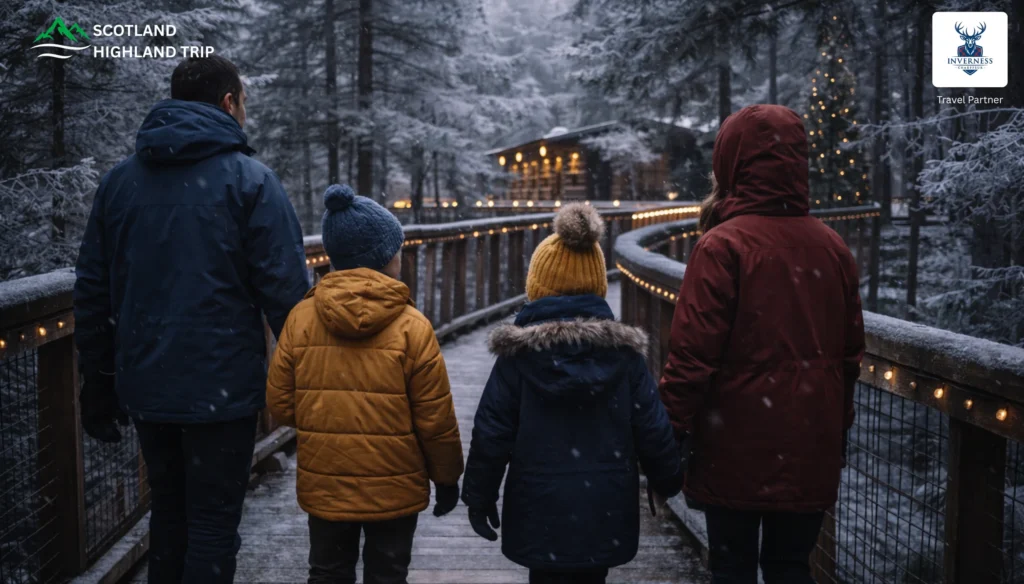
In the village of Carrbridge, the Landmark Forest Adventure Park stays open most of the year and offers three water coasters, aerial treetop courses, the Dinosaur Kingdom and woodland trails. Kids will love the Bamboozeleum with optical puzzles and the Red Squirrel Trail, while parents enjoy hot drinks at the café.
11: Road Trip the North Coast 500
The North Coast 500 (NC500) is Scotland’s answer to Route 66. In winter, this 516‑mile loop becomes an adventurous odyssey across windswept beaches, dramatic cliffs and remote villages. The NC500 features castles, beaches, and gourmet experiences; winter adds invigorating walks on icy beaches followed by a dram of whisky. Drive carefully, some sections are single‑track, and snow or drifting can close roads. Plan shorter days and carry emergency supplies.
12: Tackle Multi‑Day Trails & Hikes
For experienced hikers, the Northern Highlands offer some of the UK’s toughest and most beautiful long‑distance trails. Cape Wrath Trail runs 230 miles from Fort William to Cape Wrath, following the remote west coast through Assynt; you’ll need to wild camp or stay in bothies. Shorter options include the Stac Pollaidh Circuit (2.75-mile loop around the iconic peak) and the Sandwood Bay walk (8-mile return to a remote sandy beach). These hikes are challenging in winter; check weather forecasts, carry full gear, and be prepared for snow and river crossings.
13: Hit the Slopes & Snow Sports
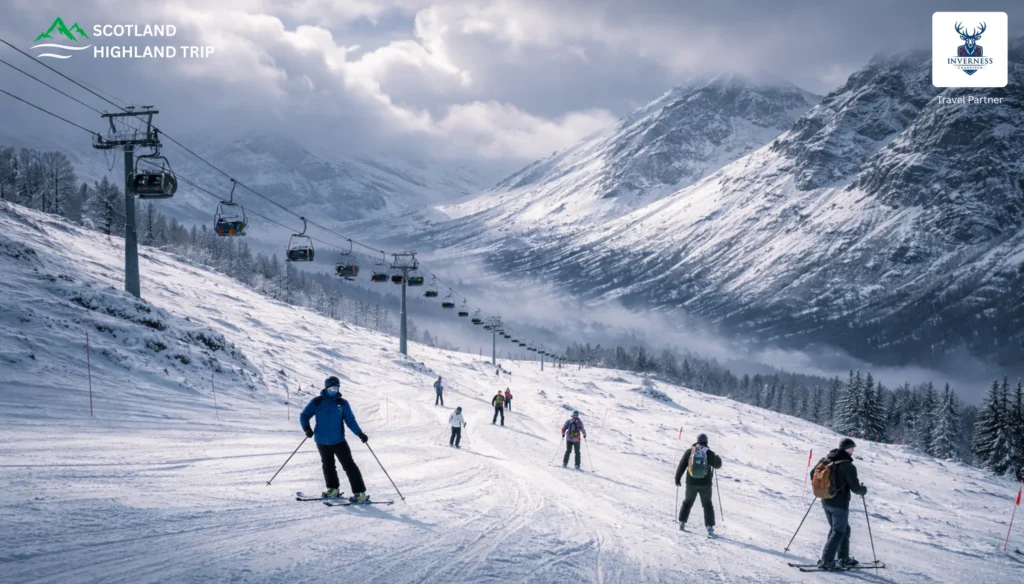
Skiing and snowboarding in Scotland are weather-dependent but thrilling. CairnGorm Mountain near Aviemore, Glencoe Mountain Resort, Glenshee, Nevis Range and The Lecht operate lifts whenever snow allows. Winterhighland’s reports show that lifts open as conditions permit; for example, on 2 January, the Ptarmigan Tow reopened with new snowfall, though cover was thin.
Beginners can enjoy sledging and ski lessons at Glencoe snow-covered dry slope. Always check live snow reports. OnTheSnow lists Highland’s average annual snowfall as 54 cm and publishes snow depths, open trails and weather.
14: Explore Castles & Historic Sites
Many castles and historic attractions stay open all year. Highlights include:
- Eilean Donan Castle: Perched where three lochs meet, one of the most photographed castles and a must‑visit for history lovers.
- Urquhart Castle: Dating to the 13th century, with panoramic views over Loch Ness.
- Ruthven Barracks: Ruins of an 18th‑century barracks on a hill above Kingussie.
- Highland Folk Museum: An open‑air museum in Newtonmore that recreates Highland life from the 1700s to the 1960s.
- Culloden Battlefield Visitor Centre: Near Inverness (not quoted above), where you can learn about the 1746 battle.
Many historic sites offer indoor exhibits, cafés and accessible facilities, making them ideal for a winter day.
15: Warm Up With Whisky & Local Food
No Highland winter trip is complete without sampling Scotland’s culinary delights. Visit local distilleries for whisky and gin tastings; many offer tours year‑round. Try fresh seafood, venison and artisan cheeses at farm shops and restaurants. In Inverness and Fort William, cosy pubs with log fires serve hearty stews and seasonal ales. After a day outdoors, there’s nothing like warming up with a dram of whisky while listening to traditional music.
Frequently Asked Questions
What to do in the Highlands in winter?
Winter in the Highlands offers a mix of outdoor adventures and cosy indoor experiences: cruise Loch Ness, hike shorter trails in Glen Coe or Glen Nevis, search for the Northern Lights, visit wildlife parks, ski at CairnGorm or Glencoe, explore castles and enjoy local festivals. There’s something for every traveller, even on wet or cold days.
How many days do you need for the Highlands?
To sample the Highlands’ highlights, plan at least 3–4 days based in Inverness or Fort William. This allows time for a Loch Ness cruise, a Glen Coe hike and exploration of castles. A week gives flexibility to drive the North Coast 500 and visit remote areas. Multi‑day hikes like the Cape Wrath Trail require 2–3 weeks.
What is the prettiest village in the Scottish Highlands?
Beauty is subjective, but many travellers love Plockton for its palm‑lined harbour and colourful cottages, Cromarty on the Black Isle for Georgian architecture and dolphin spotting, and Ullapool for whitewashed houses and ferry connections to the Outer Hebrides. Winter adds a dusting of snow and tranquillity to these villages.
Best place to live in the Scottish Highlands?
For those considering relocation, Inverness offers the best blend of amenities, transport links and proximity to nature. Fort William appeals to outdoor enthusiasts, while Nairn provides a quieter coastal lifestyle. Smaller communities like Grantown‑on‑Spey offer charm but fewer services. The cost of living is generally higher than the Scottish average due to remoteness and fuel costs, so plan accordingly.
Do people still live in the Scottish Highlands?
Yes. The Highlands’ population is around 235,000, and communities thrive in towns and villages across the region. People work in tourism, agriculture, forestry, energy and the public sector. Remote crofting communities still exist, and there is a growing trend of remote workers moving to the Highlands for lifestyle reasons.
How to move to the Highlands?
Relocating requires planning: researching housing availability, job opportunities and transport links. Winter weather can isolate remote communities, so consider proximity to shops and medical services. Visiting in winter will give you a realistic impression of daily life.
Living in Fort William, Scotland
Fort William is the “Outdoor Capital of the UK”. Residents enjoy direct access to Ben Nevis, Glen Nevis and the Great Glen. Winter brings heavy snowfall at higher elevations and occasional road closures, so a 4×4 vehicle is recommended.
Cost of living in the Scottish Highlands
Costs vary by location but are generally higher for transport and fuel. Housing can be more affordable than in Edinburgh or Glasgow, but remote areas incur higher costs for groceries and heating. Budget extra for winter heating and travel contingencies.
Conclusion
Winter transforms the Scottish Highlands into a serene wonderland of snow‑capped peaks, quiet lochs and cosy villages. From cruising Loch Ness and hiking Glen Coe to wildlife watching and whisky tasting, the Scottish Highlands in winter offer diverse experiences. With careful planning, checking weather forecasts, packing layers and allowing for shorter days, you can enjoy the magic of this season while staying safe. Whether you’re on a short break or a multi‑week expedition, the Highlands welcome you with open arms and a dram of warmth.
Plan Your Winter Adventure
Ready to explore the Highlands in winter? Our travel specialists can craft a tailored itinerary, arrange lodging and tours, and provide up‑to‑date road and weather information. Contact us today to start planning your unforgettable winter getaway.

Emma is a solo traveler and freelance travel writer from New Zealand who spent three weeks exploring the Scottish Highlands. With a deep appreciation for history and landscapes, she booked a series of day tours and a private chauffeur journey with Scotland Highland Trip. From Loch Ness to the Cairngorms, she documented her experience through vivid blog posts and drone footage.