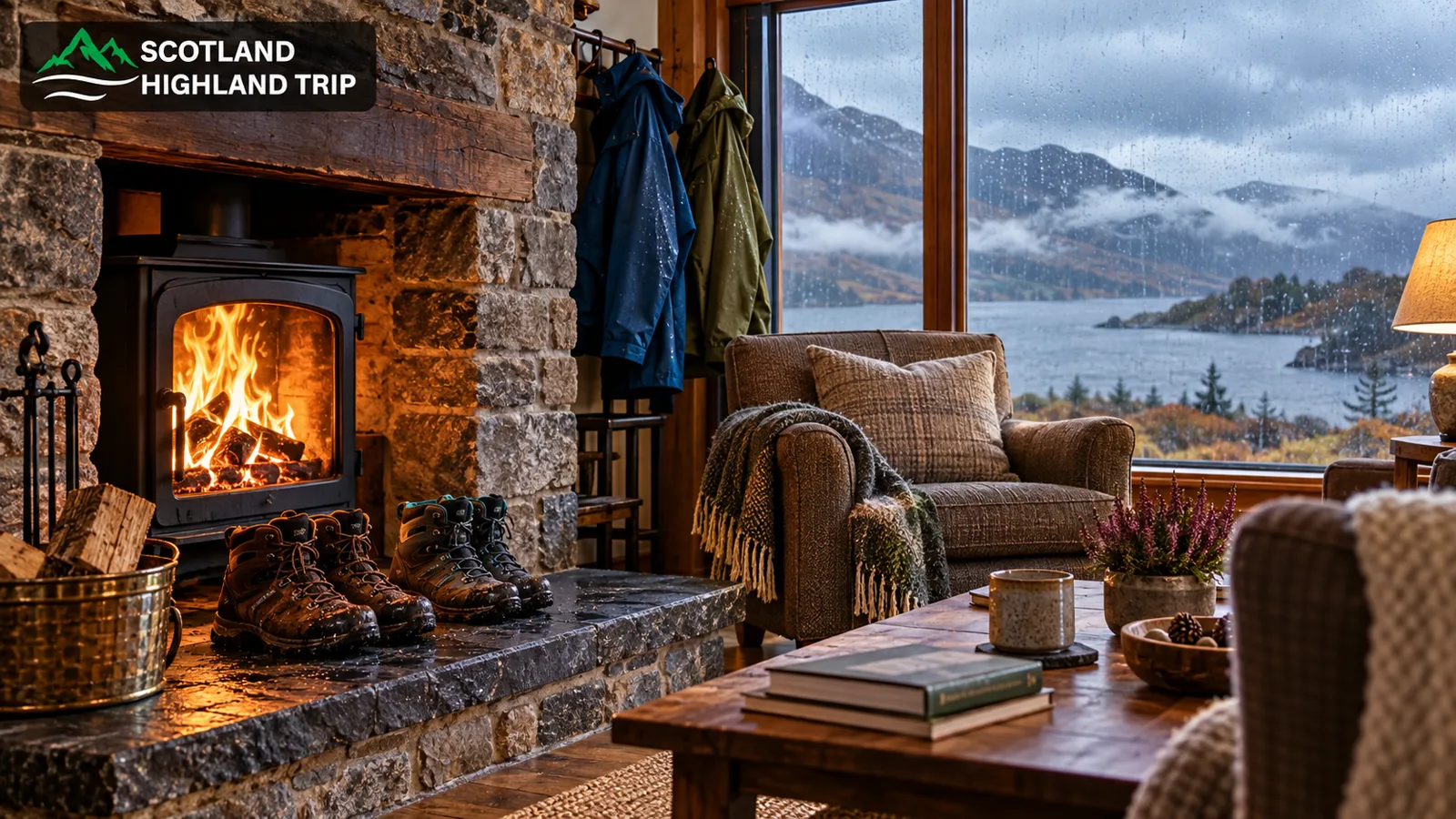
Muddy boots sit by the door while rain taps the lodge windows. Inside, the fire is lit, dinner is booked and tomorrow’s guide is already checking the mountain forecast. That contrast is what luxury adventure holidays Scotland can deliver: genuinely wild days without a week of damp socks and instant noodles.
The Highlands received 1.79 million overnight visits in 2024, generating £756 million in visitor spending, according to VisitScotland’s regional research. Yet the best trip is not the one that races through the most landmarks. It gives the landscape time, uses skilled local people and makes recovery part of the plan.
What does adventure luxe mean in the Scottish Highlands?
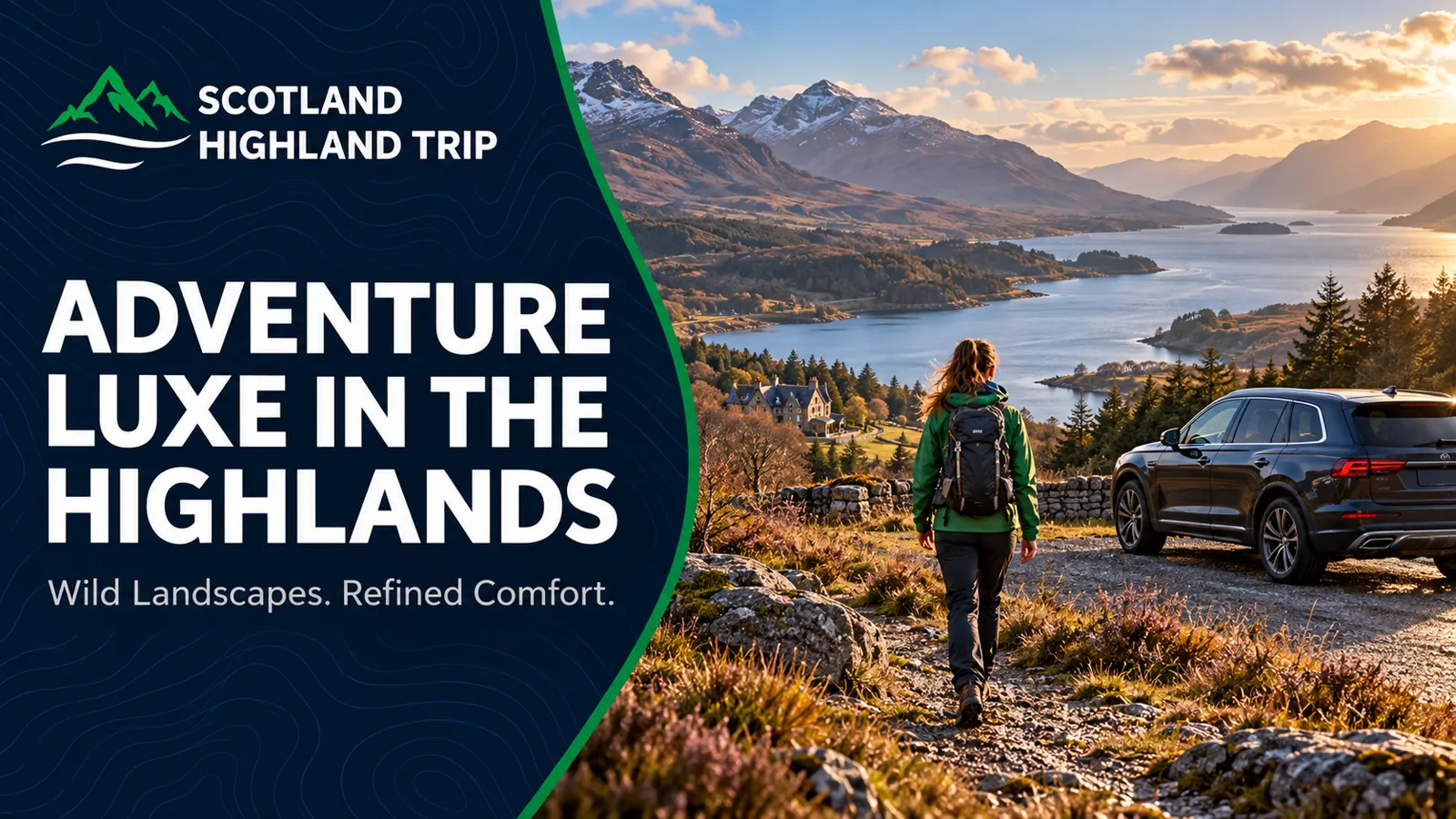
Adventure luxe pairs a real outdoor experience with expert support and a comfortable return. You still walk, paddle or ride through Highland weather, but a private guide, flexible vehicle, good food and a proper bed remove the needless friction.
The adventure should not feel staged. A guide may lead you onto a quiet ridge, help you read the weather and explain why the glen looks as it does. The luxury arrives around that experience: dry kit waiting in the vehicle, a hot shower, a thoughtful meal and no argument over who drives home.
Good planning matters more than gold taps. The useful upgrades are time, privacy, warmth and local judgement. A grand hotel two hours from the trail is merely inconvenient with a nicer bathroom.
| Ordinary outdoor break | Adventure-luxe Highland trip |
|---|---|
| Fixed route despite changing weather | Guide adjusts the day to conditions |
| Hire car packed with wet equipment | Door-to-door vehicle with room for kit |
| One activity level for the whole group | Routes graded and adapted to each guest |
| Dinner decided after the walk | Table reserved and dietary needs arranged |
| Accommodation chosen on price alone | Base selected for access, recovery and atmosphere |
Which Highland adventures work best without roughing it?
The strongest adventure-luxe activities are guided hillwalking, sea kayaking, e-biking, wildlife watching and privately arranged fishing. Each offers close contact with the landscape, while local instruction, quality equipment and flexible transport keep the day safe, personal and comfortable.
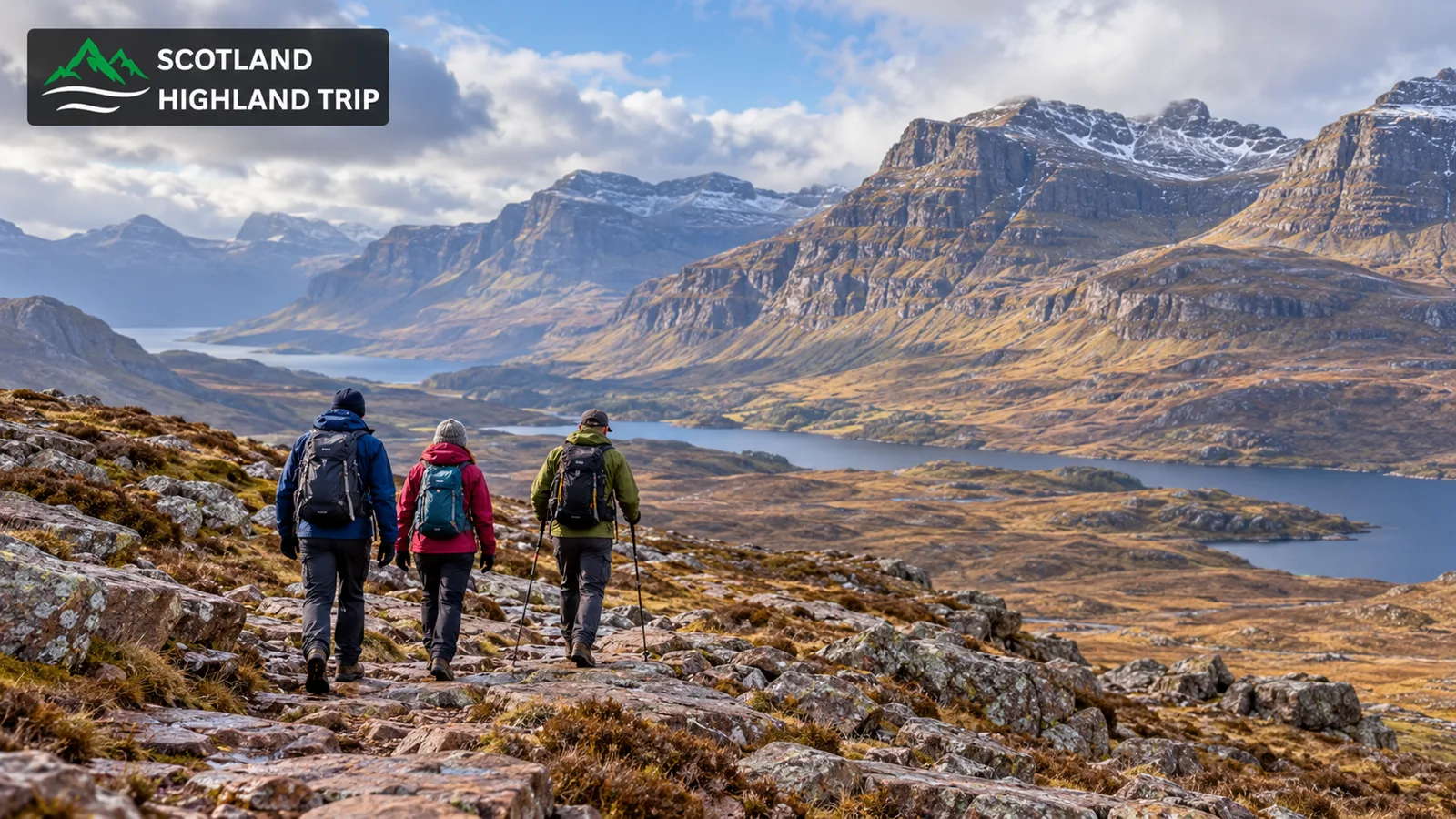
Guided mountain walking
A private walking guide matches distance, ascent and ground conditions to the group, then changes the route when cloud or wind makes the original plan unwise. That is sound mountain judgement.
Torridon suits experienced walkers who want sandstone ridges and big scenery. Glencoe offers shorter routes as well as serious mountain days. In the Cairngorms, broad plateaux and ancient pinewoods let mixed-ability groups split the difference.
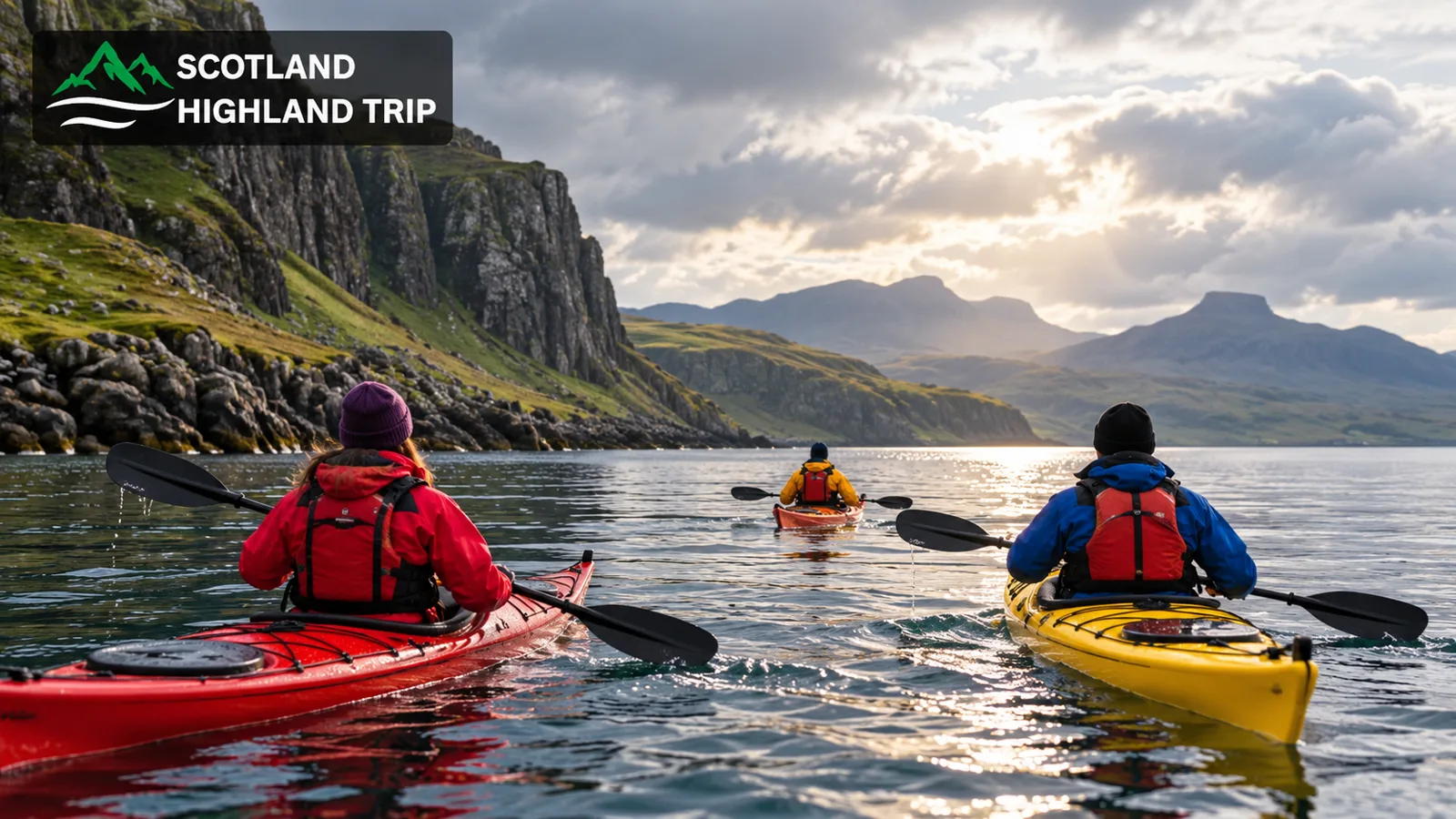
Sea kayaking and wildlife boating
Sea kayaking around Skye or the west coast gives cliffs, seals and sea lochs a different scale. A qualified guide supplies buoyancy aids, paddles and local tide knowledge. Beginners can use sheltered water, while experienced paddlers can take a longer coastal journey.
Wind decides more than enthusiasm. Keep a wildlife boat, coastal walk or distillery visit ready for a rough day. Flexibility beats forcing a photogenic plan into unsafe conditions.
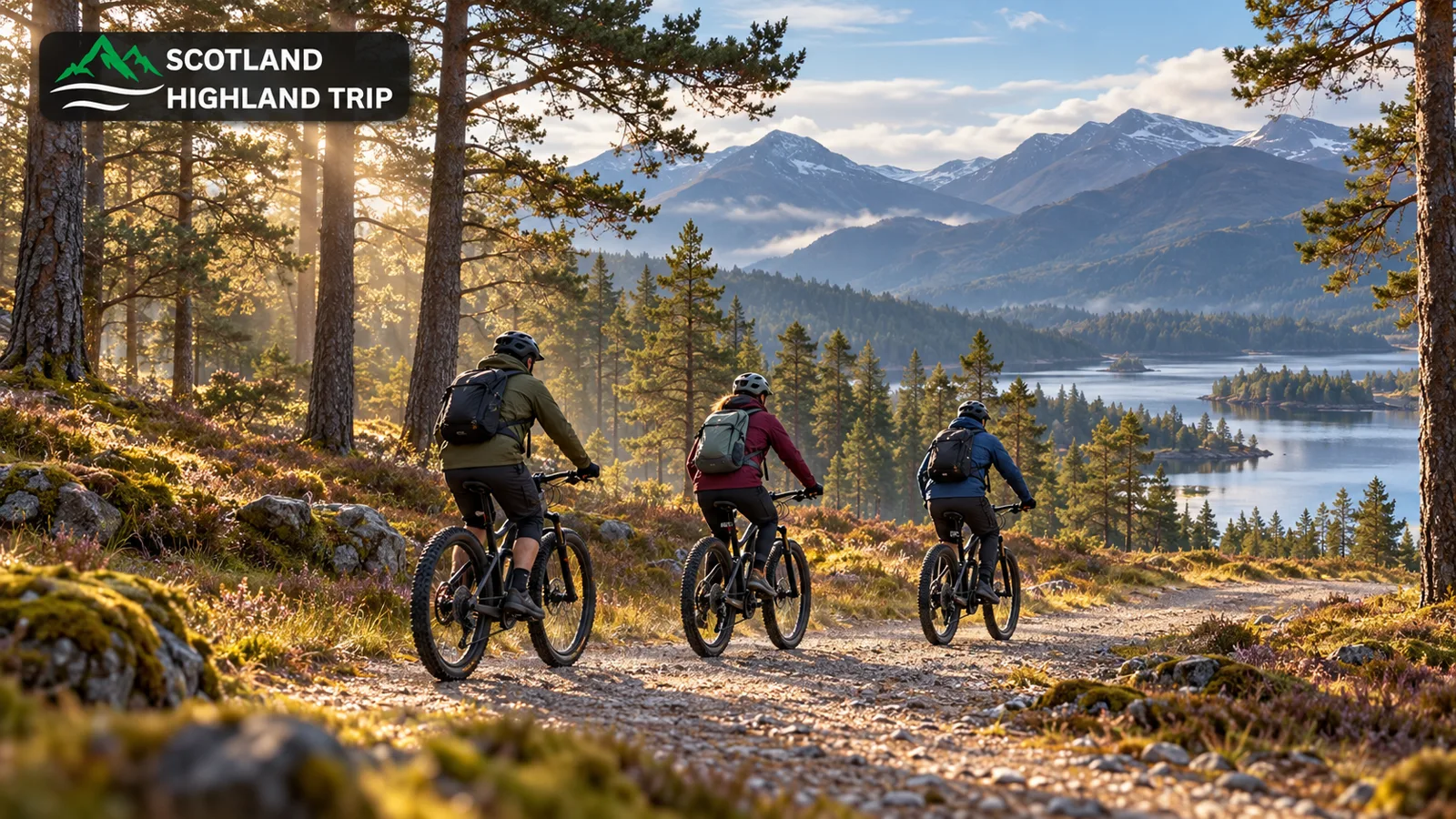
E-biking through forests and glens
An e-bike provides pedal assistance rather than doing all the work. It is excellent for couples or families with different fitness levels, and it turns long estate tracks into an enjoyable day instead of a test of patience.
Glen Affric, Rothiemurchus and quieter Speyside tracks work well. Choose a guide who carries repair essentials and knows where vehicle access ends. A picnic tastes better beside a loch than in a crowded lay-by.
Wildlife watching and fishing
Wildlife outings reward patience. A private Cairngorms wildlife tour can combine pine forest, open moor and a warming stop without turning the day into a checklist. Animals remain wild, so no responsible guide guarantees a sighting.
Fishing needs separate permission and usually a permit, ghillie or estate arrangement. Scotland’s access rights do not include fishing. A hosted day removes that uncertainty and supplies suitable tackle, but weather and river conditions still have the final word.
Where should you base a luxury Highland adventure?
Choose one or two bases according to the landscape you want, not the longest list of attractions. Inverness gives easy arrivals, Aviemore serves the Cairngorms, Glencoe suits mountain days, Skye adds coast and Torridon delivers remoteness with fewer convenient alternatives.
| Base | Best for | Comfort advantage | Honest limitation |
|---|---|---|---|
| Inverness | Loch Ness, Black Isle, east-coast wildlife, transfers | Airport, rail links and broad hotel choice | Feels like a gateway rather than a wilderness base |
| Aviemore | Pinewoods, e-biking, lochs, winter skills | Strong activity infrastructure and dining options | Busy during school holidays |
| Glencoe or Ballachulish | Hillwalking, photography, sea lochs | Mountain scenery begins at the door | Weather can close the high routes |
| Skye | Kayaking, coastal walks, food and photography | Excellent small hotels and restaurants | Single-track roads make timing slow |
| Torridon or Wester Ross | Serious walking, quiet roads and sea views | Deep calm and memorable lodges | Long transfers and fewer wet-weather options |
Travellers who want variety with minimal repacking should use Inverness or Aviemore. Those who value immersion should stay at least three nights in the west. Our comparison of the best base for exploring the Highlands helps narrow the choice by route rather than hotel brochure.
Pairing the Cairngorms with Torridon and Assynt creates a strong east-to-west trip. One side offers forests and easier logistics. The other gives bare rock, empty beaches and the feeling that the road has finally run out.
How does private transport change an active Highland trip?
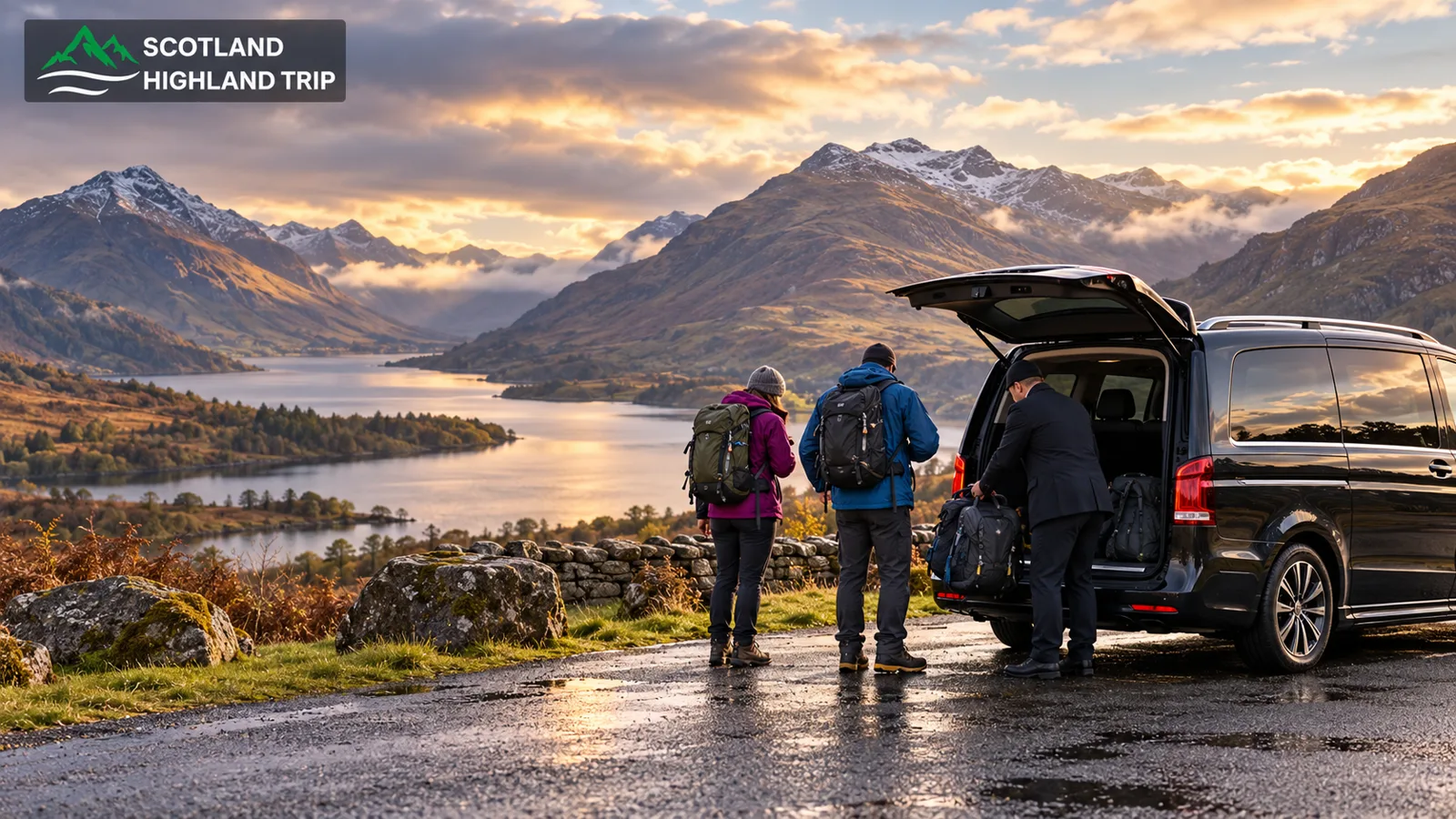
Private transport turns travel time into usable holiday time. A chauffeur can meet flights, carry wet equipment, reach scattered trailheads and move the day when weather changes. Guests can rest, watch the scenery or enjoy a whisky tasting without driving afterwards.
Highland distances look modest on a map. Single-track roads, livestock, viewpoints and weather make them slower in practice. A local driver knows where a large vehicle can stop safely and which scenic detour is worth the time.
A private chauffeur service solves the awkward ends of linear walks. The driver can collect the group elsewhere while spare shoes and dry layers stay secure. Add an airport transfer and the holiday begins before anyone faces a car-hire queue.
What does a five-day adventure-luxe itinerary look like?
A balanced five-day route combines two active days, one flexible wildlife day, one cultural or food experience and enough transfer time to enjoy the landscape. Base near Inverness first, then move west, keeping one activity interchangeable with a weather-safe alternative.
- Arrive in Inverness. Meet the chauffeur, settle into a comfortable hotel and take an easy riverside walk. An early dinner is wiser than squeezing in Loch Ness after a long flight.
- Explore the Cairngorms. Choose a guided woodland walk or e-bike circuit, with wildlife watching built into the pace. Finish with a good meal and a second night in the east.
- Cross to the west. Travel through changing glens with a short waterfall or lochside walk. Check into a lodge near Torridon, Plockton or Skye before dark.
- Take the main adventure day. Walk with a mountain guide or kayak in sheltered coastal water. Use the pre-agreed low-level route or distillery option if wind and cloud turn against you.
- Return slowly. Stop for local food, a castle or a Speyside whisky tour if the onward route allows. Finish in Inverness, or continue south with a private transfer.
Five days is the sensible minimum. Seven nights allow a second western base and remove the urge to treat every drive as a race.
How fit do you need to be for an adventure-luxe trip?
You do not need elite fitness, but you should describe your normal activity honestly. Luxury removes logistical strain, not hills, wind or uneven ground. A good planner grades each day by duration, ascent and terrain, then offers a genuine alternative.
Ask for numbers. “Moderate” means little without distance and ascent. A six-kilometre woodland path is not the same as a six-kilometre ridge with 700 metres of climbing.
Mixed groups work best when one shared experience anchors the day. Strong walkers can take a longer route while others visit a garden, cruise or short forest trail, then everyone meets for dinner. Nobody wants to spend a costly holiday pretending their knees are fine.
Before booking, tell the organiser about mobility limits, vertigo, recent injuries, food needs and children’s ages. Guides adapt well when they have useful information early.
When is the best time for luxury adventure holidays in Scotland?
May, June and September offer the best balance of daylight, services and manageable visitor numbers, though no month guarantees dry weather. July and August suit families, autumn brings colour, and winter works for guests who want short days and specialist skills.
| Season | Best experiences | Planning reality |
|---|---|---|
| April to June | Walking, wildlife, cycling and long evenings | Cold snaps remain possible; book May weekends early |
| July to August | Family activities, boating and broad opening hours | Higher demand, midges and busier roads |
| September to October | Autumn colour, food, photography and quieter trails | Shortening days and more changeable weather |
| November to March | Fireside stays, dark skies and guided winter skills | Limited daylight; snow and ice require specialist decisions |
Mountain forecasts differ from town forecasts. Check specialist services before any hill day, and use Mountaineering Scotland’s weather and avalanche resources in winter. A blue sky at breakfast says very little about conditions on a high plateau.
What should you book before travelling?
Reserve the scarce elements first: specialist guides, small luxury properties, dinner tables and suitable vehicles. Leave the exact mountain route flexible until close to the day. That combination protects quality without pretending Highland weather can be scheduled months ahead.
– Book private guides with the right qualification for the activity.
– Confirm what technical clothing and equipment are included.
– Reserve restaurants when staying in remote areas with few alternatives.
– Match the vehicle to passenger numbers, luggage and outdoor kit.
– Ask who makes the final weather decision and what replaces a cancelled activity.
– Check deposits, cancellation terms and travel insurance before paying.
– Request an itemised quote; the breakdown of private Scotland tour costs helps reveal where comfort and private access add value.
Do not lock every hour. Fine Highland moments often happen between bookings, when light hits a glen or a quiet beach appears beside the road.
How do you keep a luxury adventure responsible?
Travel responsibly by staying longer, using local guides, paying for managed experiences and following access rules. Keep vehicles off unsuitable ground, give wildlife space and take litter away. Comfort should support Highland communities and landscapes, not insulate visitors from them.
The Scottish Outdoor Access Code allows responsible recreation on most land and inland water. Those rights cover walking, cycling, swimming and wildlife watching, but not motor access or fishing. Follow land-manager advice, avoid blocking gates and move on if wildlife changes its behaviour.
Luxury can be constructive. A private guide, independent hotel, local restaurant and regional driver keep more spending in the destination. Staying three nights also creates a calmer trip than changing hotels daily, and it reduces needless mileage.
Choose operators who explain their decisions. Vague claims about being green are less useful than smaller groups, sensible routes, refillable water and honest limits on wildlife encounters.
What should travellers know before booking?
The best adventure-luxe trip is tailored around ability, season and preferred pace before hotels are chosen. Confirm guide credentials, weather alternatives, transfer times, inclusions and cancellation terms. If a proposal promises perfect conditions or guaranteed wildlife, keep looking.
Frequently asked questions
Is adventure luxe only for expert hikers?
No. Routes can range from gentle forest walks to full mountain days. The important part is agreeing a clear activity grade and an alternative before the trip.
Can children or grandparents join an adventure-luxe holiday?
Yes, when activities, vehicles and accommodation match their needs. Private guiding works especially well for mixed generations because pace and stops can change without affecting another group.
Do you need a car for a luxury Highland adventure?
Not necessarily. A chauffeur-supported itinerary can connect airports, hotels and remote activity starts, while removing parking, navigation and post-walk driving from the day.
What happens if weather cancels the main activity?
A well-designed itinerary switches to a lower walk, wildlife outing, castle, food experience or distillery visit. The replacement should be agreed in principle before arrival.
Is wild camping part of adventure luxe?
It can be, but it is not required. A supported wild camp may include quality equipment and catered meals, while most travellers will prefer a lodge or hotel every night.
How many days should you allow in the Highlands?
Allow at least five days for one east-to-west route. Seven to ten days gives weather flexibility, two strong bases and enough time to enjoy the scenery between activities.

Emma is a solo traveler and freelance travel writer from New Zealand who spent three weeks exploring the Scottish Highlands. With a deep appreciation for history and landscapes, she booked a series of day tours and a private chauffeur journey with Scotland Highland Trip. From Loch Ness to the Cairngorms, she documented her experience through vivid blog posts and drone footage.