

Ask any Scotch lover where to find the highest concentration of distilleries and most elegant malts, and one answer comes back again and again: Speyside. This fertile region in north‑east Scotland, centred on the River Spey, is home to around half of Scotland’s whisky distilleries. It offers a gentler, fruit‑forward style of single malt compared with the smoky peat bombs of Islay, thick flavours of pear, apple, peach, plum and dried fruits coupled with vanilla, toffee and butterscotch.
The area’s soft water, mild micro‑climate and access to quality barley have created a whisky paradise where you can hop from one historic distillery to the next within a few miles. This guide explains why Speyside whisky is considered the best, how to plan the best Speyside distillery tour and whether to drive yourself or hire a chauffeur, so you can sip responsibly and savour each dram.
Jump to Section
Why is Speyside whisky special?
A unique terroir
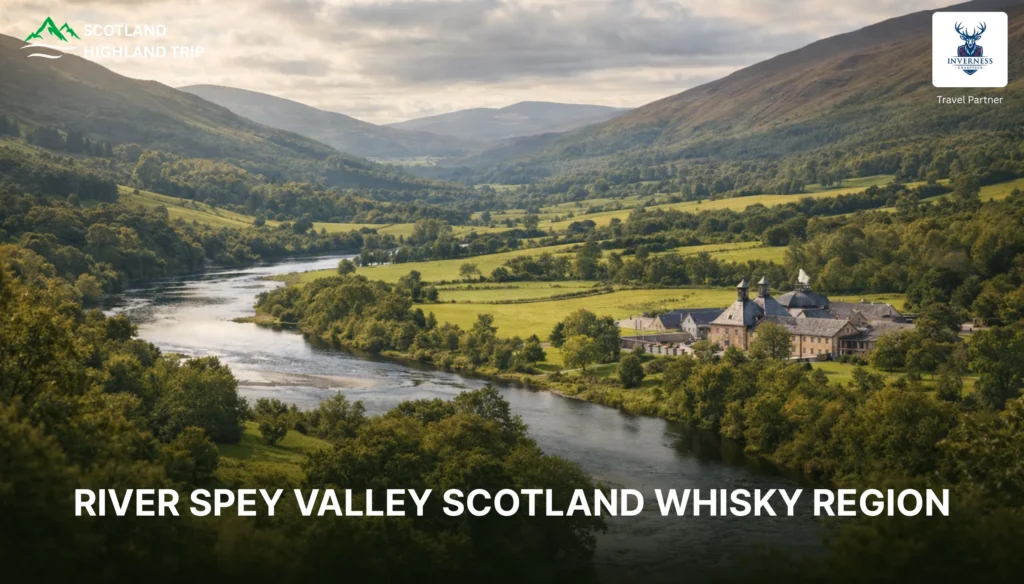
Speyside is a triangle of whisky heaven bordered by the Cairngorm mountains and the Moray Firth. The River Spey provides soft, mineral‑rich water, while fields of barley thrive in the fertile valleys. This micro‑climate produces whiskies known for their elegant sweetness, often matured in sherry oak casks to impart notes of dried fruits and spice. Fans describe Speyside drams as refined, with delicate layers of vanilla, toffee and subtle spices. Even when producers experiment with smoky peat or unusual cask finishes, fruit remains at the core.
Density of distilleries
With over 60 distilleries in close proximity, Speyside offers the densest cluster of whisky producers in Scotland. Many names begin with “Glen” because the region is carved by glens formed by the River Spey. Legendary houses like Glenfiddich, Macallan, The Glenlivet, Balvenie, Cardhu and Benromach sit within a short drive of each other. This makes the best Speyside distillery tours easy to organise, you can sample multiple styles in one day without long drives.
Heritage and innovation
Speyside’s history stretches back centuries. Strathisla Distillery, founded in 1786, is Scotland’s oldest continuously operating Highland distillery and is considered “the prettiest distillery in Scotland”, its stone buildings, pagoda roofs and water wheel create an enchanting scene. Distilleries here pioneered innovations such as the pagoda roof at Dailuaine, introduced in 1884 to draw smoke from the malting floor. Modern giants like Macallan continue to push boundaries with architectural showpieces and experimental maturation programmes.
Top Speyside distilleries to visit
To help you plan your route, here are the standout distilleries and experiences that make Speyside so beloved. Use these suggestions to build your own itinerary or join an organised tour.
Glenfiddich (the icon)
Located in Dufftown, Glenfiddich is the world’s best‑selling single malt and a must‑visit for first‑timers. Tours start at around £10 and take you through the family‑owned distillery that still uses some of the original stills from 1887. Sample classics like the 12‑year old, or upgrade to a connoisseur tasting to savour the 21‑year Havana Reserve, finished in rum casks with notes of apple, honey, vanilla and dark chocolate. The visitor centre includes the largest distillery shop in Speyside and offers views of Balvenie Castle.
Macallan: Modern opulence
Macallan sits on a hillside overlooking the Spey and is renowned for luxurious single malts aged in sherry oak casks. Tours (from £15) lead you through an award‑winning subterranean still house and end with tastings of expressions like Macallan Gold, featuring citrus fruits, toffee and spices. Book early, spaces fill up months in advance. Their new distillery and visitor centre opened in 2018 and includes a bar where you can try rare bottlings.
The Glenlivet: Birthplace of legal single malt
As the first distillery licensed under the 1823 Excise Act, The Glenlivet claims the title “the single malt that started it all”. Nestled in the remote Livet valley, tours reveal how founder George Smith defied illicit distillers to produce a smooth, honeyed spirit that became a favourite of King George IV. The guided tasting explores core whiskies such as the 12‑year old and 15‑year French Oak Reserve.
Cardhu: Pioneering women’s whisky
Cardhu, near Archiestown, has a colourful history. Helen Cumming founded the distillery in the early 1800s and allegedly used domestic tricks to evade excise officers. Today Cardhu serves as a key malt in Johnnie Walker blends and a Speyside icon in its own right. Tours start at £5 to £9 and offer tastings of its spicy‑sweet expressions, including the elegant 18‑year‑old. The small visitor centre honours the women who shaped the distillery’s story.
Balvenie: Craftsmanship on show
Balvenie, adjacent to Glenfiddich, is one of the few distilleries still practising traditional floor malting. Their range highlights honeyed sweetness and gentle spice. Tours are limited and often booked out months ahead; those lucky enough to secure a spot can see the cooperage, maltings and ageing warehouses before sampling rare cask finishes.
Benromach: Boutique gem
Benromach, on the outskirts of Forres, is part of Gordon & MacPhail. It produces a lightly peated style reminiscent of pre‑1960s Speyside malts. The standard tour includes a taste of their flagship 10‑year old, while more advanced options explore experimental cask finishes. The distillery is small and friendly, making this a great introduction for novices.
Strathisla: The prettiest distillery
Strathisla in the town of Keith is celebrated not only for its whisky but also for its storybook beauty. Undiscovered Scotland calls it “without a shadow of doubt, the prettiest distillery in Scotland”. The Chivas Regal home is characterised by twin pagodas, stone walls and a water wheel. Tour the historic still house, visit the Royal Salute Vault and taste the buttery 12‑year old single malt.
Speyside Cooperage: Where casks come alive
Oak casks contribute up to 70 % of a whisky’s flavour. At the Speyside Cooperage near Craigellachie, you can watch coopers build and repair barrels using traditional tools. The tour costs around £3.50 and explains how oak travels from American forests to Speyside warehouses. This stop deepens your appreciation of the craft behind maturation.
Other notable stops
- Glenfarclas, family‑run since 1836, known for sherry‑matured malts and a friendly welcome.
- Mannochmore produced the controversial black whisky Loch Dhu in the 1990s; tours are infrequent but interesting.
- Mortlach, once used its barley store as a Free Church; modern releases are rich and meaty.
- Dallas Dhu, now a museum; part of the Malt Whisky Trail.
The Speyside Malt Whisky Trail & map

The Malt Whisky Trail is a self‑guided route connecting nine locations, eight distilleries and the Speyside Cooperage making up the world’s largest concentration of Scotch malt whisky producers. The official trail sites include Benromach, Cardhu, Dallas Dhu, Glenfiddich, Glen Grant, The Glenlivet, Glen Moray, Speyside Cooperage and Strathisla. Each offers tours and tastings, and most are open year‑round. Pick up a trail map at visitor centres or download one from tourism websites. To appreciate the region’s geography, plot the trail on a physical map or navigation app, the distilleries sit within a 50‑km radius, and roads follow glens carved by the Spey and Isla.
Suggested one‑day itinerary
For a tasting‑packed day from Inverness, drive east along the A96 and follow this route:
- Benromach: Start early in Forres with a morning tour (1 hr). Enjoy a dram of the smoky‑sweet 10‑year old.
- Speyside Cooperage: Head south to Craigellachie to witness coopers assembling barrels (1 hr). The on‑site café serves light lunches.
- Cardhu: Continue along the B9102 to this historic distillery near Archiestown for an afternoon tour (1-1.5 hrs).
- Glenfiddich or Balvenie: Finish the day in Dufftown with a tasting flight at Glenfiddich’s bar or, if you pre‑booked, a rare Balvenie distillery tour (1-2 hrs). Enjoy dinner in Dufftown before returning to Inverness (approx. 1.5 hr drive).
Pro tip: If you only have one day, book tours in advance and designate a driver who abstains from tasting. Distilleries will not serve alcohol to the driver, so consider hiring a chauffeur (see below).
Multi‑day itinerary (3 days)
Day 1: Elgin & Lossie Coast: Start at Glen Moray in Elgin, then visit nearby Glen Grant with its Victorian gardens. Explore the ruins of Elgin Cathedral and end your day at the coast in Lossiemouth.
Day 2: Dufftown & Craigellachie: Tour Glenfiddich and Balvenie, then walk over to Mortlach Kirk to see the distinctive multi‑staged tower. After lunch, visit the Speyside Cooperage and cross the Craigellachie Bridge, the iron bridge over the Spey celebrated for its views. End with a tasting at Craigellachie Hotel’s Quaich Bar.
Day 3: Livet & Keith: Drive to The Glenlivet for the morning, then continue to Strathisla, appreciating why it’s considered Scotland’s prettiest distillery. Finish at Benromach or venture east to Royal Lochnagar near Balmoral if you’re extending into the Highlands.
Self‑drive vs chauffeur: choosing your tour style
Why hire a chauffeur?
Distilleries will not serve alcohol to the driver, and Scotland’s drink‑drive limit is lower than in many countries. Narrow single‑track roads and left‑hand driving can be stressful for visitors. A professional driver‑guide removes that stress, adds local knowledge and allows everyone to enjoy tastings. A chauffeur is also ideal for corporate or VIP travel or multi‑day journeys when you’d rather relax between stops.
When to self‑drive
Self‑drive suits experienced drivers who are comfortable with left‑hand, single‑track roads and want total flexibility to stop for photographs, detours or picnic breaks. You can set your own schedule and explore off‑the‑beaten‑path distilleries not served by tour buses. Make sure at least one person in your group stays sober at each tasting; consider spitting after sips or sharing drams.
Mix and match
Many visitors combine both approaches. Hire a driver for long days or special occasions (e.g. a 3‑day whisky trail or visits to remote distilleries) and rent a car for shorter, relaxed days exploring villages or castles. This flexible approach offers the best of both worlds.
Best time to visit Speyside
Locals say Speyside’s whisky season runs from late March to late September. Spring arrives when the last snow melts off Ben Rinnes, sometimes as late as May. Summer brings long daylight hours (sunset after 10 pm in June) and mild temperatures ideal for touring. Autumn colours in September are spectacular, though some distilleries reduce tour frequency. Winter visits are possible, many distilleries remain open but expect limited daylight and fewer experiences.
Speyside vs other Scotch whisky regions
Scotland has six whisky regions: Speyside, Highlands, Lowlands, Islay, Islands and Campbeltown. Speyside stands out for its density of distilleries and sweet, fruity style. Highlands produce a diverse range (from light to peaty), Islay whiskies are heavily peated and medicinal, Lowlands are gentle and grassy, Islands vary widely, and Campbeltown offers maritime notes. Exploring Speyside first gives newcomers a friendly introduction before venturing into bolder territories.
Travel tips for planning your Speyside whisky trail
- Base yourself in Dufftown, Craigellachie or Aberlour. These towns sit near the centre of the whisky triangle and offer B&Bs, hotels and restaurants.
- Book distillery tours early. Major distilleries like Macallan and Balvenie release tickets months ahead and fill up quickly.
- Designate a driver or hire a chauffeur. Distilleries won’t serve drivers and police patrol roads during festival season.
- Check festival calendars. The Spirit of Speyside Festival (late April/early May) features exclusive tastings and events; tickets sell out fast.
- Sample responsibly. Take tasting notes, sip water between drams and eat hearty meals.
- Visit the Cooperage. Understanding cask construction deepens your appreciation for ageing.
- Explore beyond whisky. Hike to the Linn Falls, wander Aberlour’s high street, visit Castle Grant or fish the River Spey (permits required).
Frequently asked questions
What are the best Speyside distilleries to visit?
The most popular stops include Glenfiddich for its history and range, Macallan for modern architecture, The Glenlivet for its pioneering legacy, Strathisla for fairy‑tale beauty, Cardhu for its women‑led history and the Speyside Cooperage to see casks being made. However, the charm of Speyside lies in discovering smaller distilleries like Benromach and Glenfarclas too.
What is Prince (“King”) Charles’s favourite whisky?
According to reports on royal warrant renewals, King Charles III often reaches for a bottle of Laphroaig, an Islay single malt. The King is a member of the Laphroaig Appreciation Society, and he renewed the distillery’s royal warrant in May 2024. While not a Speyside whisky, this shows the monarchy’s broad palate and support for Scotland’s whisky industry.
Which is the best Speyside whisky?
“Best” is subjective, but widely acclaimed expressions include Macallan Sherry Oak 18 Year, Glenfiddich 21 Year Havana Reserve, Glenlivet 18 Year and Balvenie DoubleWood 17 Year. Each showcases Speyside’s signature fruitiness with different cask influences. Tasting flights at distilleries or specialist bars let you decide your own favourite.
What makes Speyside whisky different?
Speyside whiskies are known for elegant, fruity flavours such as pear, apple, peach and dried fruits. They rarely use heavy peat, instead focusing on sweetness from quality barley, clean water from the River Spey and maturation in sherry or bourbon oak casks. The region’s dense concentration of distilleries also encourages experimentation and collaboration.
When is the best time to visit Speyside?
Plan your trip between late March and late September. Spring (April–May) brings budding trees and fewer crowds; summer offers long evenings; early autumn provides russet colours. Winter tours are quieter but have shorter daylight hours.
What is the prettiest distillery in Scotland?
Strathisla Distillery in Keith is often described as the prettiest. Undiscovered Scotland says it is “without a shadow of doubt” the most beautiful distillery, thanks to its stone buildings, pagodas and water wheel.
What is special about Speyside whisky?
Speyside whisky stands out for its fruit‑led flavour profile, diverse distilleries and concentration of heritage sites. Visitors can explore more than sixty distilleries in a small area, experience different production methods (from traditional floor maltings to modern architectural masterpieces), and enjoy stunning Highland scenery along the Spey.
Conclusion
Speyside is not just a region, it’s an immersion in Scotland’s whisky soul. With its high density of historic distilleries, friendly locals and lush scenery, the area offers endless opportunities to taste world‑class single malts and learn the art of whisky‑making. Whether you explore on your own or hire a chauffeur in Inverness/highland so you can savour every dram, plan well ahead and give yourself time to linger in each glen.
Ready to sip your way through Speyside? Book your whisky distillery tours now, organise a driver or designated driver and prepare for a journey that will deepen your appreciation of Scotland’s national drink. Slàinte!

Emma is a solo traveler and freelance travel writer from New Zealand who spent three weeks exploring the Scottish Highlands. With a deep appreciation for history and landscapes, she booked a series of day tours and a private chauffeur journey with Scotland Highland Trip. From Loch Ness to the Cairngorms, she documented her experience through vivid blog posts and drone footage.