
A red deer track crosses the path, young Scots pines push through the heather, and a blocked drainage ditch holds water where peat once dried out. Highland rewilding can look quiet at first. Look closer and the work becomes obvious.
At Beinn Eighe National Nature Reserve, woodland cover has increased by 41 percent since the reserve was created in 1951, according to NatureScot. That result took decades, not a viral weekend. This article shows where visitors can see comparable conservation in action, what each place offers and how to plan a trip without disturbing the recovery.
On this Page
What is Highland rewilding, and what can visitors actually see?
Highland rewilding restores damaged forests, peatlands, rivers and species relationships so nature can recover with less human control. Visitors can see young native woodland, rewetted bogs, natural regeneration, deadwood habitat, restored waterways and, with luck, animals returning to healthier landscapes.
Rewilding is more than planting trees
Rewilding works with natural processes. A project may reduce deer pressure so seedlings survive, block old drains so peat stays wet, reconnect woodland fragments or restore a missing species that changes its habitat.
Tree planting still matters where seed sources have vanished. Yet a fenced plantation of identical saplings is not the whole story. Healthy recovery includes trees of different ages, scrub, open glades, fungi, insects, wet ground and decaying wood.
Visitors should also separate evidence from spectacle. A beaver lodge, expanding pinewood or recovering bog tells you more about conservation than a distant animal glimpsed for three seconds. Wildlife sightings are a bonus, not the admission ticket.
| Place | What you can see | Access model | Allow | Best for |
|---|---|---|---|---|
| Dundreggan | Native tree nursery, woodland trails and regeneration | Free visitor centre and trails | 2 to 4 hours | Best first visit and families |
| Cairngorms Connect | Pinewood expansion, restored peatland and natural river systems | Multiple public gateways | Half day to 2 days | Landscape-scale restoration |
| Beinn Eighe | Decades of pinewood and birch recovery | Free reserve trails | 1.5 hours to full day | Long-term evidence and hiking |
| Knapdale | Beaver wetlands, gnawed trees and lodges | Free forest trails, optional events | 2 to 3 hours | Species reintroduction |
| Bunloit | Woodland, peatland and field research | Contact or book before visiting | Half day or stay | Guided access and volunteering |
Where is the best place to start a Highland rewilding trip?
Dundreggan Rewilding Centre is the best starting point because it combines clear interpretation, easy woodland trails, a native tree nursery, food, toilets and accessible facilities. Entry is free, so visitors can understand the restoration work before exploring more remote Highland landscapes.
Dundreggan makes the science visible
Dundreggan sits in Glenmoriston, about eight miles from Loch Ness. Trees for Life manages the 10,000-acre estate, which supports more than 4,000 species and contains remnants of the Caledonian Forest.
The centre explains how grazing pressure, seed collection, propagation and planting fit together. Outside, marked trails pass young woodland, mature trees and open ground. You can see recovery at several stages rather than stare at a polished display and take the message on trust.
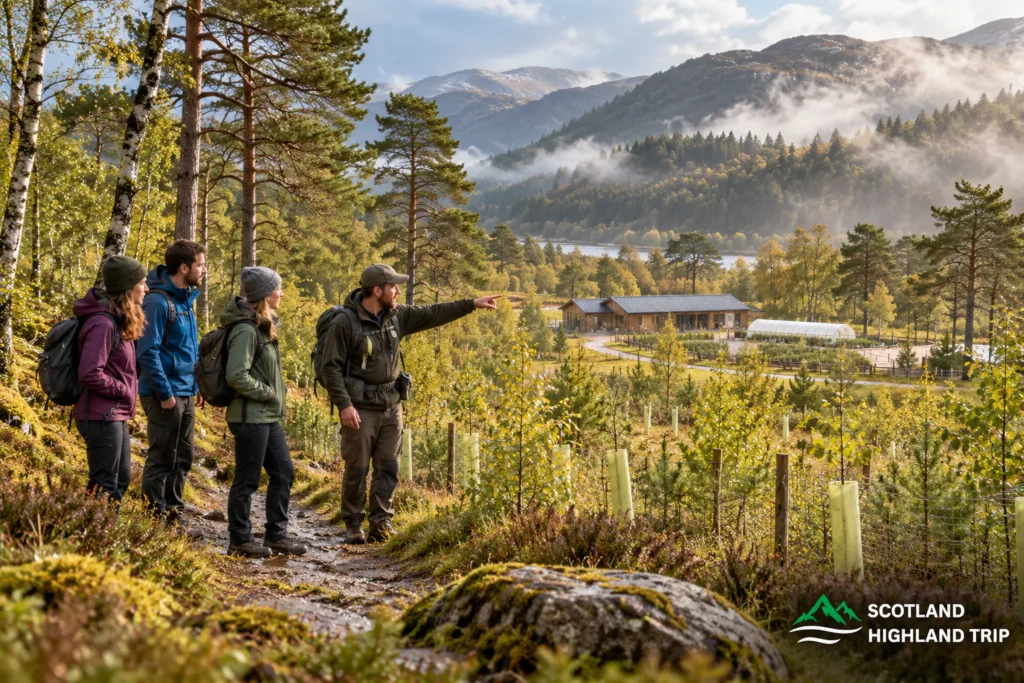
Free entry and dog-friendly grounds make Dundreggan unusually easy to add to a trip. The visitor centre has step-free access by ramp, while trail surfaces and gradients vary. Check the current access notes and seasonal opening times before leaving, especially outside summer.
Pair the visit with Loch Ness, but keep enough time
Dundreggan lies west of Loch Ness, so the two work well on one route from Inverness. Allow two hours for a rushed stop or half a day if you want the exhibition, café and a proper walk.
Don’t turn it into a ten-minute photo call. Dundreggan succeeds because it makes woodland restoration understandable. Racing through misses the point rather spectacularly.
How can visitors experience Cairngorms Connect?
Visitors experience Cairngorms Connect through public reserves and forests rather than one entrance. Start at Glenmore, Rothiemurchus, Insh Marshes or Abernethy, then look for expanding pinewood, restored bogs, deadwood and healthier rivers across Britain’s largest habitat-restoration partnership.
One project, several public gateways
Cairngorms Connect covers about 600 square kilometres within the Cairngorms. Its four land managers are WildLand Limited, NatureScot, Forestry and Land Scotland, and RSPB Scotland. Their vision runs for 200 years.
Scale matters here. Forest fragments cannot support resilient wildlife if roads, plantations and heavily grazed ground isolate them forever. Partners allow native woodland to spread, restructure commercial forests, restore peat and improve river habitats across estate boundaries.
Glenmore Forest Park offers the simplest public introduction. Abernethy suits keen birdwatchers, while Insh Marshes shows how floodplain habitat works. A Cairngorms National Park day needs a focused route because the partnership area is far too large to “do” in one visit.
Know what restored peat looks like
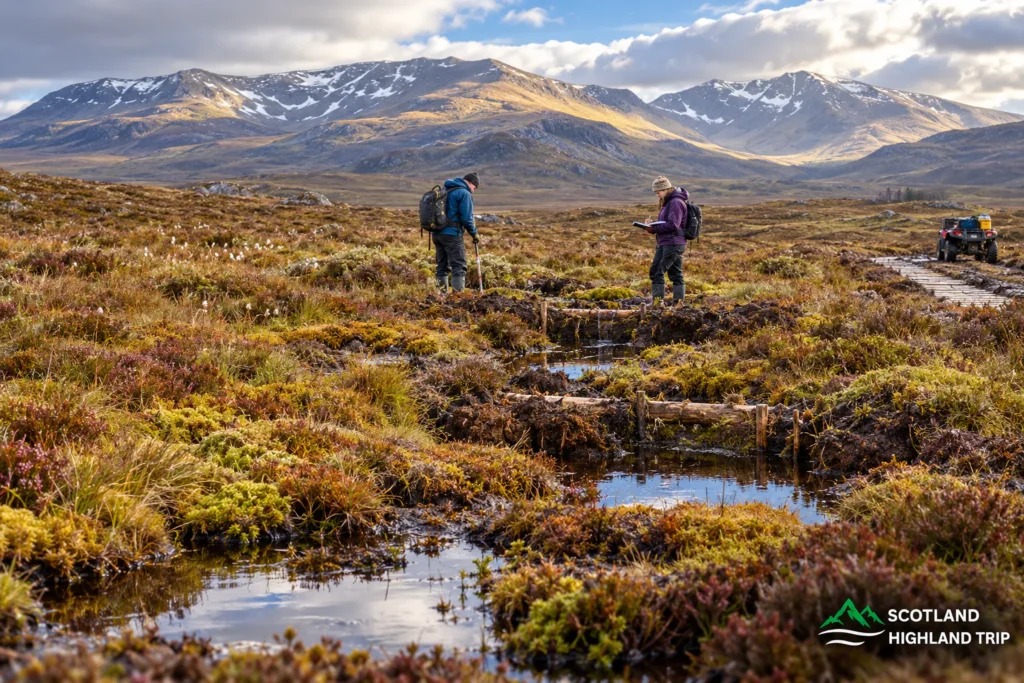
Healthy peatland can appear untidy. Pools return, dams slow drainage, cut banks soften and sphagnum moss begins holding water again. That wetness protects stored carbon and creates habitat for insects and birds.
Visitors often expect dramatic before-and-after scenery. Field signs are subtler. Look for blocked grips, which are old drainage channels, wet moss, fewer bare peat faces and a mosaic of pools rather than one dry brown sheet.
Why is Beinn Eighe one of the clearest long-term examples?
Beinn Eighe is a strong long-term example because woodland cover has risen by 41 percent since 1951. Free waymarked trails let visitors compare Scots pine, birch, open mountain ground and Loch Maree while seeing what sustained protection achieves over decades.
The reserve shows recovery across generations
Beinn Eighe became Britain’s first National Nature Reserve in 1951. Conservation teams have protected old pinewoods and helped native trees spread onto slopes where browsing and past land use had limited growth.
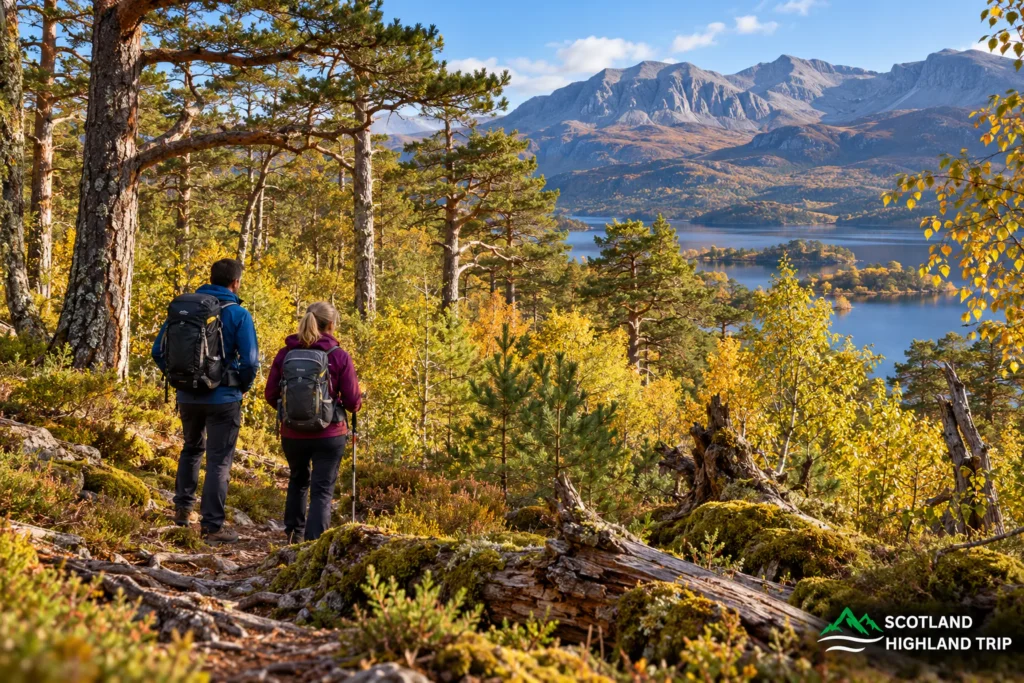
The 1.5-kilometre woodland trail is the approachable option. Three all-ability trails near the visitor centre stay open year-round, though the centre itself usually opens from Easter to October. The 6.5-kilometre mountain trail takes roughly three to four hours and crosses steep, rough ground.
Weather changes fast around Torridon. Pack waterproofs and turn back if cloud drops onto the higher route. The wider Torridon and Assynt landscape deserves patience, not bravado.
Where can visitors see species reintroduction in action?
Knapdale Forest in Argyll is Scotland’s clearest visitor-friendly place to understand beaver reintroduction. Walk around Dubh Loch and Loch Coille-Bharr at dawn or dusk, searching for gnawed stems, dams, lodges and wetland change rather than expecting a guaranteed sighting.
Beaver signs are more reliable than beavers
Knapdale hosted the planned Scottish Beaver Trial, which began in 2009. Beavers are now a protected species in Scotland, and their engineering can slow water, create ponds, add deadwood and produce varied wetland edges.
The Beaver Detective Trail from Barnluasgan leads through suitable habitat. Move quietly, keep dogs close and scan the water near dawn or dusk. Fresh tooth marks and stripped bark are often easier to find than the animal itself.
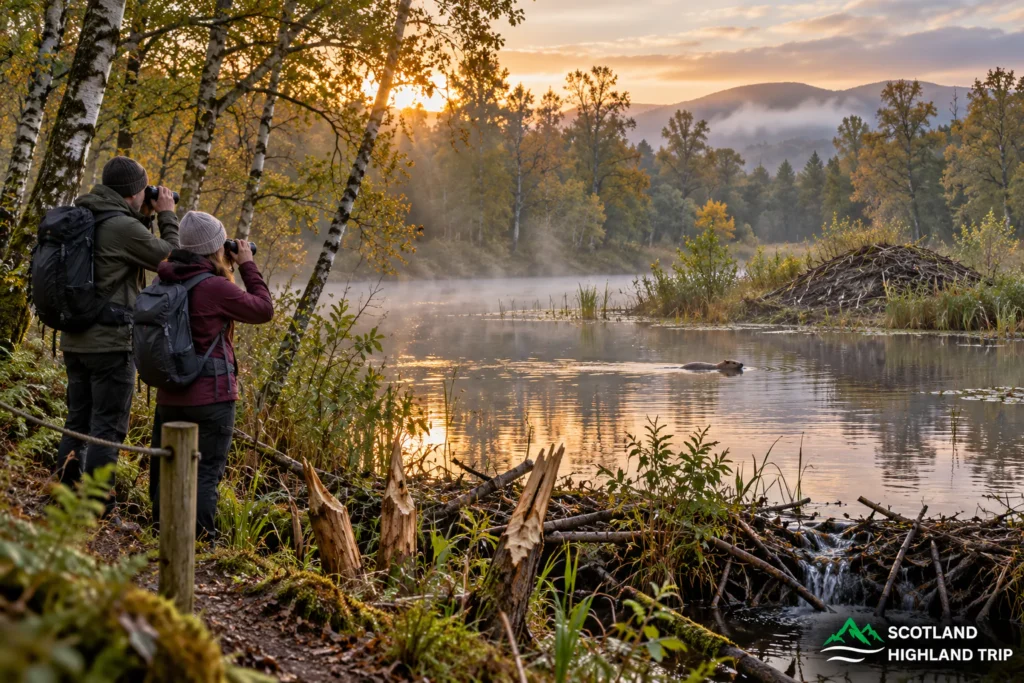
Avoid approaching a lodge or blocking a route into the water. A long lens is useful; chasing a phone clip is not. The woodland can be wet and midge-heavy, so waterproof boots and repellent earn their place in the bag.
Can visitors tour Bunloit and Affric Highlands?
Visitors can experience Bunloit through pre-arranged nature days, volunteer sessions, guided estate visits or selected stays. Affric Highlands is a vast landscape programme with public routes but no single visitor centre, so plan around Glen Affric, Glenmoriston or Kintail access points.
Bunloit needs coordination, not a casual arrival
Bunloit overlooks Loch Ness and combines woodland recovery, peatland work, research and lower-impact land management. Public access rights still come with responsibilities, while estate operations such as deer stalking make advance contact sensible and sometimes essential.
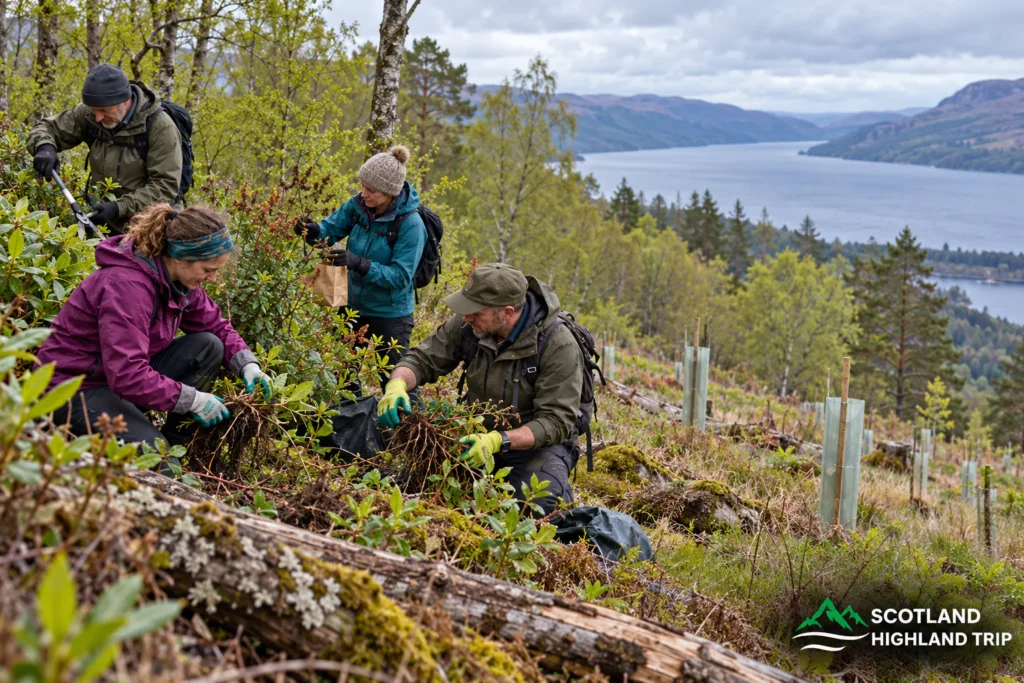
Highlands Rewilding asks visitors to coordinate before coming. Seasonal nature days and volunteer sessions offer the clearest view of fieldwork. Guests in estate accommodation may also arrange a guided visit.
Affric Highlands is a landscape, not an attraction
Affric Highlands stretches from Glenmoriston towards Kintail across more than 200,000 hectares. Trees for Life and Rewilding Europe support a long-term vision that links woodland fragments, restores peat and helps communities benefit from a healthier landscape.
Visitors can use established routes in Glen Affric and surrounding glens, but should not expect a ticket desk or branded circuit. That distinction matters. Big rewilding projects often work through landowners, public agencies and communities across inhabited ground.
How should you plan a responsible Highland rewilding itinerary?
Build the itinerary around one region, check each site’s access rules and spend enough time to notice habitat change. Use marked paths, control dogs, avoid wildlife disturbance and book private-estate activities ahead. Inverness is the most flexible base for eastern and central sites.
A practical three-day route from Inverness
- Day one, Dundreggan and Loch Ness: Drive through Drumnadrochit to Dundreggan. Spend three hours at the centre and trails, then return along the loch without cramming in every roadside stop.
- Day two, Cairngorms Connect: Choose Glenmore plus one nearby woodland or wetland location. A guided Cairngorms wildlife and nature tour can reduce driving and help you read the landscape.
- Day three, choose depth over distance: Head west to Beinn Eighe for woodland and mountain trails, or stay near Loch Ness for a pre-booked Bunloit activity. Knapdale needs a separate Argyll leg rather than a heroic day trip.
Inverness works well because it keeps Dundreggan, Loch Ness and the Cairngorms within reasonable reach. The best base for exploring the Highlands still depends on which two projects matter most to you.
Pack for field conditions, not brochure weather
- Waterproof jacket and trousers
- Boots with grip for boggy or rocky trails
- Binoculars and a camera with zoom
- Midge repellent from late spring into early autumn
- Offline maps where phone signal fades
- Refillable bottle and food for remote trailheads
Early starts improve more than wildlife odds. Small car parks fill quickly, quieter trails make animal behaviour easier to notice, and soft morning light reveals pools, moss and young trees without harsh glare. Leave gates as you find them, carry litter out and give working vehicles room.
Highland rewilding also happens beside farms, homes and managed estates. Respect signs and temporary diversions, especially during forestry work or deer management. Responsible access is not passive. A careful visitor protects the same recovery they came to witness.
Rain rarely ruins a woodland visit, but wind and swollen burns can change plans. Keep a museum, visitor centre or lower trail in reserve when the Highlands turn wet.
What should visitors know before they go?
Highland rewilding sites vary from staffed centres to remote open landscapes. Check seasonal hours, parking, trail conditions and booking rules on the operator’s official channels. Expect visible habitat recovery, but never assume red squirrels, beavers, eagles or other wildlife will appear.
Frequently asked questions
Is Highland rewilding suitable for children?
Yes. Dundreggan is the easiest family choice because it combines interpretation, toilets, food and shorter trails. Choose a route that matches the youngest walker, and keep children beside you around deep water and active restoration work.
Is it free to visit Highland rewilding projects?
Several are free, including Dundreggan’s general visitor experience, Beinn Eighe trails and public forest routes at Knapdale. Guided walks, events, accommodation and private-estate experiences may charge or require booking.
When is the best time to see rewilding in Scotland?
May, June, September and October balance usable daylight with seasonal colour and active wildlife. Summer offers longer days but brings busier roads and midges. Winter can be beautiful, though visitor facilities and daylight are limited.
Will I see beavers, eagles or red squirrels?
No sighting is guaranteed. Dawn, dusk, quiet movement and binoculars improve the odds, but tracks, feeding signs and habitat changes provide more dependable evidence. Never bait wildlife or leave a path to force a closer view.
Can I volunteer on a Highland rewilding project?
Yes. Dundreggan and Bunloit advertise selected volunteer opportunities, which may include tree care, seed collection, monitoring, invasive-species removal or path work. Apply through the organisation and do not turn up expecting an informal task.
Do I need a car for these sites?
A car makes most routes far easier. Public transport reaches parts of Loch Ness and the Cairngorms, but timetables rarely connect several conservation sites efficiently. A small-group tour is the practical alternative for visitors who prefer not to drive.
Is rewilding the same as abandoning the land?
No. Highland rewilding usually involves active early work such as deer management, drain blocking, non-native tree removal, species monitoring and community consultation. The aim is to restore natural processes, then reduce intervention where the ecosystem can sustain itself.

Emma is a solo traveler and freelance travel writer from New Zealand who spent three weeks exploring the Scottish Highlands. With a deep appreciation for history and landscapes, she booked a series of day tours and a private chauffeur journey with Scotland Highland Trip. From Loch Ness to the Cairngorms, she documented her experience through vivid blog posts and drone footage.