
The first warning sign is usually innocent: someone adds Skye, Loch Ness, Culloden and the Cairngorms to the same day. A multigenerational Highland tour fails through excess long before it fails through bad weather.
VisitScotland’s seven-day family route covers 293 miles, or 472 kilometres, across the Highlands. That official figure explains why smart pacing matters. Grandparents need comfort, children need movement, and parents need a plan that does not turn them into unpaid event managers.
On this Page
What makes a multigenerational Highland tour work for every age?
A successful multigenerational Highland tour uses one comfortable base, no more than two main activities each day, short driving blocks and genuine choices. The family shares the key experience, while optional walks, cafés and rest periods absorb different energy and mobility levels.
Plan for the slowest body, not the loudest vote
Start with physical needs. Ask about stairs, walking distance, standing time, motion sickness, nap schedules, food allergies and toilet frequency before anyone names a castle. That conversation is less glamorous than choosing viewpoints, but it saves the holiday.
The best shared stops work on several levels at once. Loch Ness gives children a monster story, adults a dramatic landscape and grandparents a seated cruise or visitor-centre option. Everyone sees the same place without completing the same physical task.
Use an activity filter before booking
| Experience | Walking demand | Indoor shelter | Seating | Child appeal | Best mixed-age use |
|---|---|---|---|---|---|
| Culloden Visitor Centre | Low to moderate | Excellent | Good | Medium | Museum together, optional battlefield loop |
| Clava Cairns | Low on uneven ground | None | Limited | Medium | Short history stop in dry weather |
| Urquhart Castle | Moderate, with steep slopes | Visitor centre and café | Benches | High | View and exhibition, with ruins optional |
| Loch Ness cruise | Low once aboard | Varies by vessel | Excellent | High | Shared seated experience |
| Highland Wildlife Park | Low to moderate | Limited | Good | Very high | Drive-through first, walking area second |
| Highland Folk Museum | Moderate | Partial | Scattered | High | Open-air history with an early turnaround option |
How many days and which base suit a mixed-age Highland family?
Allow at least four full days and preferably five or six. Choose Inverness for Loch Ness, Culloden and broad day-trip choice, or Aviemore for wildlife and gentle outdoor activities. One base usually works better than moving luggage every second morning.
Inverness offers the easiest all-round plan
Inverness gives a multigenerational Highland tour the widest safety net. The city has supermarkets, pharmacies, restaurants, rail links and indoor alternatives. Loch Ness, Culloden and Clava Cairns sit close enough for half-day outings rather than endurance drives.
Families can also reach Aviemore and the western Cairngorms without changing accommodation. Our comparison of the best Highland bases explains where Inverness wins and where Aviemore is stronger.
Aviemore suits families that place wildlife, forest walks and resort facilities above castles. Skye is a poor single base for this particular trip unless the family has already accepted narrow roads, exposed stops and longer transfers.
Choose accommodation by function
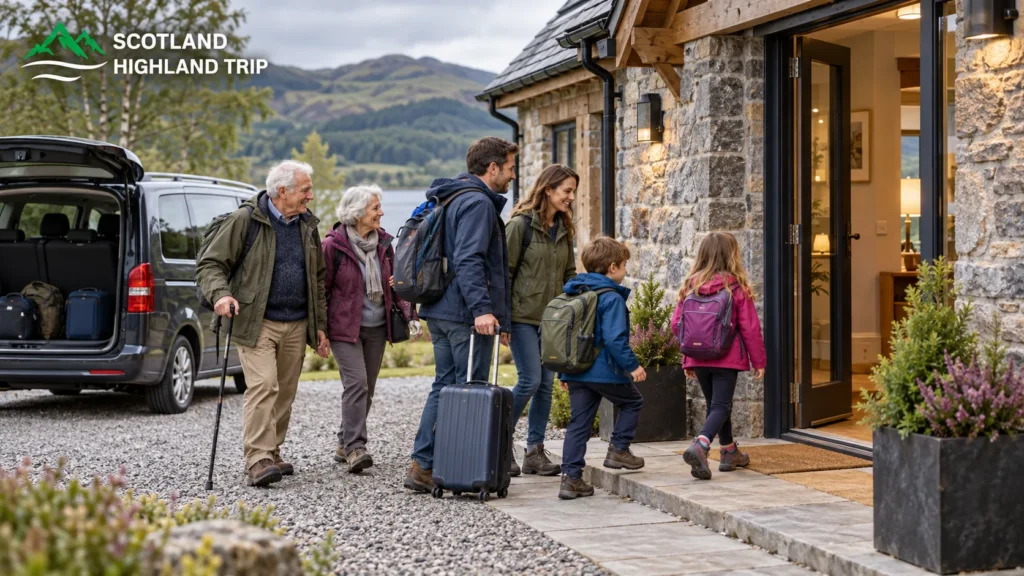
Bedrooms alone do not make a house multigenerational. Look for:
- A bedroom and full bathroom on the entrance level
- Step-free access or a clearly photographed alternative entrance
- Two sitting areas, so early sleepers and late talkers can coexist
- A dining table that seats the whole group
- Laundry, fridge space and simple breakfast facilities
- Parking beside the entrance, not at the bottom of a slope
- Written distances to the nearest shop, pharmacy and urgent care
Which Highland attractions genuinely suit grandparents and children?
The strongest shared attractions are Culloden, Loch Ness, Urquhart Castle, Highland Wildlife Park and the Highland Folk Museum. Each combines a clear story with flexible visit lengths, but families should check slopes, surfaces, seating and seasonal opening before promising the same route to everyone.
Culloden and Clava Cairns make a balanced history morning
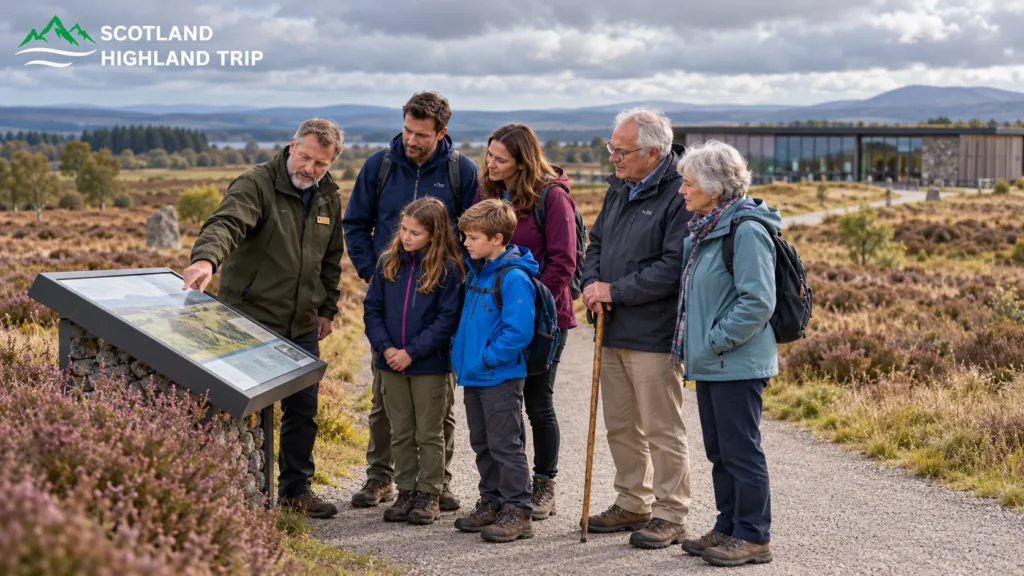
Culloden works because its modern visitor centre carries the story. Level access connects the entrance with the ticket desk, accessible toilet, shop, café and battlefield, and wheelchairs are available free of charge. A grandparent can spend longer indoors while an energetic child completes part of the battlefield trail with a parent.
Clava Cairns lies nearby and needs only 30 to 45 minutes. The prehistoric stones interest children without another long museum visit. Ground can be uneven, and shelter is scarce, so skip it during hard rain or when legs are already tired.
Loch Ness works when you avoid overloading it
Choose one cruise, one castle and one village stop. Trying to circle the whole loch while adding waterfalls creates a long vehicle day with too many exits and entrances.
The Urquhart Castle visitor centre, café and exhibition can still deliver the view and history for someone who does not tour every ruin. Historic Environment Scotland warns that access includes a steep tarmac ramp and steep paths, while Grant Tower requires stairs. That detail should decide the plan, not surprise the family at the gate.
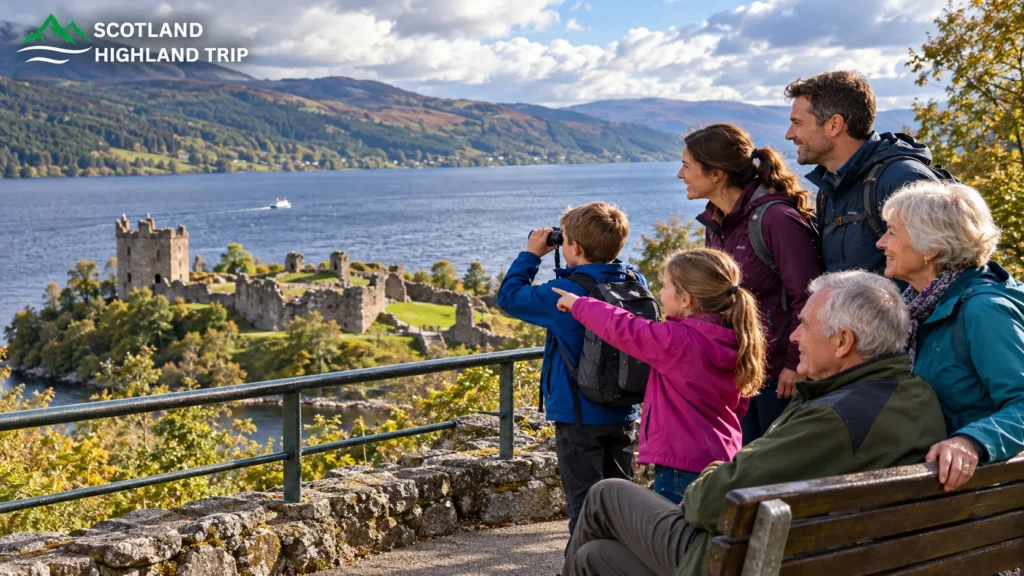
Children usually respond well to a short cruise and the science behind the legend. A Loch Ness and Urquhart Castle tour can also remove parking and timing decisions if the vehicle setup suits the group.
Highland Wildlife Park gives everyone a reason to look up
The park near Kincraig combines a drive-through reserve with a walking area. That structure is useful: the whole family sees wildlife from the vehicle first, then each person decides how much walking to add.
Official access information lists Blue Badge parking, free manual wheelchairs and a limited number of mobility scooters for hire on a first-come basis. Reserve enough time for three to four hours, but do not promise every enclosure. Animals keep their own schedule.
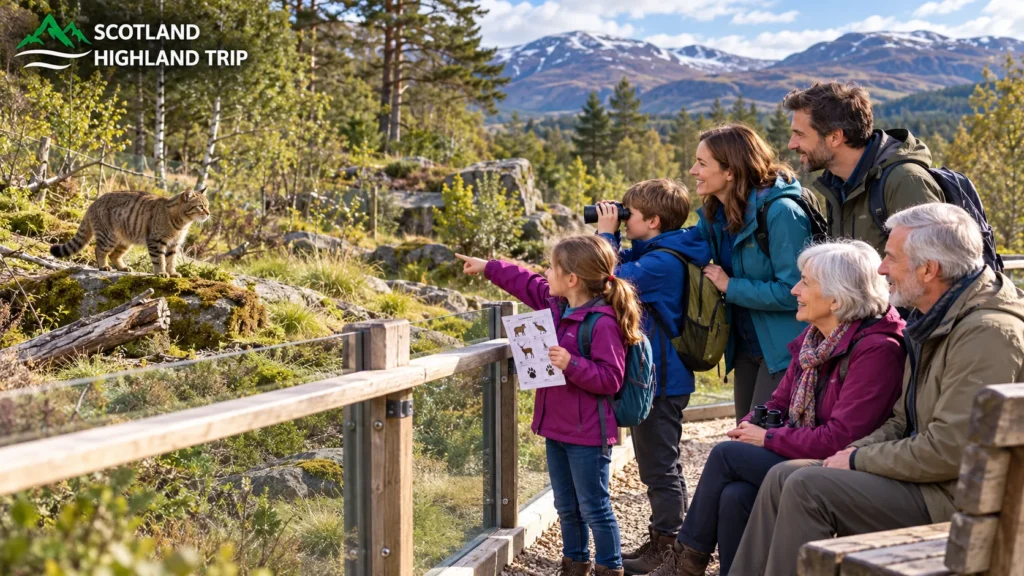
The Highland Wildlife Park pairs well with a shorter stop at the Highland Folk Museum in Newtonmore. Treat either attraction as the main event, not as the warm-up for three more stops.
How should each tour day be paced to prevent fatigue?
Start around 9:30am, schedule the main attraction before lunch and keep the afternoon lighter. Limit continuous driving to about 90 minutes where possible. A café, scenic seat or short village walk should be a planned component, not an apologetic emergency stop.
Build days in three blocks
Morning carries the demanding activity because energy and patience are highest. Lunch needs a real seat, toilet access and at least 45 minutes. Afternoon should offer one simple shared experience or a choice between a short walk and a warm indoor stop.
Split briefly without splitting the holiday
At Urquhart Castle, one group can explore the tower while another watches the introductory film and uses the café. At Loch Morlich, walkers can follow a short forest path while others remain by the beach or a bench.
Set a clear meeting point and time. Keep the split under 90 minutes, and reunite for lunch or the next shared stop. Nobody should feel parked while the “real” trip happens elsewhere.
How do you manage mobility, child seats and vehicle comfort?
Match the vehicle to passengers before luggage. Confirm step height, handholds, seat width, child-seat compatibility and boot capacity in writing. Bring each traveller’s normal mobility aid, and request attraction assistance ahead instead of assuming equipment will remain available on arrival.
Accessibility needs specific answers
Ask accommodation and attraction staff for measurements or current photographs when a slope, doorway or shower matters. “A few steps” is useless wording. For one traveller it means three shallow stairs; for another it means the day is over.
Child-seat law applies even on holiday
Under UK child-seat rules, children normally need an appropriate car seat until age 12 or 135 centimetres tall, whichever comes first. Confirm the child’s age, height and seat requirement with the hire company or tour operator before payment.
Licensed taxis have limited exceptions, but legal does not automatically mean suitable for a long Highland journey. Families should request the correct restraint rather than plan around an exception.
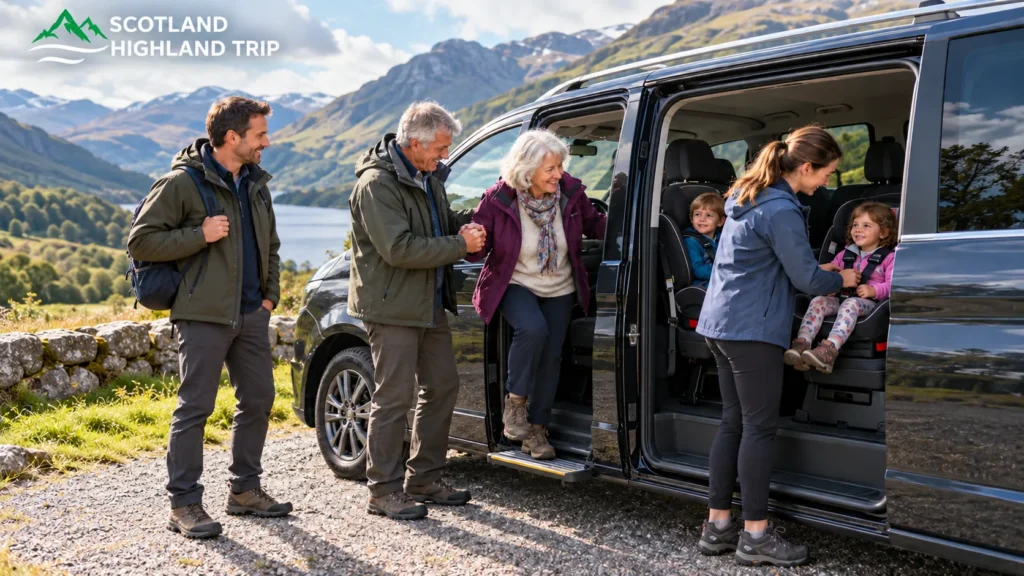
Private transport earns its cost when the group needs frequent stops, a walking frame, two child seats or a flexible return time. Check the practical setup before choosing a Highland day tour by its headline stops.
What is the best five-day multigenerational Highland itinerary?
Base all five nights in Inverness. Use the arrival day locally, pair Culloden with Clava Cairns, give Loch Ness its own day, visit the Cairngorms once and keep day five flexible. That order alternates history, scenery, wildlife and recovery time.
- Day one, settle into Inverness. Arrive, buy supplies and walk part of the River Ness or Ness Islands. Eat early. International families should not combine jet lag with a cross-country drive.
- Day two, Culloden and Clava Cairns. Spend the morning at the visitor centre and battlefield. Eat lunch nearby, then visit Clava only if weather and energy remain good. Return to Inverness by mid-afternoon.
- Day three, Loch Ness and Urquhart Castle. Take a pre-booked cruise or choose the castle first. Add Drumnadrochit for lunch and the Loch Ness Centre, then stop. A full loch circuit is unnecessary.
- Day four, Cairngorms and wildlife. Drive south for Highland Wildlife Park. Choose either the Highland Folk Museum or a gentle Aviemore and Loch Morlich stop afterward. Our Cairngorms wildlife route shows how those places fit together.
- Day five, weather and preference day. Repeat a favourite, visit Nairn, explore Inverness indoors or take a shorter scenic drive. A flexible final day absorbs closures, fatigue and the attraction someone still talks about over breakfast.
Skye is absent on purpose. A return day from Inverness can approach 12 hours once stops are included. Add two island nights to a longer holiday, or leave it for another trip.
What should the family do when Highland weather changes?
Keep one indoor substitute near each outdoor stop and decide the swap before breakfast. Light rain may suit a cruise or forest walk, but high winds, flooding, snow and official warnings can affect roads, boats, paths and attraction operations.
Culloden Visitor Centre replaces its battlefield loop. The Loch Ness Centre can replace an exposed castle visit. Inverness Museum, Eden Court or a long lunch can rescue a western day when visibility disappears.
Waterproof clothing still matters because car parks and short approaches are exposed. Umbrellas are less useful in Highland wind. Our wet-weather Highland plan separates ordinary rain from conditions that justify changing the route.
What should families book before the tour begins?
Book the accommodation, correctly configured vehicle, essential child seats and one timed attraction per day. Confirm accessibility directly with each venue. Leave secondary stops unbooked where possible, because flexibility matters more than squeezing a small saving from a rigid schedule.
Use this order:
- Confirm group size, ages, mobility needs and room layout.
- Reserve accommodation with the required entrance-level bedroom and bathroom.
- Book the vehicle and record every child seat, mobility aid and suitcase.
- Choose one anchor booking per day, such as a cruise or wildlife park entry.
- Check restaurant space for the largest group dinner.
- Recheck seasonal hours and access notes seven days before travel.
- Share one itinerary containing addresses, booking numbers and medical contacts.
Avoid prepaying every hour. A multigenerational Highland tour needs enough structure to feel safe and enough empty space to remain a holiday.
What else should families know before travelling together?
Agree on pace, spending and optional activities before arrival. Give one adult control of bookings and another responsibility for medicines, snacks and children’s kit. Shared decisions prevent resentment, while a written plan stops essential details living inside one exhausted parent’s phone.
Frequently asked questions
Is Inverness or Aviemore better for a multigenerational family?
Inverness is better for the broadest first trip because it offers Loch Ness, Culloden, city facilities and more route choices. Aviemore is better when wildlife, forests and resort activities dominate the family’s priorities.
How many attractions should a family plan each day?
Plan one main attraction and one lighter secondary stop. Two demanding ticketed attractions usually create rushed meals, excessive standing and arguments about leaving before everyone has finished.
Is Urquhart Castle suitable for limited mobility?
The visitor centre, café and main viewpoint can still make the visit worthwhile, but paths to and through the ruins include steep slopes and steps. Check current access notes and decide which sections matter before arrival.
Can grandparents skip part of an activity without missing the day?
Yes. Choose attractions with cafés, exhibitions, viewpoints or seated experiences close to the active section. Agree on a meeting point so a rest feels like a valid choice rather than exclusion.
Should a multigenerational group hire a car or book a driver?
A hire car suits confident drivers with a simple route and minimal equipment. A private driver becomes valuable when the group needs two child seats, mobility aids, flexible stops or relief from narrow-road driving.
Is the Isle of Skye suitable for a day trip from Inverness?
Skye is possible but rarely comfortable for three generations in one day. The return journey, scenic stops and island roads create a long schedule. Add two nights on Skye or omit it.
What month is best for a mixed-age Highland tour?
May, June and September offer useful daylight with less peak-season pressure than July and August. Weather remains changeable in every month, so accessibility and indoor alternatives matter year-round.

Emma is a solo traveler and freelance travel writer from New Zealand who spent three weeks exploring the Scottish Highlands. With a deep appreciation for history and landscapes, she booked a series of day tours and a private chauffeur journey with Scotland Highland Trip. From Loch Ness to the Cairngorms, she documented her experience through vivid blog posts and drone footage.