
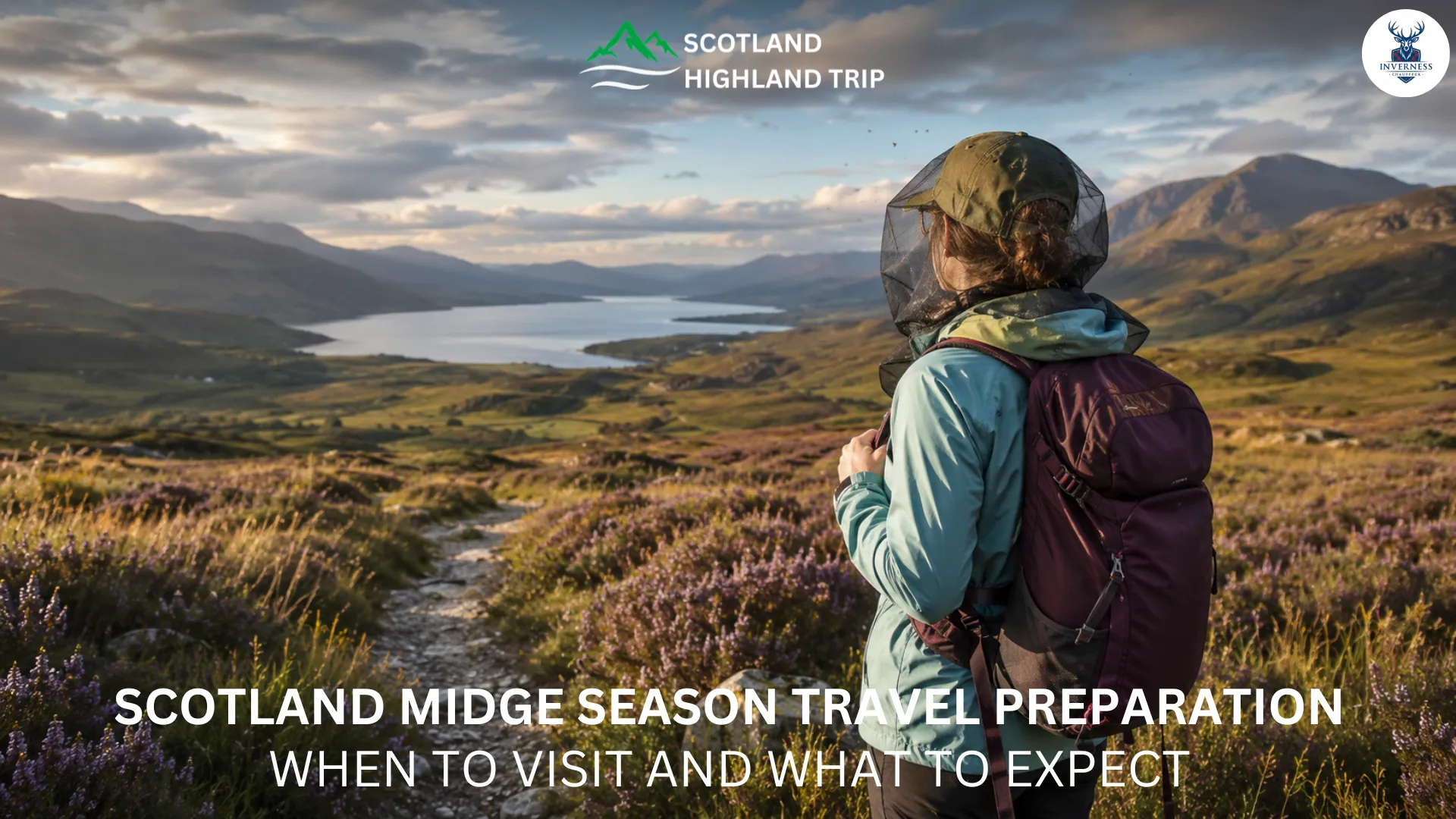
For many travellers, stories about Scotland’s midge season conjure images of swarms of tiny biting insects ruining holidays. In reality, midges are a manageable nuisance rather than a trip‑stopping plague. The biting species in Scotland is the Culicoides impunctatus, commonly known as the Highland midge. These flies are much smaller than mosquitoes, with a wingspan of about 2 mm. Their bites can cause itchy, red bumps, but they do not transmit diseases. Midge season typically runs from late spring to early autumn, peaking in high summer, and their intensity depends heavily on weather and location. With the right timing, preparation and mindset, you can enjoy Scotland’s outdoors without letting midges dominate your trip.
Quick Answers at a Glance
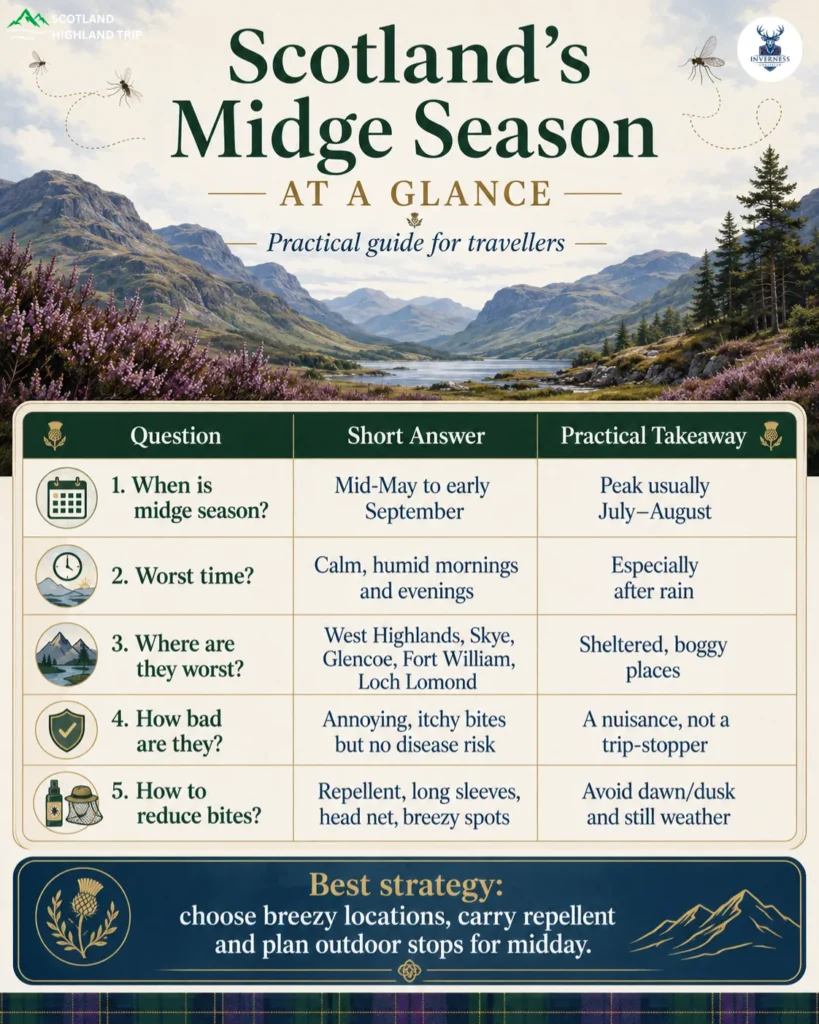
| Question | Short Answer |
| When is midge season in Scotland? | Generally mid‑May through early September, with peak activity in July and August. A cold, dry spring can delay the start, while warm, wet weather can prolong the season. |
| Worst time for midges? | Calm, humid evenings and mornings during July and August, particularly after rain. Still, damp days with little wind encourage swarms. |
| Where are they worst? | Sheltered, boggy areas of the West Highlands, including the Isle of Skye, Glencoe, Fort William, Loch Lomond and wet woodlands in the Cairngorms. The east coast, urban areas and windy islands like Orkney and Shetland experience far fewer midges. |
| How bad are they really? | Midges are an irritation, not a health hazard. Their bites itch but don’t spread disease. Severity varies by individual; some people barely notice them, others react strongly. |
| How to reduce bites? | Use effective repellent (e.g. DEET or Saltidin‑based products like Smidge), wear light‑coloured long sleeves and trousers, use a midge net, avoid dawn/dusk and still, humid conditions, and choose breezy or elevated locations. |
Jump To Section
When Is Midge Season in Scotland?
The Scottish midge season spans roughly from mid‑May to early September, though exact dates vary with weather and region. Understanding the phases can help you time your trip:
- Early season (mid‑May to June). The first generation emerges after a warm, damp spring. In most years, midge numbers increase from late May into June. Early frosts can delay hatching, while mild, wet weather can accelerate it.
- Peak season (July to August). This is when midges are most abundant, especially following rain. Warm, overcast conditions and high humidity create ideal breeding conditions. If you plan to visit popular spots like Skye, Glencoe or Loch Lomond in July or August, be prepared with repellent and a flexible attitude.
- Late season (September). As temperatures cool and days shorten, midge activity declines. Numbers taper off through September, and the first frosts end the season. Travelling in mid‑September or later greatly reduces the chance of encountering midges, while still enjoying relatively mild weather.
It’s important to note that the calendar alone doesn’t determine midge activity. A warm, damp spring can trigger large numbers early, while a cold, dry spring delays the season. Similarly, a dry, sunny June or early July can suppress the second generation and provide a respite.
When Are Midges Worst?
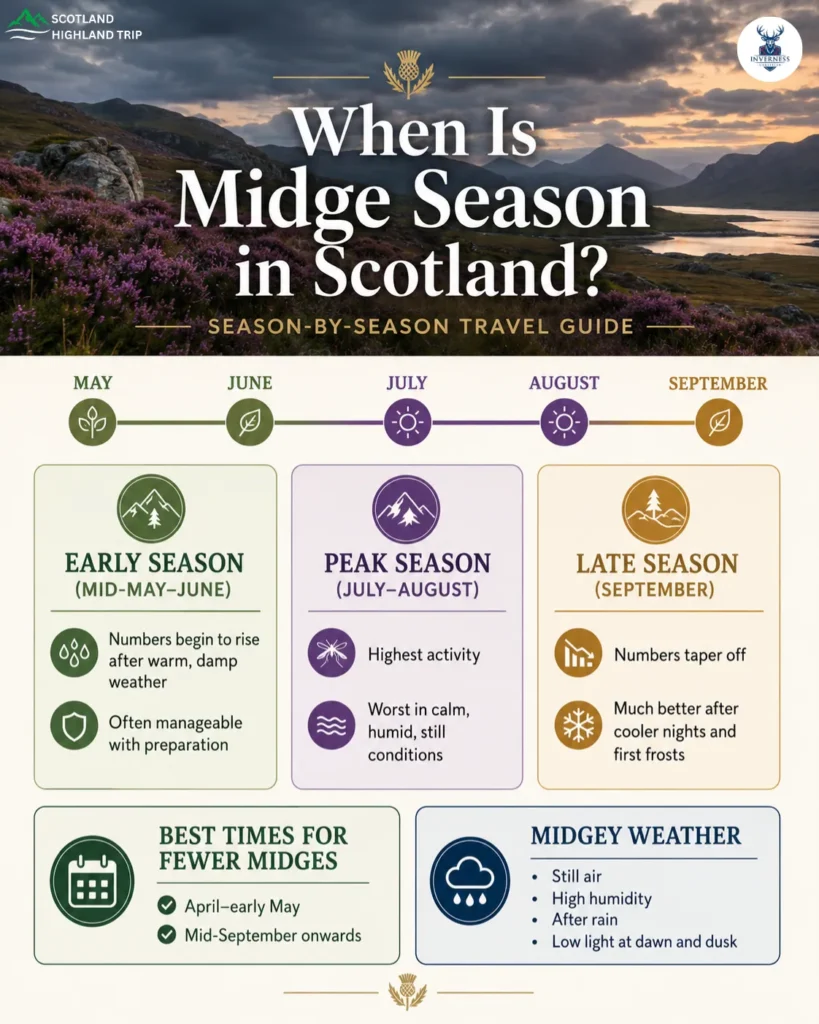
Midge misery isn’t confined to a specific month; it’s about conditions. Midges thrive when:
- It’s still and humid. With wings just 2 mm long, midges struggle to fly in winds above about 7 mph. A slight breeze can dramatically reduce their numbers. They prefer sheltered glens, forest edges and boggy areas protected from wind.
- Light levels are low. Midges feed in low‑light conditions. They are most active at dawn and dusk or under thick cloud cover. Midday in bright sunshine tends to be relatively midge‑free.
- The air is warm and moist. Warm, damp weather encourages multiple generations of midges. Calm evenings after rain are often the worst. Conversely, a dry spell or cool, windy day can keep them at bay.
Peak annoyance tends to coincide with school summer holidays, when many travellers visit the Highlands. If you can, plan hikes or outdoor activities for the middle of the day, when midge numbers are lower. Avoid lingering beside still water or in dense woodland at dawn or dusk.
Where Are Midges Worst in Scotland?
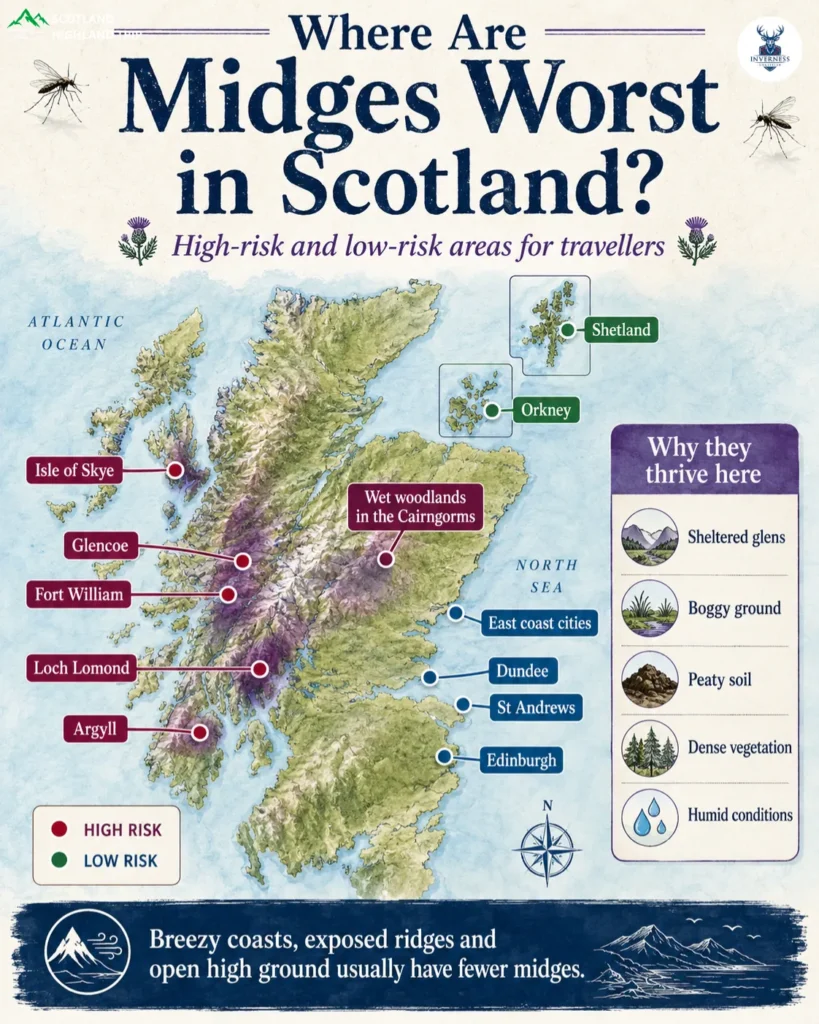
Midge distribution is uneven. The tiny insects breed in peaty, acidic soils and hide in long bracken or moss on tree bark. These habitats dominate the West Highlands, where moist conditions, dense vegetation and sheltered glens offer perfect breeding grounds. Key hotspots include:
- Isle of Skye. Particularly Glen Brittle and the Cuillin foothills, where campgrounds and trails near streams are notorious for swarms.
- Glencoe & Fort William. Deep glens and boggy moorland create ideal conditions, especially around the valley floors.
- Loch Lomond & The Trossachs National Park. Sheltered loch shores and wooded hillsides host large numbers.
- Cairngorms National Park. Wet woodlands and boggy moors see midges in summer, though drier, windier plateaus are less affected.
- Argyll and the western seaboard. Coastal marshes and inland lochs are prime midge territory.
In contrast, midge‑free or low‑risk zones include the east coast (cities such as Edinburgh, St Andrews and Dundee), urban areas with little vegetation, and windy coastal islands like Orkney and Shetland. The Inverness and Loch Ness area is mostly midge‑free along the coast, though more sheltered spots like Glen Affric see higher numbers. High ground and exposed ridges also tend to have fewer midges because of wind.
How Bad Are Midges Really?
For travellers used to mosquitoes or biting flies, Scottish midges may seem tame. While the insects can form clouds around your head, they do not spread diseases. Only the females bite, using scissor‑like mouthparts to take tiny blood meals for egg production. Most bites result in small, itchy bumps that last a few days. Some people react more strongly than others, and scratching can prolong irritation. According to midge experts, bites are unlikely to be felt at the time; it’s only afterwards that itching occurs. Relief comes from antihistamine creams and not scratching.
Midges can be annoying, particularly when they swarm around your face or crawl into ears and hair. However, the intensity is often overblown. Keep moving, midges can’t keep up when you’re walking or cycling. Use repellent and choose your time and place wisely, and you’ll still enjoy Scotland’s landscapes.
How Weather Affects Midges
Midge activity is weather‑dependent. Understanding these influences helps you predict when they’ll be out and when they’ll disappear:
- Wind speed. A breeze of around 7 mph (11 km/h) or more makes it difficult for midges to fly. Coastal breezes and open ridgelines are your friends.
- Temperature and moisture. Warm, damp conditions spur multiple generations. A hot, dry June can reduce numbers, while prolonged rain increases them. Frost kills larvae and ends the season; late September or early May frost can significantly cut populations.
- Humidity and cloud cover. High humidity and overcast skies create “midgey weather.” Midges become active when sunlight intensity drops. Bright sunshine or dry air suppresses them.
- Time of day. Dawn and dusk coincide with peak feeding. Plan static activities like camping, picnics or photography sessions outside these windows.
Because weather can vary across Scotland, it’s worth checking a midge forecast for specific areas. The Smidge forecast uses data from midge traps and mini‑weather stations combined with weather forecasts to predict midge levels. It’s not perfect, but it offers a general sense of when conditions are ripe for swarms.
Midges vs Mosquitoes: What’s the Difference?
Travellers sometimes confuse midges with mosquitoes. Both are small, flying, blood‑feeding insects, but there are important differences:
- Size and appearance. Midges are tiny (1 to 3 mm) and can pass through standard mosquito nets, which is why fine‑mesh midge nets are recommended. Mosquitoes are larger and have long proboscises.
- Disease risk. Scottish midges do not carry diseases that affect humans. Some mosquito species present in the UK can bite, but they currently pose minimal health risk and are rarely encountered by travellers.
- Habitat and behaviour. Mosquitoes breed in standing water; midges prefer damp soil, peaty bogs and shaded woodland. Mosquitoes often bite at night; midges favour dawn and dusk.
Knowing these differences helps set expectations: midges are a nuisance but not a danger.
How to Reduce Midge Bites
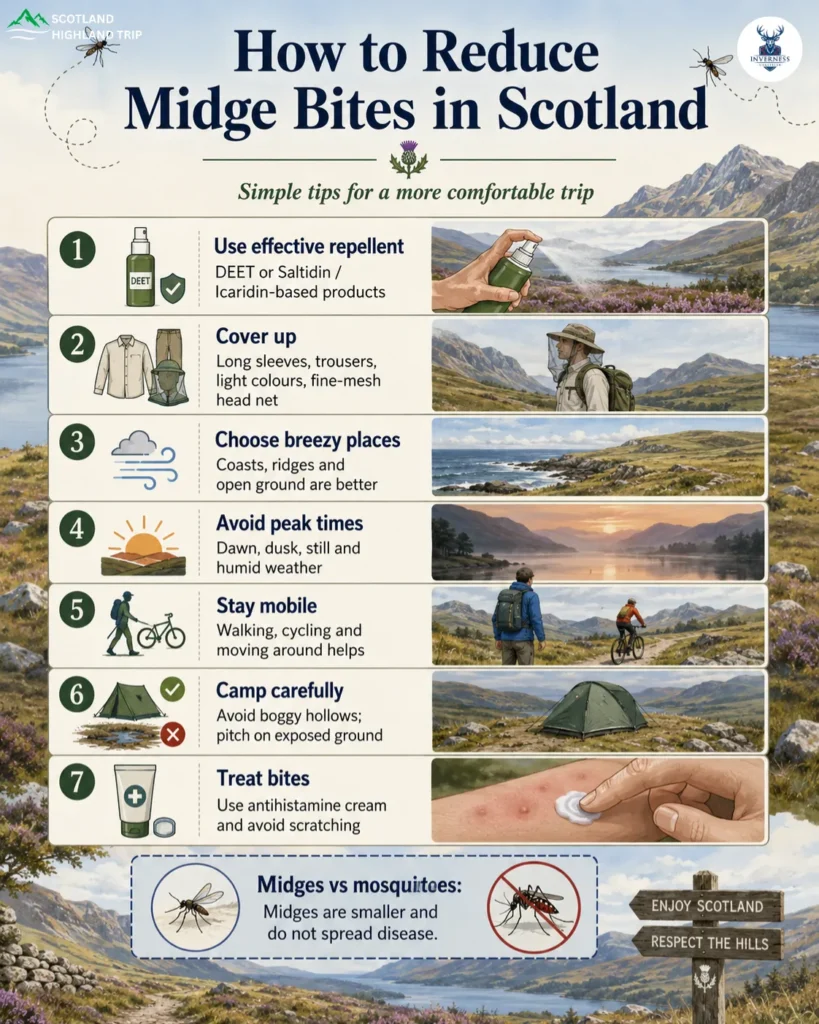
You don’t need to avoid Scotland to avoid midges. Use these strategies to limit their impact:
- Time your visit wisely. Travel outside peak season (April to early May or mid‑September onwards) to experience fewer midges. Early frost or cooler weather further reduces numbers.
- Choose your locations. Opt for the east coast, urban centres or breezy islands when planning summer trips. If heading west, stay on exposed headlands, high ground or near the sea; avoid sheltered glens and boggy lochs.
- Stay mobile. Midges struggle to keep up with moving targets. Walking, cycling or kayaking will deter them. If you need to stop, choose open, windy spots.
- Avoid dawn and dusk. Plan static activities like picnics and camp cooking for midday, when midges are least active. In June and July, long daylight hours make this easier; in August and September, check sunrise and sunset times.
- Use effective repellents. Products containing DEET or Saltidin (Icaridin) are most effective; Smidge is specifically formulated for Scottish midges. Some travellers swear by Avon Skin So Soft, though it may not repel midges completely. Reapply repellent after sweating or swimming.
- Cover up. Wear long sleeves, trousers and light‑coloured clothing; midges are attracted to dark colours. A midge head net over a hat can save your sanity during peak conditions. Unlike mosquitoes, midges can pass through coarse mesh, so choose fine netting.
- Create your own breeze. Handheld fans, portable midge coils or campfires generate enough turbulence to deter midges. On still days, consider using a tent porch or gazebo with mesh sides for outdoor dining.
- Camp with care. Pitch tents on high, exposed ground rather than low, damp hollows. Avoid camping near stagnant water, bogs or sheltered woodland. If you must camp in a midge hotspot, keep tent doors zipped, use inner mesh and set up camp before dusk to minimise swarms.
- Treat bites properly. If you are bitten, apply antihistamine cream and avoid scratching. Pack remedies like hydrocortisone cream or oral antihistamines if you have strong reactions.
Should Midge Season Change Your Trip?
Scotland’s landscapes are spectacular year‑round, and midges shouldn’t deter you from visiting. However, the timing and itinerary of your trip can influence how much you notice them:
- Hiking and camping: If you plan multi‑day treks or wild camping in the West Highlands, consider travelling in May or September when midges are fewer. Choose higher routes and windy ridges. For trips in July or August, pack repellent, head nets and be prepared to cook inside a tent vestibule on still evenings.
- Road trips and sightseeing: Travellers exploring by car may encounter midges only at viewpoints or picnic stops. Picking coastal routes and visiting attractions during midday can minimise encounters. Air‑conditioned vehicles offer respite on still days.
- Island hopping: Islands like Orkney, Shetland and exposed parts of Skye experience breezes that deter midges. More sheltered western islands such as Mull or Jura may have midges in glens and forests.
- Photography and wildlife watching: Early morning and evening light are prime for photography and animal sightings, but these are also midge peak times. Wear protective clothing, use repellents and consider midges part of the wild experience.
- Family travel: Families with small children may find midges bothersome during picnics or campsite meals. Choose accommodation with insect screens and plan indoor activities (museums, castles, distilleries) on still, damp days.
Ultimately, proper preparation, timing, location choice, repellent and clothing, makes travel during midge season manageable. If you’re extremely sensitive to insect bites or hate the thought of them, visit outside peak season; otherwise, embrace them as part of the Scotland Highlands adventure.
FAQs
When is midge season in Scotland?
Midge season usually runs from mid‑May through early September, peaking in July and August. Weather can shift these dates: a warm, wet spring brings an early surge; a cold, dry spring delays it.
When are midges worst in Scotland?
Midges are worst when conditions are still, humid and warm, especially at dawn and dusk in July and August. Calm evenings after rain in sheltered Highland glens are peak midge time.
Where are the worst places for midges in Scotland?
The West Highlands, including Skye, Glencoe, Fort William, Loch Lomond and wet woodlands of the Cairngorms, are notorious. Coastal breezes and higher altitudes reduce numbers; east‑coast cities and windy islands are low‑risk.
How bad are midges in Scotland?
Midges are a nuisance but not dangerous. They bite to obtain protein for eggs, causing itchy lumps that can last a few days. They don’t transmit diseases. Severity depends on your sensitivity and the number of insects present.
Do midges bite? What are midge bites like?
Yes, only females bite. You may not feel the bite initially; itching starts afterwards. Midges feed for about 3 TO 4 minutes and then move on. Treat bites with antihistamine cream and avoid scratching.
Are there mosquitoes in Scotland?
There are mosquito species in the UK, but they rarely bother travellers and currently pose minimal health risk. Midges are different: smaller, more abundant and not disease‑carrying.
Is there a midge forecast?
Yes, Smidge’s Scottish Midge Forecast uses data from midge traps and mini‑weather stations combined with weather forecasts to predict midge levels across Scotland. It can help you plan, but remember that local conditions change quickly.
Should I avoid the Highlands during midge season?
Not necessarily. The Highlands are stunning in summer. If you can’t avoid peak season, mitigate by choosing breezy locations, timing hikes for midday, using repellent and covering up. Those extremely averse to insect bites may prefer to visit in spring or autumn when midges are minimal.
Final Takeaway
Scotland’s midge season is an undeniable part of Highland summers, but it need not dictate your travel plans. Midges are most active from mid‑May to early September, with peak numbers in July and August. Their annoyance level depends more on weather and location than the calendar. Still, humid evenings in sheltered western glens are peak midge time; windy, sunny days on coasts and high plateaus are almost midge‑free.
Midges don’t carry diseases and their bites are temporary irritations. By timing your visit, choosing breezy destinations, packing appropriate clothing and repellents, and planning activities for midge‑free times of day, you can explore Scotland’s lochs, glens and islands with confidence. Consider midges another part of the Highlands’ wild character, one you can prepare for and overcome rather than fear.

Emma is a solo traveler and freelance travel writer from New Zealand who spent three weeks exploring the Scottish Highlands. With a deep appreciation for history and landscapes, she booked a series of day tours and a private chauffeur journey with Scotland Highland Trip. From Loch Ness to the Cairngorms, she documented her experience through vivid blog posts and drone footage.